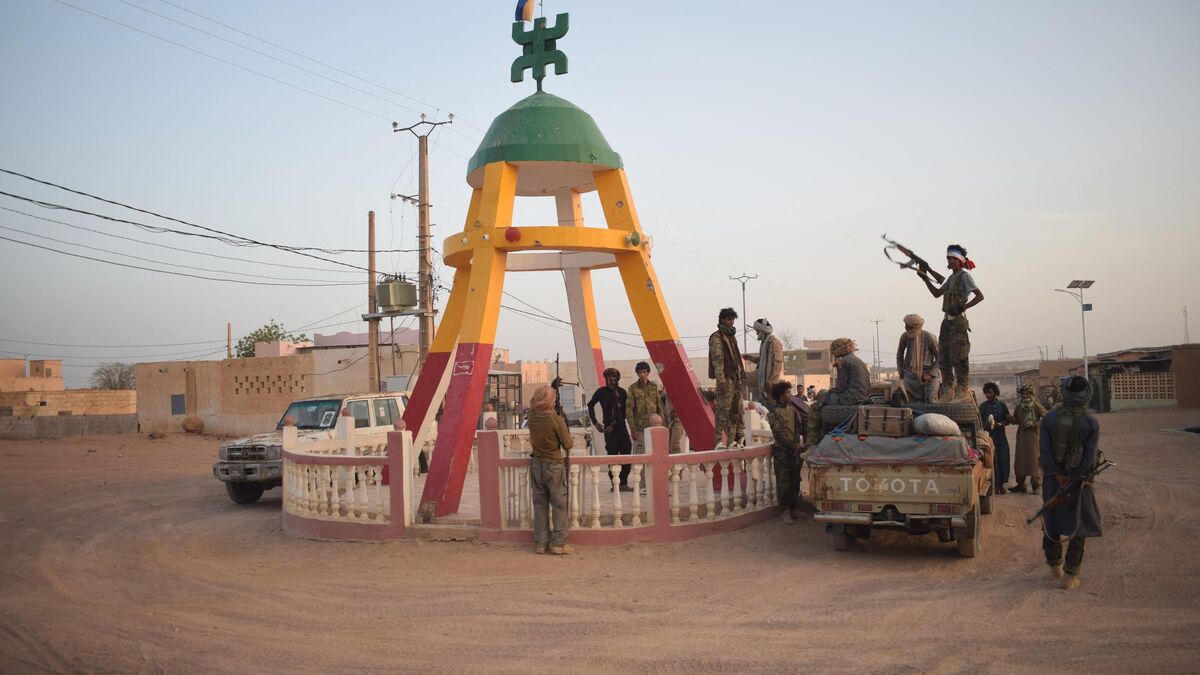
Africa Corps, Russia’s latest paramilitary force active in Africa, has recently lost a key stronghold in Mali’s Kidal region—a stronghold it had held for years. The retreat, though significant, does not diminish the group’s strategic importance for Moscow in the Sahel, where it continues to play a critical role.
From shadows to center stage: the rise of Africa Corps
Officially established in late 2023, Africa Corps emerged as one of Russia’s most clandestine military offshoots. Its formation was first hinted at by military blogger Deux Majors on Telegram, who cited remarks from Igor Korotchenko, a former Russian colonel and Kremlin-aligned journalist. The group is reportedly led by Younous-bek Evkourov, Russia’s Deputy Minister of Defense.
The timing of Africa Corps’ creation coincided with the decline of the Wagner Group, a shadowy Russian paramilitary organization that had operated extensively across Africa since 2014. The deaths of Wagner’s founders, oligarch Evgueni Prigojine and former intelligence officer Dmitri Outkine, in a 2023 plane crash marked a turning point. Prigojine had previously attempted a brief rebellion against Moscow, further destabilizing the group’s future.
Africa Corps: Moscow’s new weapon in the Sahel
Unlike Wagner, which gained notoriety for its brutal tactics and alleged war crimes, Africa Corps presents itself as a more controlled and centralized force. Its operations are tightly supervised by the Kremlin, with a focus on forming alliances with African governments rather than direct confrontation. The group has expanded its footprint across Burkina Faso, Libya, Sudan, the Central African Republic, and Niger, reinforcing Russia’s influence in the region.
Africa Corps has absorbed many Wagner operatives and their assets, inheriting both personnel and strategic interests. Its stated mission is to support African nations in breaking free from Western neocolonial dependence, expelling foreign military presence, and securing full sovereignty. This narrative aligns with Moscow’s broader geopolitical goals.
Military presence and geopolitical stakes in Mali
In Mali, Africa Corps has been a cornerstone of the junta’s security apparatus since 2024, deploying hundreds—if not thousands—of fighters. The group’s involvement has been pivotal in helping the Bamako government fend off Tuareg rebels, particularly in the northern city of Kidal, which fell to rebel forces over the weekend. The retreat from Kidal marks a rare setback for the group, though its long-term influence in Mali and the Sahel remains intact.
Moscow’s objectives go beyond military support. By strengthening ties with allied African governments, Russia aims to secure access to mineral resources and influence migration routes across the continent. The withdrawal of Western powers, including France, from the region has created a power vacuum that Africa Corps and its backers are eager to fill.
Controversies and international scrutiny
Despite its more controlled image, Africa Corps has not escaped global condemnation. In 2024, the United Kingdom accused the group of widespread human rights violations and exploiting natural resources across Africa for profit. These allegations underscore the challenges Africa Corps faces as it seeks to legitimize its role on the continent.
The group’s name itself carries historical weight—a deliberate reference to the Afrika Korps, the Nazi-aligned military force that operated in North Africa during World War II. This choice has drawn criticism and raised questions about the Kremlin’s long-term intentions in Africa.