Africa Corps: the shadowy Russian force reshaping Mali’s future
After years of dominance in Mali’s conflict zones, the Africa Corps paramilitary unit has withdrawn from a pivotal stronghold near Kidal, yet remains a critical instrument of Moscow’s influence across the Sahel.
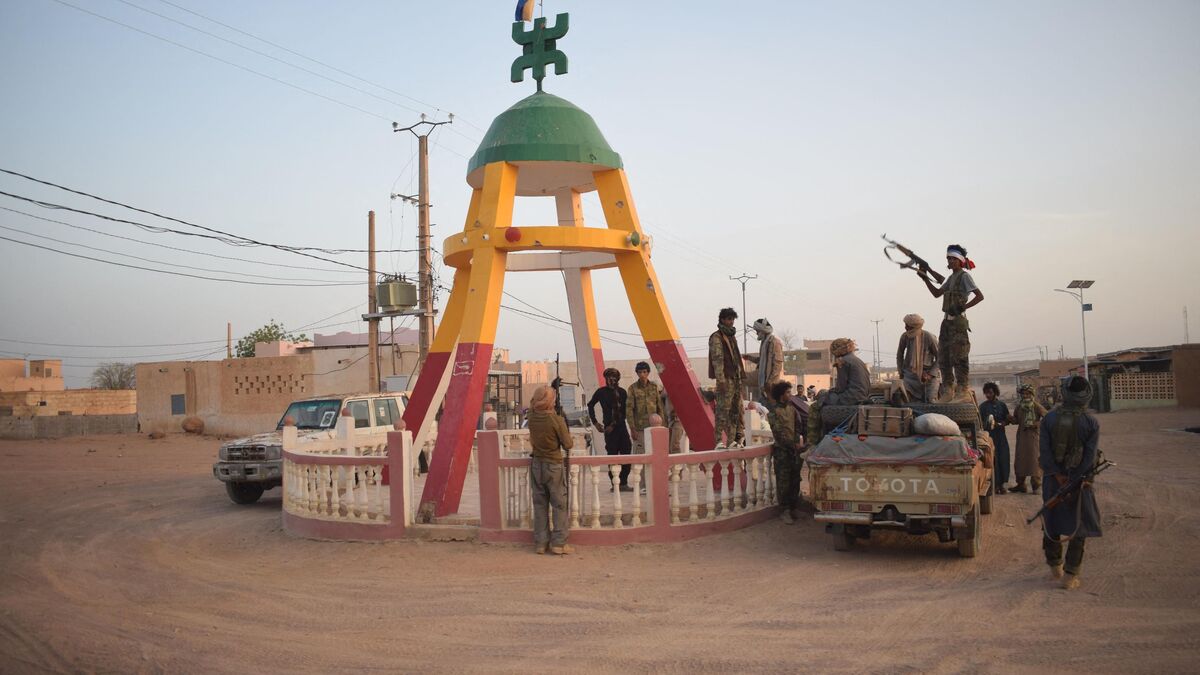
This past weekend, Mali witnessed intense clashes as jihadist factions aligned with Tuareg rebels launched coordinated assaults on strategic juncture points across the country. In Bamako, the defense minister was killed during an attack on his residence, while multiple urban centers faced simultaneous offensives.
In eastern Mali, rebels reclaimed Kidal, a vital stronghold the junta had fiercely controlled for years. The Africa Corps, a Russian paramilitary unit, eventually withdrew after intense combat and negotiations, though its presence continues to shape regional dynamics beyond Mali’s borders.
Russia’s Africa Corps emerged in late 2023 as a successor to the Wagner Group, which had operated across Africa since 2014. The new formation was first publicly discussed on Telegram by military blogger Deux Majors, citing remarks by Igor Korotchenko, a Kremlin-aligned analyst and former colonel. The unit is reportedly overseen by Russian Deputy Defense Minister Yunus-bek Yevkurov.
The Africa Corps’ formation coincided with Wagner’s decline following the deaths of its founders, oligarch Yevgeny Prigozhin and ex-intelligence officer Dmitri Utkin, in a suspicious 2023 air crash. Prigozhin, once a close ally of President Vladimir Putin, had briefly attempted a mutiny against Moscow before his demise.
Explicit strategic ambitions
From its inception, Africa Corps has outlined clear goals: conducting large-scale military operations to help African nations break free from colonial legacies, expel Western influence, and assert full sovereignty. According to Korotchenko, the group’s mission extends to securing mineral resources and controlling migration routes.
Unlike Wagner, Africa Corps operates with greater discretion, avoiding the widespread accusations of war crimes and brutal repression that marred its predecessor’s reputation. Instead, it focuses on strengthening ties with allied governments by supplying troops and military equipment. Its footprint now spans Burkina Faso, Libya, Sudan, the Central African Republic, and Niger.
Deep roots in Mali
Since 2024, Africa Corps has replaced Wagner in Mali, deploying hundreds—if not thousands—of fighters. Many former Wagner commanders and personnel have transitioned into the new unit, reinforcing its presence in the region. The group has played a pivotal role in bolstering the Bamako junta against Tuareg rebels, a strategy Moscow uses to expand its regional clout after Western powers, including France, scaled back their involvement.
The Africa Corps’ name draws inspiration from the Nazi-era Afrikakorps, a historical reference that underscores its ideological alignment with the Kremlin’s broader geopolitical narrative. While its territorial control is less overtly violent than Wagner’s, Africa Corps has not escaped international scrutiny. In 2024, the United Kingdom sanctioned the group for alleged widespread human rights abuses and exploitation of natural resources across Africa.