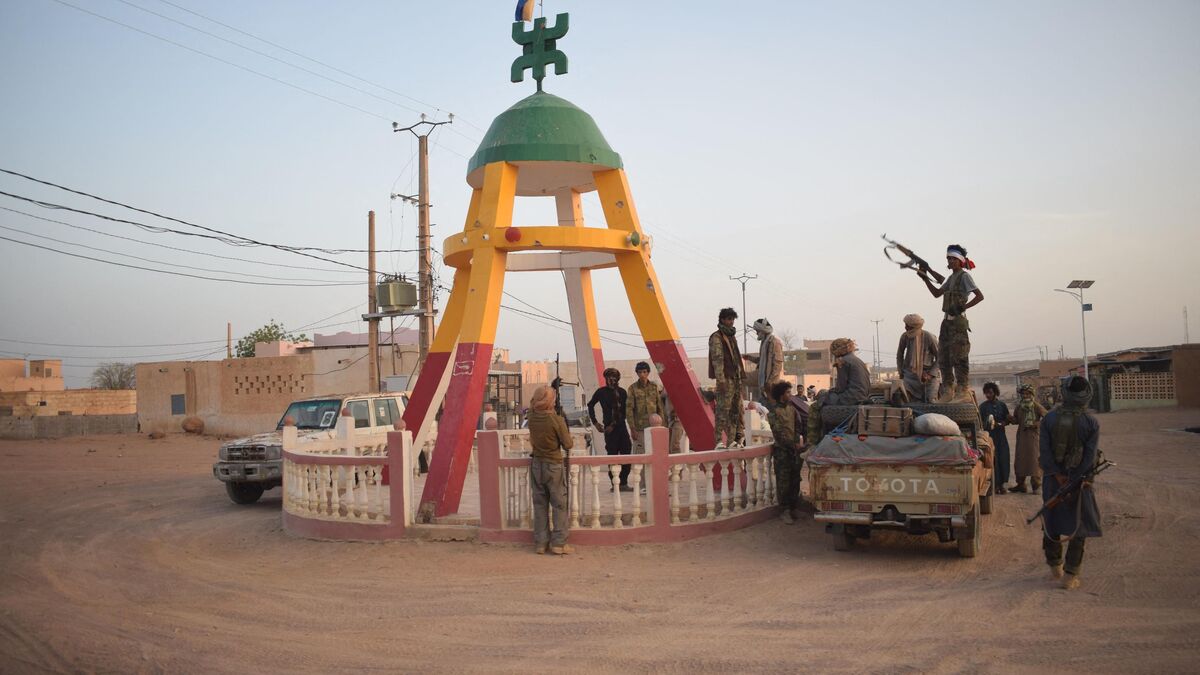
Recent clashes in Mali have exposed the shifting sands of power in the Sahel. Over the weekend, Islamist militants joined forces with Tuareg rebels to launch coordinated attacks on strategic positions held by the ruling junta, including a deadly strike on Defense Minister Sadio Camara’s residence near Bamako. In the east, rebels reclaimed Kidal, a key stronghold that had been under the iron grip of Africa Corps—a shadowy Russian paramilitary group—for years.
The retreat from Kidal marks a significant setback for Africa Corps, which had established itself as a dominant military force in Mali since 2023. Despite this withdrawal, the group remains a critical instrument of Moscow’s influence across North and West Africa, particularly in resource-rich territories where Western powers have scaled back their presence.
From Wagner to Africa Corps: A strategic pivot in Africa
The emergence of Africa Corps in 2023 followed a turbulent period for its predecessor, the Wagner Group. After the mysterious deaths of its founders, oligarch Evgueni Prigojine and ex-intelligence officer Dmitri Outkine, in a 2023 plane crash, Wagner’s autonomy waned. Africa Corps was introduced as a more centralized and Kremlin-aligned alternative, absorbing personnel and operations across Africa.
The group’s formation was first hinted at by military blogger Deux Majors on Telegram in November 2023, citing statements from Igor Korotchenko, a former Russian colonel and Kremlin-affiliated journalist. Korotchenko revealed that Africa Corps operates under the oversight of Russian Deputy Defense Minister Iounous-bek Evkourov, signaling a tighter integration with Moscow’s military strategy.
Symbolism and strategic goals
Africa Corps carries a name steeped in historical irony. Inspired by the Nazi-era Afrikakorps, the group’s moniker reflects a deliberate contrast to Wagner’s legacy. While Wagner was often accused of reckless brutality and human rights abuses, Africa Corps presents itself as a disciplined, state-backed force focused on geopolitical influence rather than overt violence.
Its stated mission is to support African governments in breaking free from Western neocolonial control, eliminating foreign military presence, and securing full sovereignty. Korotchenko emphasized that Africa Corps would conduct large-scale military operations to achieve these objectives, positioning Russia as a key ally in the continent’s fight for autonomy.
Africa Corps’ expanding footprint in the Sahel
Since its inception, Africa Corps has steadily expanded its reach beyond Mali, establishing a presence in the Burkina Faso, Libya, Sudan, the Central African Republic, and Niger. Unlike Wagner, which was frequently criticized for its heavy-handed tactics, Africa Corps has adopted a more subdued approach, focusing on forging alliances with sympathetic governments through military training and equipment support.
In Mali, Africa Corps has played a pivotal role in bolstering the junta against Tuareg rebels and Islamist militants. The group’s deployment of hundreds—or possibly thousands—of fighters has helped sustain the Bamako government, particularly as Western powers, including France, have withdrawn from the region. This shift aligns with Moscow’s broader strategy to fill the power vacuum left by departing Western forces, while also gaining leverage over critical migration routes and mineral resources.
Controversies and international scrutiny
Despite its more restrained image, Africa Corps has not escaped international condemnation. In 2024, the United Kingdom accused the group of committing widespread human rights violations across Africa and exploiting local resources for profit. These allegations underscore the challenges Africa Corps faces as it seeks to legitimize its operations while maintaining its covert nature.
The group’s operations in Mali remain a focal point of regional instability. Its ability to adapt to shifting power dynamics—such as the recent loss of Kidal—will determine whether it can consolidate its influence or face further setbacks in the Sahel’s volatile landscape.