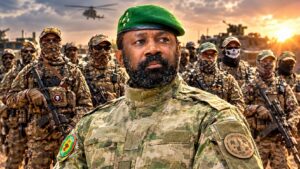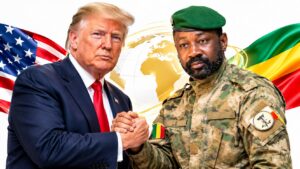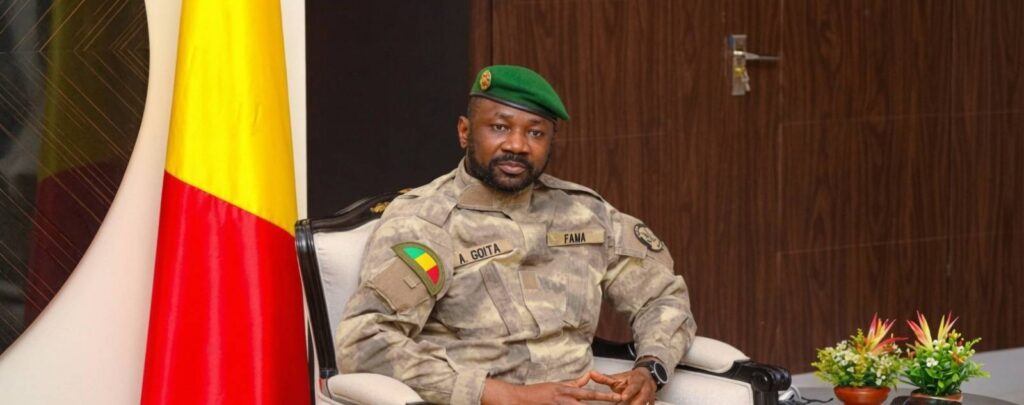
The independence day message delivered to the nation by the head of the Transition, army general Assimi Goïta, was built on a triumphant register: promises of economic growth, praise for a military on the rise and a heavy dose of sovereignty rhetoric. Yet the decisive question is not how forcefully that narrative was delivered from the podium — it is what happens to ordinary Malians when the promises are measured against the facts on the ground. That gap, and the price attached to it, is where the real stakes of this address lie.
Why the stakes of this speech reach far beyond the podium
Read alongside the daily experience of households in Bamako and in the provinces, the official reading of the Transition’s record reveals not only discrepancies but outright contradictions. Three areas crystallise the dilemma: the security narrative, the economic figures, and the call for reconciliation.
Security: the claim of a reconquered territory under scrutiny
The presidential address described the Malian armed forces as reorganised, well equipped and victorious, operating in close coordination with partners of the Alliance of Sahel States.
What the speech celebrates
- A military presented as restructured and effective.
- Regional cooperation framed as a strategic asset.
- An emphasis on regained autonomy in security matters.
What the front lines actually show
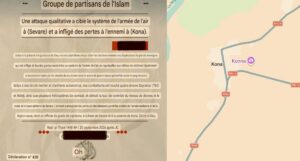
Left out of the account is the severe deterioration of security in the centre and the north of the country. Large-scale offensives by JNIM or by separatist fighters — among them the strategic disaster suffered at Tinzawatène and the assaults on key garrisons such as Dioura and Sévaré — demonstrate that the army struggles to secure vital roads and to protect rural communities.
The promised military sovereignty also looks fragile. While the speech celebrates a reclaimed independence, operational dependence on the Russian paramilitary contingent Africa Corps, formerly known as Wagner, has only deepened — paid for through substantial financial and mining concessions, and at the expense of building a genuine republican army.
Growth statistics versus the price of a bag of rice
Official communication highlights a growth rate said to exceed 5% or 6%, credited to the mobilisation of domestic resources and to the effects of reforms to the mining code.
Inflation that squeezes every household
For most citizens, macroeconomic theory is no longer enough to hide the surge in the cost of basic goods — rice, cooking oil, sugar — and of fuel, in Bamako as much as in the interior.
Power cuts, fuel and the informal economy
The speech points to an improvement in electricity supply, but families and small businesses still live with recurring outages from the national utility EDM-SA, which paralyse informal trade and local production.
Mining revenue: who really collects the dividends?
The redistribution of mining income praised by the authorities sits awkwardly next to the massive allocation of public revenue and extraction licences to settle the bills of the foreign paramilitary partner.
Reconciliation rhetoric in a closing civic space
The head of the Transition once again appealed for reconciliation and national cohesion under the Charter for Peace. That call, however, lands in a context of unprecedented silencing of critical voices. Political figures, journalists, human rights defenders and civil society actors face prosecution, detention or systematic intimidation as soon as they question how the Transition is being run.
At the same time, the unilateral rejection of earlier peace agreements and the choice of an all-military approach have buried the mechanisms of inclusive mediation, replacing dialogue with a grinding belligerent stalemate.
The cost of the gap: what is at stake for the Transition
By favouring political messaging over verifiable results, the official discourse struggles to conceal the fractures of a governance model under pressure. Between the self-congratulation echoing through the halls of Koulouba and the growing insecurity weighing on the provinces, the distance keeps widening between the promises of a so-called Malikura and the lived reality of the Malian people — and it is that distance, more than any speech, that will shape what comes next.