Benin and Morocco elevate partnership with landmark agreements
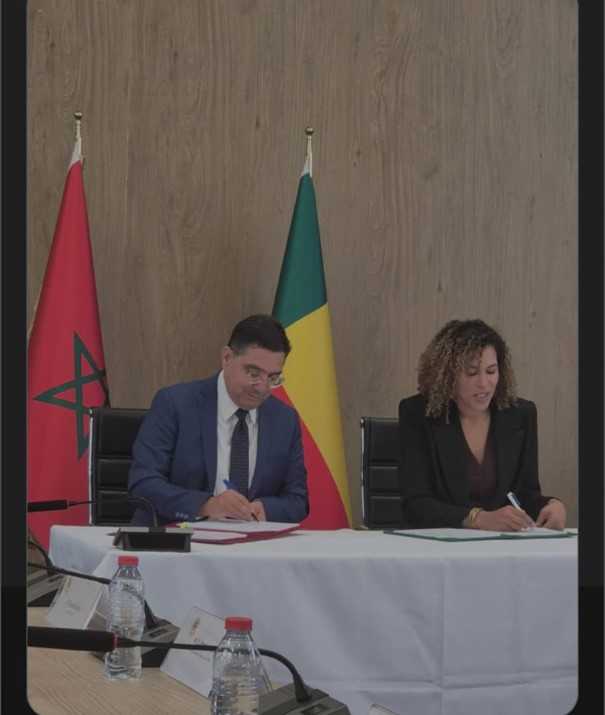
The seventh session of the Benin-Morocco Joint Cooperation Commission concluded in Cotonou on July 21, 2026, marking a significant milestone in the evolving relationship between the two nations. Hosted at the Ministry of Economy and Finance, this high-level meeting brought together top officials to chart the future of bilateral collaboration across multiple priority sectors.
Strategic vision drives deeper collaboration
The commission session was co-chaired by Corinne Amori Brunet, Benin’s Minister of Foreign Affairs in charge of Afrodescendant Integration, and Nasser Bourita, Morocco’s Minister of Foreign Affairs, African Cooperation, and Moroccans Residing Abroad. Both leaders emphasized the importance of aligning bilateral efforts with national development priorities to maximize impact.
Morocco’s foreign minister highlighted Benin’s democratic maturity and economic progress, positioning the country as an emerging leader in the region. He underscored the mutual respect and friendship between the two nations while calling for greater private sector involvement to boost economic exchanges, attract investments, and support sustainable development initiatives. Bourita also reaffirmed Morocco’s unwavering solidarity with Benin in combating terrorism and promoting a tolerant interpretation of Islam.
Benin’s Minister of Economy and Finance, Hugues Oscar Lokossou, stressed the need to elevate cooperation beyond current levels, particularly in sectors where both nations’ expertise could converge. He noted that while trade flows remain below potential, there is ample opportunity for collaboration in agriculture, industry, tourism, digital technology, and more. Lokossou advocated for creating a shared prosperity zone by pooling resources and expertise to unlock new growth opportunities.
Corinne Amori Brunet echoed these sentiments, outlining a comprehensive roadmap for strengthening cooperation across 14 key sectors, including trade, industry, tourism, health, education, security, and cultural exchange. She emphasized the importance of institutional partnerships to foster long-term development and regional stability.
A new chapter in bilateral relations: 14 groundbreaking agreements
At the conclusion of the session, Benin and Morocco formally signed 14 landmark cooperation agreements, each designed to deepen collaboration in critical areas:
- Customs assistance: An agreement on mutual administrative assistance in customs matters to streamline trade processes.
- Higher education and innovation: A framework agreement to enhance cooperation in higher education, scientific research, and innovation.
- Judicial cooperation: Conventions on mutual legal assistance in criminal matters, extradition, and the transfer of sentenced persons.
- Justice sector development: An action plan to strengthen judicial systems and institutional capacity.
- Civil protection: A protocol outlining financial modalities for civil protection cooperation.
- Health security: An agreement on sanitary and phytosanitary measures to ensure food safety.
- Vocational training: A framework convention to boost vocational training and skill development.
- Academic exchanges: An agreement to facilitate scholarships, internships, and expert exchanges.
- Sports development: A memorandum of understanding to promote sports and athletic training.
- Tourism growth: A partnership convention to jointly promote and develop tourism.
- Environmental sustainability: A memorandum of understanding focused on environmental protection and sustainable development.
These agreements reflect the shared commitment of both nations to build a resilient, future-oriented partnership rooted in solidarity, shared prosperity, and sustainable development. By expanding cooperation into new sectors and strengthening institutional ties, Benin and Morocco are setting a benchmark for inter-African collaboration.
The outcomes of this session underscore the potential of Benin-Morocco relations to drive economic growth, enhance security, and foster cultural exchange across West Africa. As both countries continue to align their strategies with regional and continental priorities, this partnership is poised to become a model for other African nations seeking to harness the power of cooperation for collective progress.