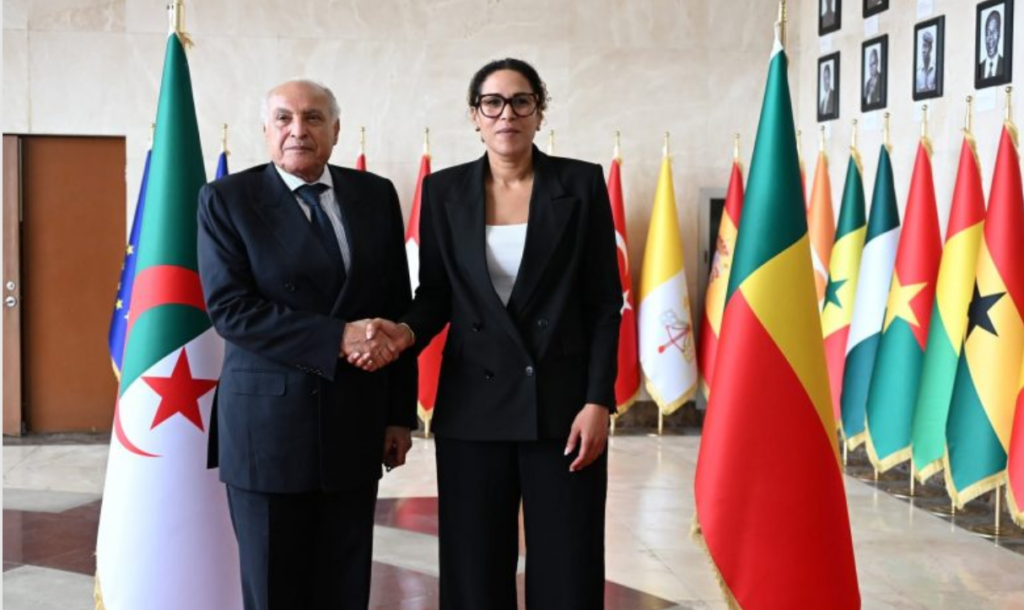
Washington has committed $250,000 to strengthen Benin’s fight against human trafficking, handing over a set of new instruments designed to sharpen case tracking, speed up victim identification and streamline the way survivors are supported. The tools were formally presented to the National Committee for the Fight against Trafficking in Persons (CNLTP) on 16 September 2026, with the US Embassy in Cotonou going public about the initiative on 2 October.
What the package actually contains
The funding is meant to give Beninese institutions more effective means of documenting trafficking cases, identifying victims and keeping a closer watch on each person’s journey through the system.
But the ambition goes beyond hardware. The real target is coordination — getting security forces, magistrates, social services, public administrations and specialist organisations to work from the same playbook.
Three instruments stand out:
- A harmonised information-gathering questionnaire
- A methodological guide
- A National Referral Mechanism (NRM)
Together, they are intended to push professionals towards shared methods for identifying, documenting and referring victims.
The UNODC connection
The design and technical rollout of these instruments was supported by the United Nations Office on Drugs and Crime (UNODC). The aim is to give Beninese institutions a more coherent framework for collecting and using information on trafficking cases.
The standardised questionnaire is expected to make it easier to gather data on victims and the circumstances of their exploitation. The methodological guide, for its part, lays out the procedures to follow so that the information collected is of better quality.
The National Referral Mechanism sits at the centre of the arrangement. It is meant to help professionals assess what a victim needs and route them quickly to the right services.
This approach is designed to prevent breaks in the care chain. A victim identified by security forces should, for example, be able to reach the relevant social or health services quickly, while also receiving support in the judicial process where necessary.
Why identification is the hardest part
Behind the administrative ambition lies a deeply human concern: not losing track of victims.
In trafficking cases, identification is often the decisive step. A person being exploited may not immediately see themselves as a victim, or may hesitate to speak out of fear of reprisals. Those responsible for receiving them therefore need methods that can detect trafficking situations and assess the needs of the person concerned.
Once identified, a victim may require several forms of assistance: protection, psychological support, medical care, social backing or legal aid.
Common tools are therefore expected to make this support faster and more structured.
Children and women remain the most exposed
The strengthened system arrives in a context where certain groups remain particularly vulnerable to trafficking. Children and women are among those most exposed to different forms of exploitation.
Economic hardship, barriers to education, fragile family situations and promises of employment can all become factors of vulnerability. Traffickers can exploit these weaknesses to lure victims and then subject them to various forms of exploitation.
The cross-border dimension of the phenomenon makes the authorities’ work even harder. Victims can be moved from one region to another, or even from one country to another, making effective cooperation between services indispensable.
In this context, having reliable and comparable data becomes essential to better understand the mechanics of trafficking and adapt public policy.
Data as a policy compass
Beyond individual care, the new tools are supposed to give Beninese institutions a clearer picture of the phenomenon.
Properly collected data can help establish how many victims have been identified, their profiles, the forms of exploitation encountered and how judicial proceedings are evolving. It can also highlight the areas or population groups that need more prevention work.
The stakes are therefore twofold: improving the response given to each victim and strengthening the state’s ability to design anti-trafficking policies based on reliable information.
This process had already reached an important milestone in May 2026, with a workshop dedicated to presenting, enriching and technically validating the methodological guide on collecting trafficking data.
From ceremony to street level
If the US funding marks a significant step, its effectiveness will now depend on how the new instruments are used on the ground.
Training will be decisive. Police officers, magistrates, social workers and other concerned actors will need to be familiar enough with the new tools for them to become genuine daily working instruments.
Coordination between institutions will also be a major issue. Information gathered must be able to circulate between the services concerned, while guaranteeing confidentiality and victim protection.
The real test of the system will begin after the official handover ceremony. It will be necessary to measure how effectively the tools are used, their impact on the time taken to provide care and their ability to improve case tracking.
An investment in protection — and a test of political will
With this $250,000 contribution, the United States is reaffirming its willingness to accompany Benin in the fight against human trafficking. The American support, reinforced by UNODC’s technical expertise, aims to consolidate existing national mechanisms rather than replace them.
For Benin, the challenge now is to turn these tools into lasting practices. Their success will depend on how fully institutions take them on board and on the ability of the different actors to work in a coordinated way.
Because behind every trafficking case is a person whose protection cannot wait. By making it possible to better identify, document, refer and follow up with victims, the new system is meant to strengthen a care chain whose final objective remains unchanged: ensuring that no victim is abandoned between the different links of the institutional response.