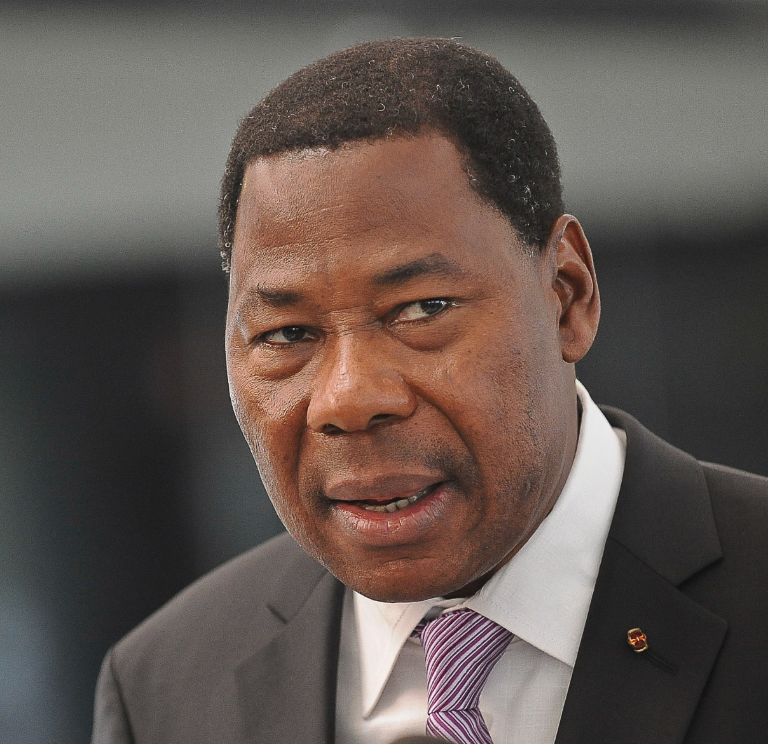
The political landscape of Bénin is poised for a historic shift as former President Thomas Boni Yayi announces his unexpected decision to take a seat in the upcoming Senate, set to be inaugurated in Porto-Novo on July 30, 2026. Against all odds, Yayi’s move marks a significant departure from his earlier stance, where he vehemently opposed the creation of this bicameral institution during the 2025 constitutional reforms.
In a statement released on his official Meta page, Yayi framed his decision as a constitutional obligation rather than a personal ambition. « My intention is to exercise my right as a senator to serve the ideals of our shared nation. This is not a request; it is the Constitution, » he emphasized. Once a vocal critic of the reform, Yayi now views the Senate as a pivotal platform for fostering national dialogue, peace, and republican cohesion. His participation is intended to transform the institution from a point of political contention into a constructive space for consensus-building.
From opposition to collaboration: Yayi’s evolving perspective
The Senate’s creation stems from the 2025 constitutional revision, championed by President Patrice Talon as part of a broader effort to modernize Bénin’s governance. The new bicameral system aims to introduce stability, enhance legislative scrutiny, and ensure long-term viability of laws by incorporating diverse voices—including local communities and traditional leadership. Notably, the reform also grants former heads of state an automatic seat, leveraging their experience to guide the nation’s strategic direction.
Yayi’s reversal underscores a broader commitment to institutional resilience in West Africa, where security and economic challenges demand robust governance. By embracing the Senate, he aligns with Talon’s vision of a deliberative chamber that mitigates political tensions before they escalate. Analysts interpret Yayi’s move as a symbolic gesture to the political class and youth, reinforcing the primacy of national institutions over partisan divides.
The Senate’s role in Bénin’s democratic evolution
The upcoming Senate is designed to act as a stabilizing force, addressing critical issues such as counterterrorism in the north and infrastructure projects through bipartisan cooperation. Talon’s reforms—spanning economic modernization, border security, and international relations—culminate in this institutional milestone. Observers highlight the coherence of his policies, which prioritize long-term stability and democratic maturity in a region often plagued by instability.
As July 30 approaches, anticipation grows around the Senate’s inauguration. Yayi’s presence in the chamber will symbolize the Bénin model: a nation that transforms institutional reforms into opportunities for unity. His participation, once unthinkable, now signals a new chapter where dialogue and shared purpose eclipse political rivalries. Bénin is stepping forward, united and resolute, toward a future defined by collective progress.