Revelations from Operation ‘Magnan’ and the growing debate
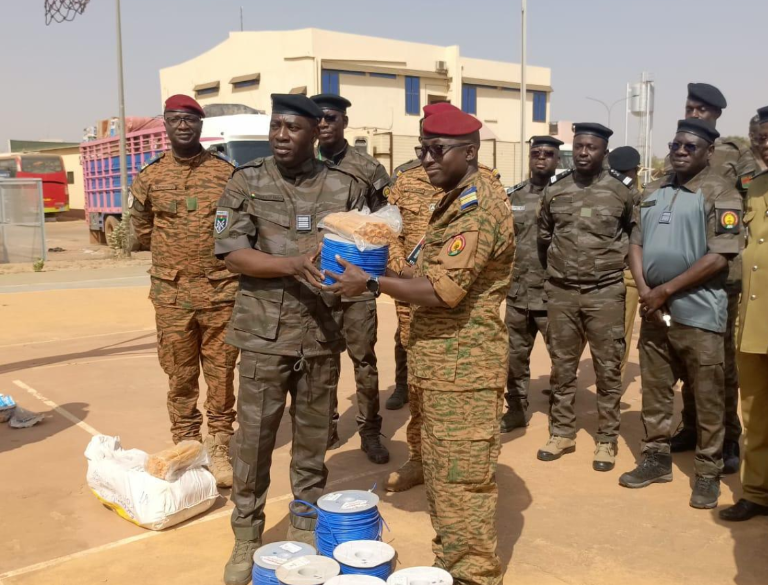
The General Directorate of Customs (DGD) of Burkina Faso has just delivered a sobering assessment of its three-month anti-contraband Operation ‘Magnan’, revealing a staggering haul of illicit goods worth over 10 billion West African CFA francs. The findings, presented in Ouagadougou on October 20, 2026, have ignited a national debate over public health risks, economic stability, and the evolving tactics of criminal networks operating in the shadows of West Africa’s informal trade corridors.
Breaking down the illegal cargo: medicines lead the charge
The scale of the seizures underscores the sophistication and danger of modern contraband networks. At the forefront of the haul are prescription medications, particularly the opioid Tapentadol, with over 4.2 million tablets intercepted—alone accounting for a market value exceeding 8 billion CFA francs. This staggering figure dwarfs the next largest pharmaceutical seizure: 11 tons of counterfeit medicines, valued at approximately 1.1 billion CFA francs. Public health experts warn that unregulated pharmaceuticals often contain improper dosages or harmful substances, posing severe risks to consumers who unknowingly purchase these dangerous products.
Beyond pharmaceuticals: a spectrum of illicit goods
The operation’s scope extended far beyond medicines, exposing a disturbing variety of prohibited items. Customs officials seized significant quantities of narcotics, including cocaine and cannabis, alongside industrial chemicals like cyanide and mercury—substances that could fuel both illegal mining operations and broader criminal enterprises. Explosives and related accessories were also recovered, highlighting the dual threats of accidental detonation and weapons proliferation. Agricultural products, including 500 tons of unregulated fertilizers, 490 tons of rice, and thousands of liters of edible oil, further underscore how contraband permeates everyday markets, from food staples to farming inputs.
The ripple effects: economic strain and public distrust
The fallout from these seizures extends well beyond immediate health and safety concerns. Economically, the influx of illicit goods creates an uneven playing field for legitimate businesses forced to compete with untaxed, substandard products. Revenue losses from unpaid duties and taxes weaken government budgets, limiting funds available for infrastructure, education, and healthcare. In agriculture, the use of counterfeit fertilizers or banned pesticides can devastate crop yields, degrade soil quality, and introduce long-term ecological damage. For consumers, the erosion of trust in market systems becomes a silent crisis, as quality checks are bypassed in favor of cheaper, riskier alternatives.
What’s next? Strengthening the fight against contraband
While the operation’s results send a strong message to traffickers, experts emphasize that sustained success requires more than large-scale seizures. To dismantle these networks permanently, authorities must focus on disrupting supply chains, identifying key players, and enforcing legal consequences. Collaboration between customs, security forces, and regulatory agencies—including health and agricultural bodies—will be critical to closing loopholes and preventing the rapid reconstitution of smuggling rings. The question now on everyone’s mind: Can these short-term wins translate into a long-term strategy capable of protecting Burkina Faso’s economy and its people?
The human cost: who pays the price?
Behind the statistics lie real consequences. Unregulated pharmaceuticals may lead to adverse drug reactions, counterfeit fertilizers can destroy livelihoods, and explosives pose existential threats to communities near illegal storage sites. Public outrage is mounting, with calls for stricter regulations, harsher penalties, and greater transparency in trade oversight. Yet, the road ahead is fraught with challenges, from technological gaps in tracking illicit goods to the adaptability of smuggling networks that exploit porous borders and weak enforcement in neighboring regions.
A call to action: balancing enforcement and engagement
As the fallout from Operation ‘Magnan’ continues to unfold, one thing is clear: Burkina Faso stands at a crossroads. The government must now decide whether to double down on punitive measures or pivot toward a more holistic approach—one that combines rigorous enforcement with community engagement, economic incentives for legal trade, and regional cooperation. The stakes are high, but the potential rewards—safer markets, healthier citizens, and a thriving formal economy—could redefine the country’s trajectory in the years to come.