For 57 consecutive days, President Paul Biya has remained out of the public eye, sparking deep unease across Cameroon. Amid this prolonged absence, a series of controversial military appointments has intensified concerns over a potential ethnic power grab and institutional vacuum.
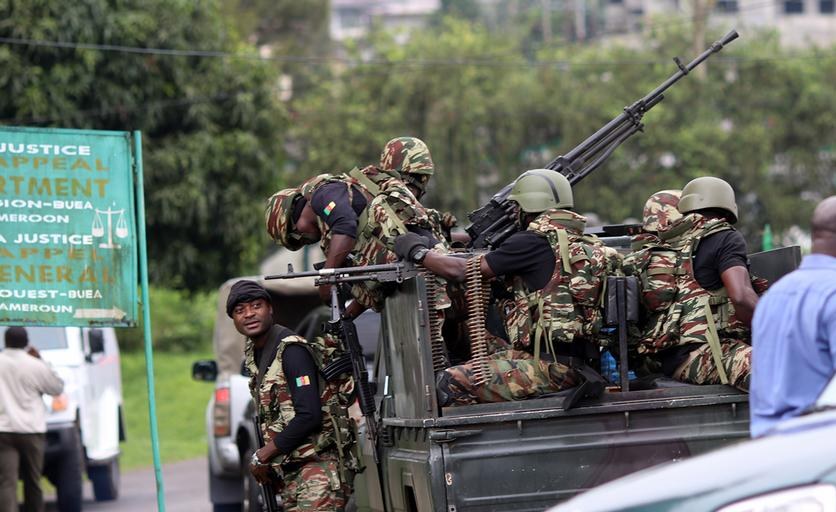
Since departing Yaoundé on June 7, 2026, ostensibly for a “private stay in Europe,” the 93-year-old head of state has not been seen in public. His extended absence has coincided with sweeping changes in the Cameroonian armed forces, including the appointment of five new brigadier generals, a new commander of the Presidential Guard, and a new Chief of Staff of the armed forces.
Unprecedented military reshuffle amid political uncertainty
These moves are far from routine. Critics argue that the restructuring is not just a bureaucratic adjustment but a deliberate effort to consolidate power within certain ethnic factions—a dangerous precedent that echoes the tragic trajectory of nations like Rwanda in 1994. The question now is not whether Cameroon is teetering on the edge, but how far it might fall.
“This isn’t just a reshuffle. It’s a militarisation of succession politics,” warned a retired colonel who requested anonymity. “No one outside the presidency can authorize such appointments—especially when the president is incommunicado.”
Geneva’s silence and the shadow over Biya’s health
The official narrative claims Biya is in good health and set to return soon. Yet, with each passing day, skepticism grows. Rumors of a knee surgery in early July have given way to speculation about post-surgical complications. Whatever the truth, the lack of transparency has only deepened public distrust.
“Why manipulate the electoral process only to vanish for weeks abroad? If there’s a health issue, the people of Cameroon deserve clarity,” declared Roger Justin Noah, Secretary-General of the Movement for the Renaissance of Cameroon (MRC).
Military appointments: a calculated power shift?
On August 3, 2026, a presidential decree (No. 2026/265) appointed General Beko’o Abondo Raymond Jean Charles as head of the Presidential Guard—a critical role overseeing the safety of the presidency. This was not an isolated move. The same decree reshuffled the military leadership, including:
- Five new brigadier generals
- A new Chief of Staff, General Ebaka Hippolyte
- Six new regional military commanders across four of Cameroon’s five operational zones
“These appointments reek of a preemptive power grab,” stated a political analyst. “They’re happening without the president’s public presence, and that’s deeply troubling.”
A constitutional deadlock and rising factionalism
The absence of a vice-president—despite a constitutional amendment in April 2026 reintroducing the position—has left Cameroon without a clear succession mechanism. Meanwhile, two dominant factions within the regime are locked in a silent struggle:
- Franck Biya, the president’s eldest son, seen as the guarantor of the current system’s continuity
- The faction led by Chantal Biya, the First Lady, and Ferdinand Ngoh Ngoh, the powerful Secretary-General of the Presidency
“The April 2026 constitutional revision was supposed to stabilize succession. Instead, it created a vacuum,” noted a constitutional law expert. “Now, every move in the shadows risks escalating into a full-blown crisis.”
The specter of ethnic division
Analysts warn that the militarisation of state institutions could deepen ethnic tensions. The fear? That one group could come to “own” the country—a slow poison eroding the national compact. “We are witnessing the tribalisation and militarisation of succession,” wrote filmmaker and commentator Jean-Pierre Bekolo. “No one knows where this ends.”
Opposition demands accountability
The MRC, led by Maurice Kamto, has taken legal action, urging the Constitutional Council to declare a power vacuum. Jean-Michel Nintcheu, an opposition MP, stated bluntly: “The Council must recognize that the presidency is vacant.”
Yet, without a vice-president, the constitutional process to trigger succession remains paralyzed. Cameroon is trapped in institutional limbo.
Why act now? The government’s silence speaks volumes
Critics question the timing of these appointments. If Biya is truly returning soon, as officials claim, why not wait for his return to make such consequential decisions? “If the president is coming back, why destabilise the armed forces in his absence?” asked Bekolo.
Rumors of forged decrees have further fueled suspicion. While the government denies any wrongdoing, doubts persist. “Once doubt takes root, it festers,” remarked a political observer.
Can disaster still be averted?
Though the situation is dire, experts suggest steps to de-escalate tensions:
- Transparency: Publicly disclose Biya’s health status and return timeline
- National dialogue: Foster inclusive talks to address communal grievances
- Immediate vice-presidential appointment: Restore constitutional order and public trust
The reckoning ahead
“History remembers not only actions but silences,” wrote Bekolo. After 43 years of Biya’s rule, Cameroon stands at a crossroads. The path of militarised factionalism, ethnic division, and shadow governance leads only to ruin. The people have tolerated much—but they will not forgive those who gamble with their future.
“Stop playing with fire,” warned Bekolo. “Tomorrow, it will be too late to say, ‘We didn’t know.’”