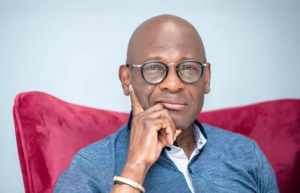
Is Senegal’s current electoral system capable of delivering a National Assembly that genuinely mirrors the votes cast by its citizens? That is the pressing question at the heart of a new contribution by Khalidou dit Mbaye Sokoma, president of the Mouvement Patriotique pour un Développement Durable (MPPD) / AND DEFAR SUNU REEW. In a detailed proposal, he argues that the country’s hybrid voting mechanisms fall short of true democratic representation and calls for a far-reaching national conversation on how lawmakers are elected.
The limits of the current hybrid system
Senegal’s legislative elections currently blend a single-round majority list system with proportional representation. Of the 165 seats in the National Assembly, 112 are filled through the majority vote and 53 through proportional representation on a national list. At the municipal level, the mixed system allocates 45% of seats by majority and 55% proportionally. For Khalidou dit Mbaye Sokoma, this arrangement has shown its limits and deserves a fresh examination so that the composition of elected bodies more accurately reflects the ballots cast.
A five-point plan for a more representative democracy
1. Full proportional representation with strong local roots
The flagship proposal is the introduction of integral proportional representation for both legislative and local elections, while preserving a genuine territorial anchor. The goal is not merely to distribute seats according to parties’ electoral weight, but to rebuild the link between elected officials and their constituents. To that end, candidacies should open beyond party machines to include citizens’ movements, independent candidates and, under strict conditions, civil society and qualified state services. Nominations would thus take root in neighbourhoods and villages, rewarding local presence and popular trust.
2. Redefining the MP’s mandate: from party to territory
The relationship between citizen, territory and representative must be rethought. Khalidou dit Mbaye Sokoma insists on the need for MPs who are clearly identifiable by those they represent and who are required to report back regularly. Political parties would keep a supporting role but would no longer hold a monopoly on representation: the figure of the “party’s MP” would give way to that of the “MP chosen by citizens and carried by a territory”.
3. Stabilising and clarifying the local vote
Applied to municipal and departmental elections, stronger proportional representation would better reflect the diversity of political sensibilities within a commune. However, this openness must go hand in hand with stable local executives. Khalidou dit Mbaye Sokoma suggests introducing a second round when no list reaches an absolute majority (50%), allowing a clear choice between competing forces, subject to a prior study of the legal and financial implications.
4. A territorialised electoral administration
To complete the framework, the local organisation of elections could rely more on prefects and sub-prefects within their respective jurisdictions, under the control of the national body and in strict respect of impartiality and equality. Such territorialisation would foster dialogue with grassroots communities.
5. The special case of Kaolack: towards a new local organisation
For Kaolack, a city spanning nearly 6,959 hectares (69.6 km²), structured into 45 neighbourhoods and home to a considerable population (1,336,720 inhabitants according to the 2023 RGPH-5), the author advocates a tailored approach. Given its urban growth and economic role, he recommends studying the creation of three or four district communes or local municipal entities. Such a change would rest on rigorous criteria: demography, infrastructure, living areas, tax resources and administrative capacity.
The stakes for Senegal’s democratic future
Ultimately, the quality of a democracy is measured by how clearly citizens can see their vote translated into seats and identify their spokespersons. Khalidou dit Mbaye Sokoma is therefore calling for a broad, pluralistic and well-documented national debate to give Senegal a system in which every citizen, every neighbourhood and every village truly counts in choosing the nation’s representatives.