Congo political crisis as tshisekedi faces opposition pressure

In the Democratic Republic of the Congo, President Félix Tshisekedi has opted to send the referendum law back to Parliament for a second review, just as the ultimatum issued by the opposition coalition C64 approaches its expiration on August 15. The move comes despite the Constitutional Court’s recent validation of the law, albeit with reservations.
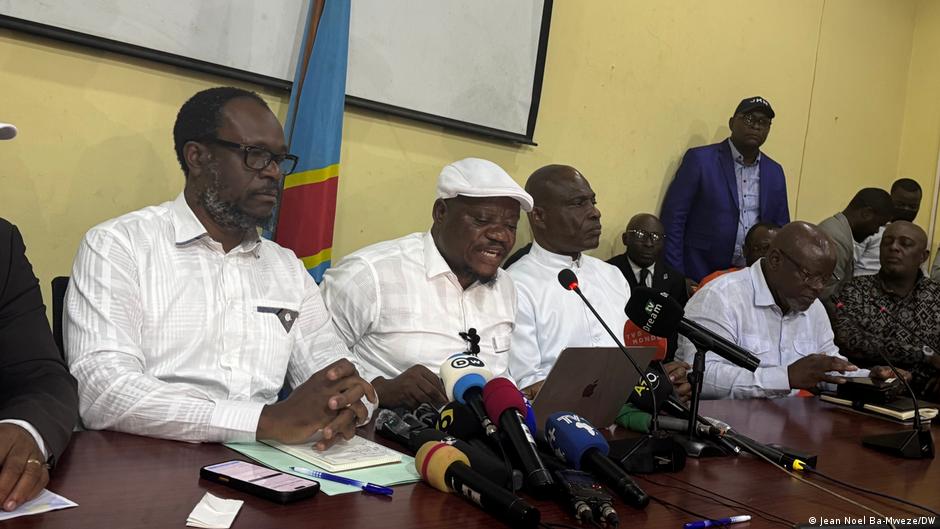
The C64 coalition, alongside over 60 civil society organizations, has demanded that the president abandon his constitutional reform plans by August 15 and reject the referendum law outright. They are also calling for an inclusive national dialogue, though no date has been set for such discussions as the deadline looms.
Tshisekedi’s tactical retreat under mounting pressure
Many had assumed the referendum law was already in effect, given the Constitution’s 15-day window for presidential promulgation under Article 140. Instead, Tshisekedi chose to return the text to Parliament, seeking further deliberation based on the Constitutional Court’s feedback.
Professor Bob Kabamba, a political scientist at the University of Liège, Belgium, interprets this as a tactical retreat by Tshisekedi. However, he cautions that this does not signal an end to the president’s efforts to secure a path beyond his second term, which concludes in 2028.
International and domestic pressures shape the decision
“It’s important to recognize the significant pressure Tshisekedi faced—not only from the opposition but also from regional actors,” Kabamba explains. “These combined pressures, along with internal consultations, forced the president to backtrack by requesting a second review of the law. It’s a retreat, but one that doesn’t rule out future attempts to extend his rule beyond 2028.”
C64 vows escalated action after August 15
The C64 coalition has acknowledged Tshisekedi’s decision to return the law to Parliament but insists the pressure will not ease. With the ultimatum set to expire at midnight on August 15, the coalition is preparing a series of decisive measures to hold the government accountable.
“When the deadline passes, we will confirm that nothing has been done,” warns Franklin Tshiamala, Secretary-General of the Leadership for Governance and Development (LGD) under former Prime Minister Augustin Matata Ponyo. “We will announce targeted operations through our C64 laboratory to compel this regime to reverse its course—one that has already stripped us of our freedoms and now threatens our national sovereignty.”
The standoff intensifies
From the government’s perspective, the referendum process remains a legitimate political and institutional initiative. The C64 ultimatum, officials argue, is an illegitimate demand that cannot dictate the president’s agenda.
Adolphe Amisi Makutano, a senior member of the Union for Democracy and Social Progress (UDPS), Tshisekedi’s party, dismisses the ultimatum as irrelevant. “This ultimatum belongs to C64—it was likely crafted to appease their backers,” he states. “The Republic continues to function normally.”
The August 15 deadline could mark the beginning of a new chapter in Congo’s political saga, with both sides digging in for a prolonged confrontation.