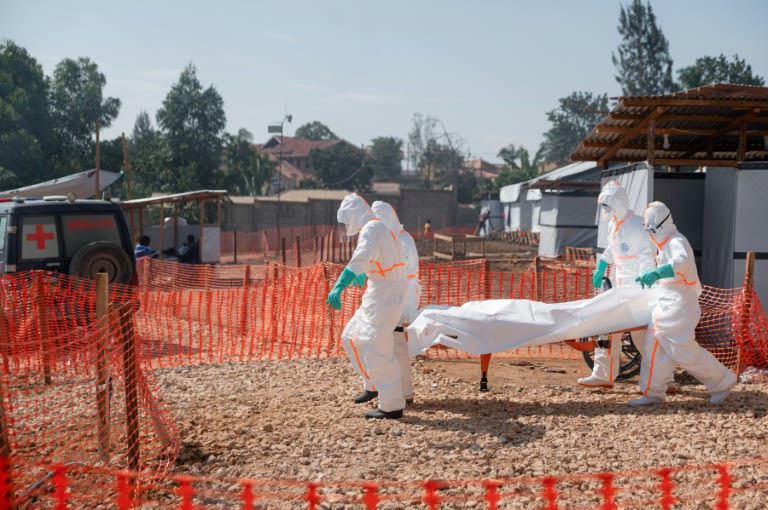
DRC’s Ebola outbreak expands to sixth province amid rising concerns
The Democratic Republic of Congo (DRC) is grappling with its most devastating Ebola outbreak yet, now affecting a sixth province in the northern region and threatening neighboring South Sudan. Health authorities declared the 17th Ebola epidemic on May 15, weeks behind schedule, marking the largest outbreak in the country’s history.
The previous deadliest outbreak in the DRC claimed nearly 2,300 lives out of 3,500 reported cases between 2018 and 2020. In stark contrast, the current epidemic has already resulted in over 2,128 deaths from 4,566 confirmed cases within just three months of its declaration, according to the latest government figures.
Until now, five provinces had been hit: Ituri, North Kivu, South Kivu, Haut-Uélé, and Tshopo. However, the disease has now reached Bas-Uélé, a northern province bordering the Central African Republic that had previously been spared. The Africa Centres for Disease Control and Prevention (Africa CDC) confirmed a fatality in Bas-Uélé, with the victim having traveled from Haut-Uélé, where cases had already been identified.
Unprecedented spread raises alarm
The Africa CDC has warned that the outbreak is spreading at an unprecedented pace worldwide. Within three months, the number of cases and deaths in the DRC has already surpassed the totals recorded during the first three months of the 2014 West Africa Ebola outbreak—the deadliest in history.
The World Health Organization (WHO) has expressed cautious optimism, stating it aims to reverse the upward trend of the epidemic within three months.
High-risk corridors fuel cross-border fears
International organizations are sounding the alarm over the potential spread of Ebola into South Sudan. Mercy Corps highlighted that confirmed cases are now just 35 kilometers from the South Sudanese border, along high-risk travel corridors.
The response efforts face significant challenges, including overwhelmed health services, inadequate access to clean water and sanitation, waning public trust, and ongoing insecurity that obstructs community access. North Kivu and South Kivu are particularly affected, divided by active conflict zones between the DRC military and the M23 rebel group, supported by Rwanda, which controls vast territories in the region.
South Kivu declares end of outbreak
Despite the grim outlook, authorities announced the end of the Ebola outbreak in South Kivu on Monday after no new cases were reported for over 42 days.
A suspected Ebola death was reported on a vessel traveling the Congo River toward Kinshasa in early August, but tests confirmed no further cases among the passengers, who were allowed to disembark near the capital last Friday.
Ebola, transmitted through bodily fluids, causes severe hemorrhagic fever and has killed over 15,000 people across Africa over the past five decades.
Related posts
Moussa Kaka’s disappearance in Niger: one month on, outrage grows and questions mount
More than a month has passed since Moussa Kaka, a towering figure in Niger’s journalism and...
Mali’s mining standoff breaks: Barrick Gold’s Loulo-Gounkoto deal ignites corruption firestorm
The sudden cancellation of the strike notice at the Loulo-Gounkoto gold complex marks a decisive turning...
Niger’s breaking point: lawyer Lirwana’s jailing ignites a new era of resistance
One courtroom decision in Niamey has become the moment everything changed. With the imprisonment of Maître...