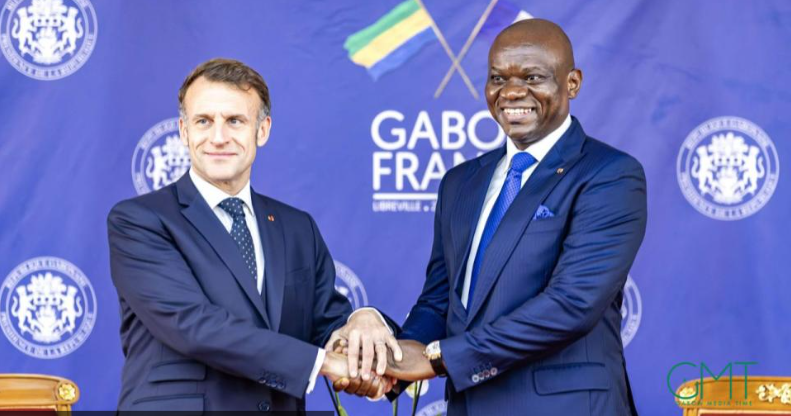
For three intensive days, Gabon’s transitional leader, General Brice Clotaire Oligui Nguema, conducted a landmark state visit to France. The agenda was packed with high-stakes discussions, centered on two transformative pillars: reshaping the military footprint of the Camp de Gaulle base and accelerating Gabon’s manganese industry through local processing. Far from embracing abrupt confrontation or unconditional submission, Libreville is steering a bold yet pragmatic course—one that asserts sovereignty while securing strategic cooperation.
A new chapter for Camp de Gaulle: Balancing autonomy with partnership
The Camp de Gaulle, long a symbol of French military presence in Central Africa, now stands at the heart of a strategic recalibration. Under France’s broader military redeployment across West and Central Africa, troop levels have already been significantly reduced. Yet Gabon is not pursuing an abrupt expulsion—rather, it is negotiating a phased transformation of the base.
Libreville’s vision is clear: reposition the facility as a joint training hub or scale down France’s role to essential technical cooperation and counter-piracy support in the Gulf of Guinea. This approach allows Gabon to restore national pride and operational control without severing critical security arrangements. For Paris, the challenge is to adapt its military posture in the region while maintaining influence with a key African partner—especially after recent setbacks elsewhere on the continent.
From raw export to local transformation: Gabon takes charge of its manganese
Economic sovereignty is another cornerstone of the discussions. As the world’s second-largest manganese producer, Gabon has long exported the mineral in its raw form. That model is now over. During meetings in Paris, General Oligui Nguema delivered a clear message to French industrialists and Eramet’s local subsidiary, Comilog: the future lies in onshore processing and value-added production.
Gabon is demanding a fairer distribution of profits, the creation of skilled jobs for young Gabonese workers, and substantial financial and technical support to build high-value processing plants. By positioning itself at the heart of the global energy transition—manganese is vital in electric vehicle batteries—the country aims to capture greater economic benefits and diversify its industrial base.
A pragmatic path beyond populist posturing
This state visit underscores a distinctive diplomatic philosophy. While the juntas in Bamako, Niamey, and Ouagadougou have embraced public ruptures with former colonial powers, Gabon is charting a different course. Instead of theatrical confrontations or anti-Western rhetoric, Libreville is practicing Realpolitik with poise and precision.
The Gabonese leader is negotiating firmly with France—without fanfare, without ultimatums—but also without compromise on core interests. At the same time, Gabon is diversifying its partnerships with China, Turkey, and India, strengthening its geopolitical autonomy without severing essential ties. This balanced approach challenges the oversimplified narrative that African self-assertion must come at the cost of diplomatic isolation or the rejection of Western engagement.
Domestic shadows amid global ambition
Yet behind the diplomatic finesse lies a domestic reality that raises concerns. Gabon’s digital landscape has seen repeated disruptions, with social media platforms and news sites periodically blocked under the pretext of maintaining public order and combating misinformation. These measures, though framed as safeguards, are increasingly seen as tools of information control by civil society and opposition voices.
In informal exchanges during the visit, French officials quietly emphasized the importance of upholding fundamental freedoms and freedom of expression. For General Oligui Nguema, the balancing act is delicate: projecting a modern, open image abroad while maintaining internal stability through tighter information controls. The credibility of his reformist agenda now hinges on whether Libreville can reconcile these two imperatives.
Toward a sustainable transition
As the visit concludes, the stakes are high for Gabon. By redefining its military cooperation and accelerating industrial transformation, Libreville is staking its claim as a sovereign, forward-thinking nation ready to shape its own future. Yet the true test lies ahead: translating diplomatic success into tangible progress on the ground.
The success of Gabon’s transition will depend not only on the outcomes of Elysée negotiations, but on its ability to foster an open society where media freedom and civic participation are respected. Only then can the Gabonese model—rooted in pragmatism, self-determination, and sustainable development—be fully realized.