Gabon’s 2027 AU summit bid: the hidden political chessboard behind Libreville’s campaign
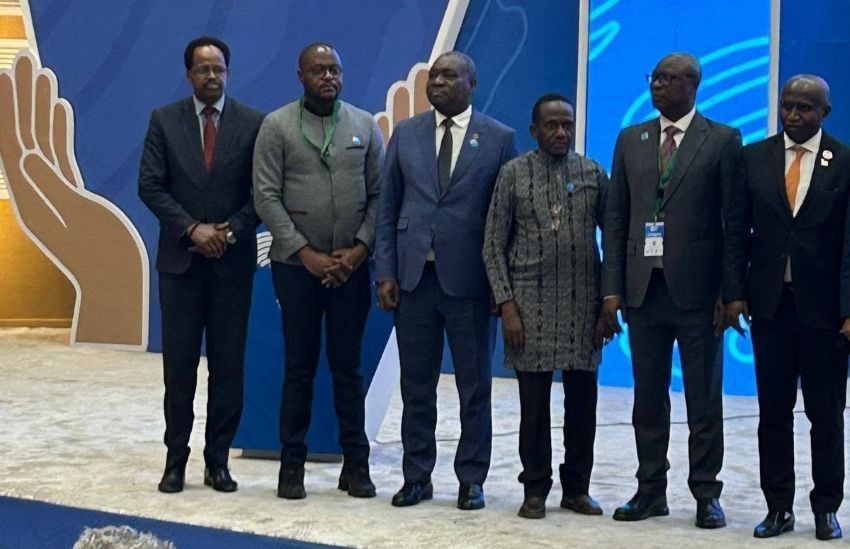
When the African Political Parties Summit convened in Addis Ababa last month, one storyline quietly emerged from the corridors of power: Gabon is not merely bidding to host the 2027 African Union summit—it is waging a multi-level campaign to reframe the narrative around its candidacy.
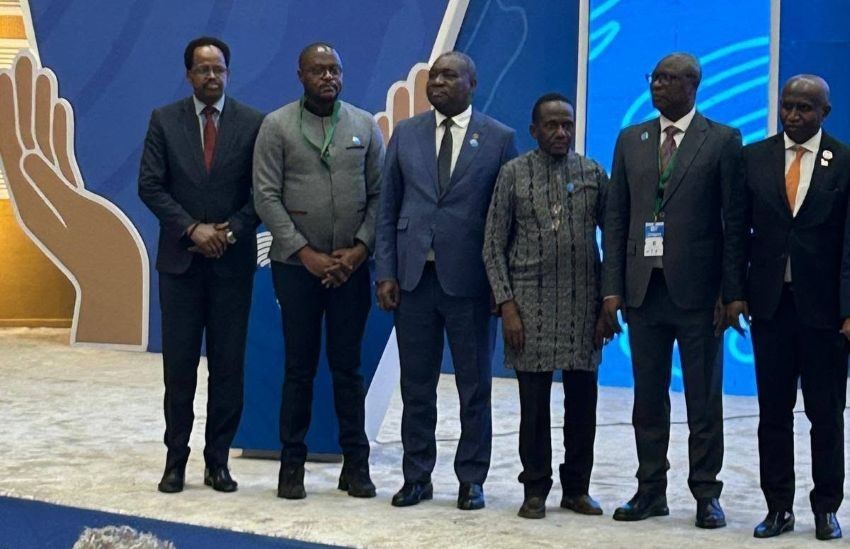
Stepping beyond the usual protocol rooms, Libreville has broadened its outreach to include African political networks, leveraging domestic party machinery to reinforce a geostrategic vision. Central to this strategy is Master Anges Kevin Nzigou, president of the Gabonese Democratic Socialist Front (FDS), who has taken the campaign to the heart of the AU ecosystem in Ethiopia this November.
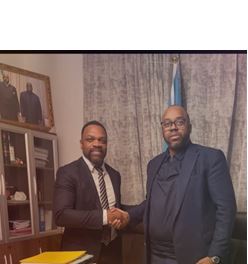
During back-to-back meetings on the sidelines of the African Political Parties Summit (APPS 2026), Nzigou placed the Gabonese pitch directly in front of key decision-makers. He secured an audience with Dr Fateh Boutbig, Chairperson of the Pan-African Parliament, and held strategic discussions with Lilly Stella Ngyema Ndong, Gabon’s Permanent Representative to the African Union. These encounters underscore a deliberate effort to weave presidential diplomacy into the continental fabric, transforming a national bid into a shared continental conversation.
From State Vision to Cross-Border Mobilisation
The groundwork for this push was laid long before the Addis visit. In January 2025, President Brice Clotaire Oligui Nguema first articulated Gabon’s ambition during a diplomatic briefing, framing it as a historic milestone: inviting Africa’s leaders to the very stage where Libreville once hosted the OAU in 1977—a half-century anniversary moment.
A year later, in Malabo, the president publicly proposed that his administration host the AU’s ninth coordination meeting in July 2027. That proposal was reiterated in May 2026 during the inauguration of the Omar Bongo Ondimba Congress Hall—an infrastructure explicitly designed, he noted, “to welcome the future of African unity.” By May 11, Gabon formally launched its bid in Nairobi. Within weeks, Nguema personally secured the Congolese endorsement of Félix Tshisekedi, cementing a crucial regional alliance.
Why 2027? A Summit of Memory and Modernity
The timing is no coincidence. Libreville’s bid leverages a dual narrative: heritage and ambition. Inviting African leaders to commemorate OAU’s 1977 summit in the same city would symbolise continuity and renewal, while the contemporaneous event would showcase Gabon’s modern institutional capacity—its newly built Congress Hall, robust diplomatic network, and logistical preparedness.
It is a gamble, but one calculated to shift perceptions from oil-dependent state to capable host capable of delivering continental outcomes. Success would elevate Gabon from the periphery of African summits to the centre of continental decision-making.
The Opposition’s Role in National Diplomacy
What makes this campaign unusual is the explicit involvement of opposition forces. The FDS has positioned itself as an active advocate of the government’s summit bid, framing it as a “national cause” that transcends partisan divides. Speaking alongside government officials at closed-door party leadership sessions during APPS 2026, FDS vice-presidents Jean-Pierre Antchoue and Deidre Nehemy Moukandza underscored their party’s commitment to inclusive diplomacy.
This stance reflects a strategic calculus: to expand the coalition of support beyond the ruling elite and present a united front in African lobbying circuits. By participating in the African Political Parties Initiative (APPI) and the Agenda 2040 forums, the FDS is asserting that Gabon’s diplomatic future cannot be left to the presidency alone—it must be co-constructed with all political stakeholders.
Yet the road is still fraught with uncertainty. Liberia and Zimbabwe have also put forward their candidacies, and the AU has urged all three nations to find consensus. While political advocacy can build momentum, institutional endorsements will ultimately decide which capital welcomes Africa’s heads of state in 2027.
The Real Test: Beyond Declarations to Delivery
For Nzigou and the FDS, the immediate task is to translate rhetorical support into tangible alliances. For the Gabonese state, the challenge is greater: demonstrating conclusively that it posseses the institutional cohesion, financial stability, and logistical capability to host a summit of such magnitude.
Libreville’s bid is no longer a ceremonial aspiration. It has become a practical test of Gabon’s readiness to play a larger role in shaping Africa’s political agenda. Whether this hidden chessboard of alliances leads to a checkmate in 2027 will depend on how well Gabon sustains both its political narrative and its operational readiness.