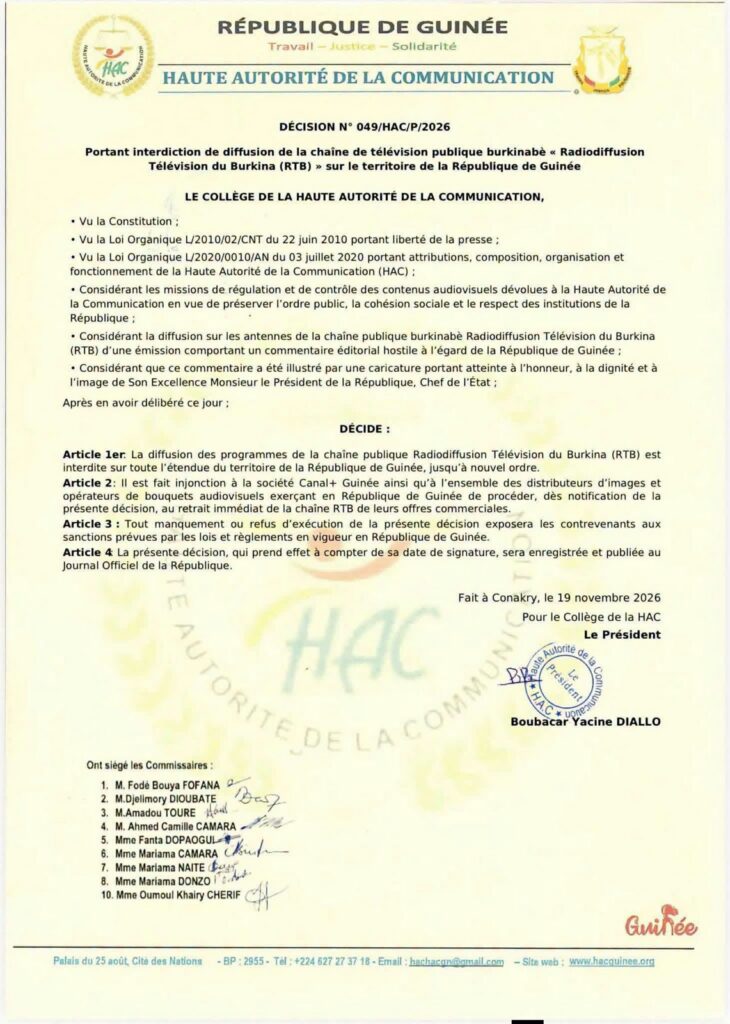
President Ibrahim Traoré’s bold rhetoric on economic sovereignty and national dignity now faces an inescapable reality: thousands of Burkinabè gold miners expelled from Guinea are returning home to a stark question how can they rebuild their economic futures in a country that has yet to offer them viable reintegration prospects?
From patriotic declarations to administrative silence
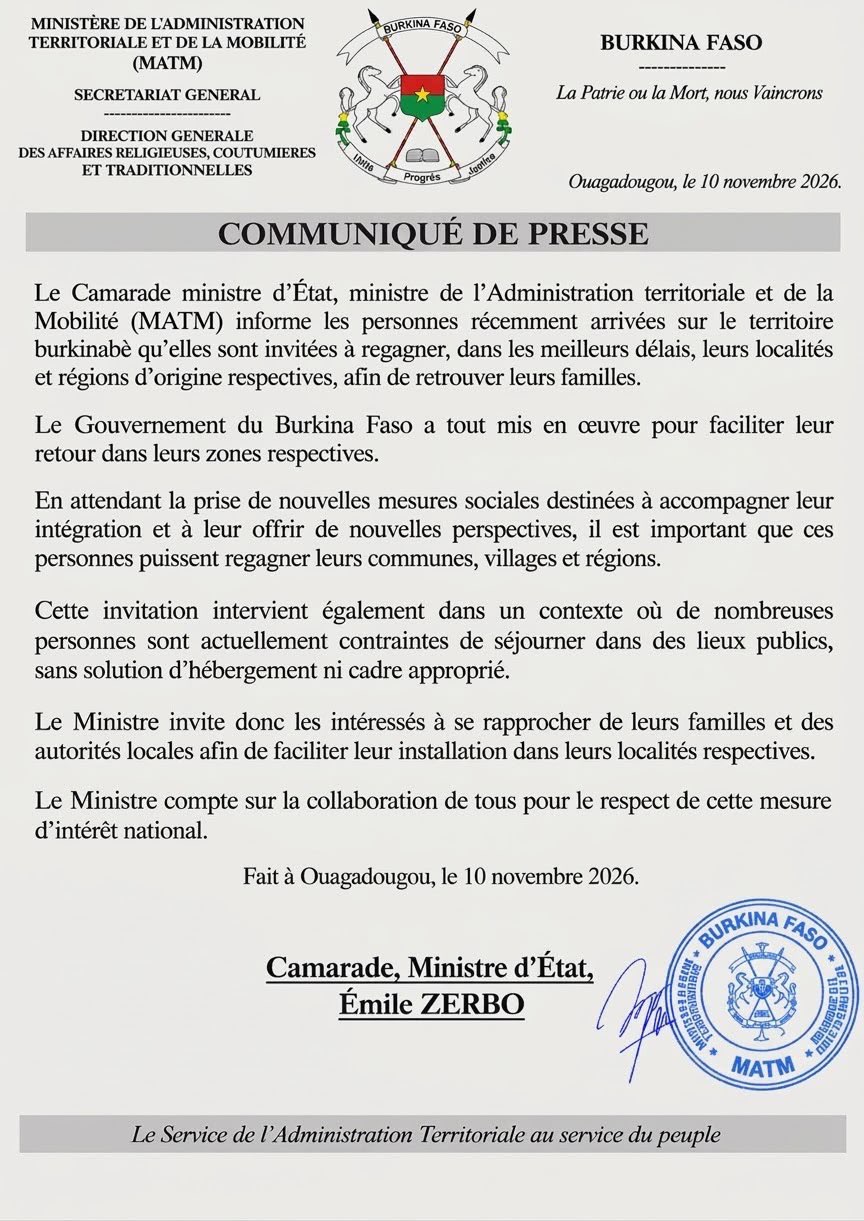
After a wave of public outrage over their expulsion and widespread calls for accountability, Burkinabè authorities have responded with what amounts to little more than an administrative directive: return to your villages, reunite with your families, and start over. This directive, delivered without structured economic reintegration programs, without clear timelines, without identifiable funding sources, and without measurable benchmarks, reflects an approach more concerned with managing immediate consequences than with implementing a genuine recovery strategy.
Return is not a solution: the harsh economic reality of forced repatriation
These young men and women did not leave Burkina Faso for adventure they sought survival. For many, artisanal gold mining was not a choice but their only means of supporting themselves and their families. Their expulsion from Guinea did not merely relocate them; it severed their income, shattered their livelihoods, and, in some cases, dismantled entire family economies built on mining revenues.
Upon returning, they face unemployment, financial ruin, and deepened vulnerability. A government response that reduces this crisis to a directive to “go home” fails to address the core issues: Do they have access to jobs? Do they possess the financial means to restart an activity? Who will support them in achieving sustainable economic stability?
Government officials cannot claim victory simply because returnees are back in their villages. An unemployed returnee is still a citizen without income. A young person sent home without capital remains economically exposed. A family stripped of its primary income source cannot be sustained by administrative recommendations alone.
The gap between mineral sovereignty and economic opportunity
Since assuming office, President Traoré has centered his political messaging on reclaiming natural resources, asserting economic sovereignty, and ensuring that Burkinabè citizens benefit from the wealth beneath their soil. Yet this narrative collides with a glaring contradiction: if Burkina Faso boasts of its vast mineral wealth and claims control over its gold potential, why are so many of its young people left in economic limbo after expulsion?
True sovereignty is not measured solely by industrial control of gold extraction, nationalization declarations, or condemnation of foreign interests. It is measured by the state’s capacity to transform national resources into jobs, income, and real economic opportunities for its people.
A nation may assert ownership of its gold reserves, but if its youth lack access to sufficiently remunerative livelihoods, the promise of sovereignty remains hollow. The real challenge lies in ensuring that national wealth translates into tangible improvements in the daily lives of citizens not just in official speeches, but in tangible outcomes.
Agriculture, livestock, and artisanal work: not magical solutions
Government officials have proposed several avenues for economic transition: agriculture, livestock, artisan crafts, vocational training, and the organization of miners into cooperatives. On paper, these ideas are sound. But in practice, they are far from universal solutions.
Switching from artisanal gold mining to farming, for instance, requires access to land, equipment, seeds, technical support, and viable markets. Livestock rearing demands initial capital, infrastructure, veterinary oversight, and commercial networks. Artisan craftsmanship requires tools, skills, and a receptive market. Simply advising thousands of young people to shift sectors is insufficient without equipping them with the material means to succeed.
A short-term vocational training without start-up funding does not guarantee job placement. A cooperative registered on paper but lacking equipment and operating capital is not a sustainable solution. Without answers to critical questions how many will be trained, what budget is allocated, how many receive accessible credit, which lands are allocated, what equipment is funded, and how progress will be monitored any reconversion policy risks remaining a hollow commitment rather than a working program.
Financing: the missing link in reintegration
Access to capital is the cornerstone of successful economic transition. Many expelled miners left behind income streams in Guinea. Some may have used personal savings to fund their return. Others return with minimal resources to restart an activity. In such conditions, asking them to begin anew without financial instruments in place is unrealistic.
An effective reinsertion program must include startup funds, microcredit mechanisms, public guarantees, and entrepreneurial support. It must also differentiate between those with agricultural experience and those with no background outside mining. Without such targeted approaches, the call to “find something else” risks becoming a mandate to fend for oneself.
Behind every returnee stands a family dependent on their income: children in school, parents to support, financial obligations to meet. The loss of livelihood can plunge entire households into deep socio-economic distress that goes far beyond the individual’s situation.
A mining policy must protect small operators too
President Traoré’s vision of mineral sovereignty must extend beyond macroeconomic strategies. It must address the fate of those who have built their lives in artisanal mining. If the government aims to organize the mining sector more effectively, it must forge a model that allows former miners to re-enter legal, income-generating work.
This requires the development of regulated artisanal mining sites, improved safety conditions, the establishment of functional cooperatives, and official gold-buying channels. Such a policy would not only safeguard livelihoods but also curb clandestine mining, reduce accident risks, formalize informal circuits, and mitigate environmental damage from unregulated extraction.
The irony would be stark: a country asserting control over its gold wealth yet failing to offer a viable economic role to thousands of citizens who have relied on artisanal mining as their lifeline.
Ibrahim Traoré’s moment of reckoning
The Guinean expulsion crisis has become a political and economic litmus test for Traoré’s government. It demands more than denunciation and diplomatic posturing. It requires proof of the state’s ability to deliver concrete solutions to the daily challenges faced by its people.
Condemning unfair expulsions and defending national dignity are necessary steps. But governance is also measured by what happens after citizens return home. How many returnees will secure meaningful employment in the coming months? How many can finance a fresh start? How many escape poverty through the announced programs?
As long as answers remain vague and promises unfulfilled, the pledges of reinsertion will linger as political rhetoric rather than manifest public policy.
Ultimately, the issue is not only that Burkinabè miners were expelled from Guinea. It is that upon return, they risk encountering the same economic hardships that drove them abroad in the first place.
If economic sovereignty is to be more than a slogan, Ibrahim Traoré must now demonstrate that this ambition yields real results: jobs, incomes, and dignified livelihoods not just in the halls of power, but in villages across the country. Governance is not measured by the strength of its denunciations abroad, but by the quality of life it secures at home.
Sovereignty is not declared. It is evidenced by the capacity of a state to offer work, income, and hope to its people. On this file, Ibrahim Traoré is called not to promise more, but to deliver results.
By Aïcha Abdou — Journalist