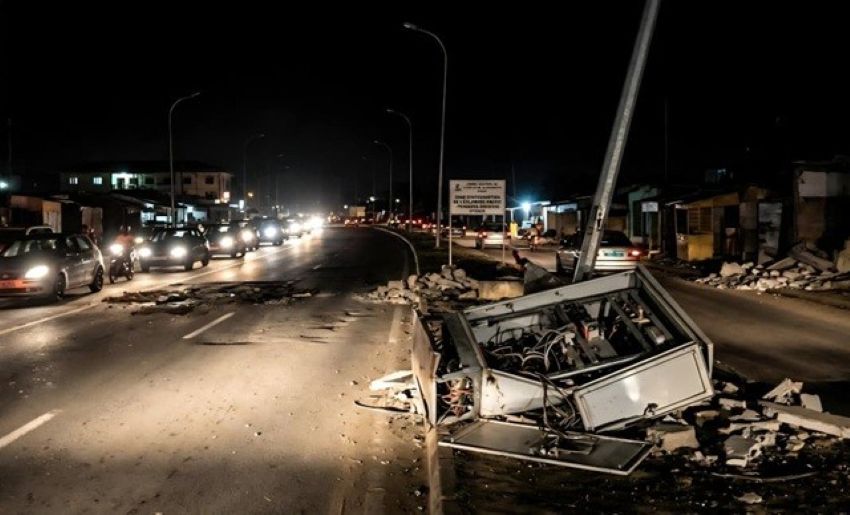
Libreville’s streetlight blackout: a cautionary tale of urban renewal gone wrong
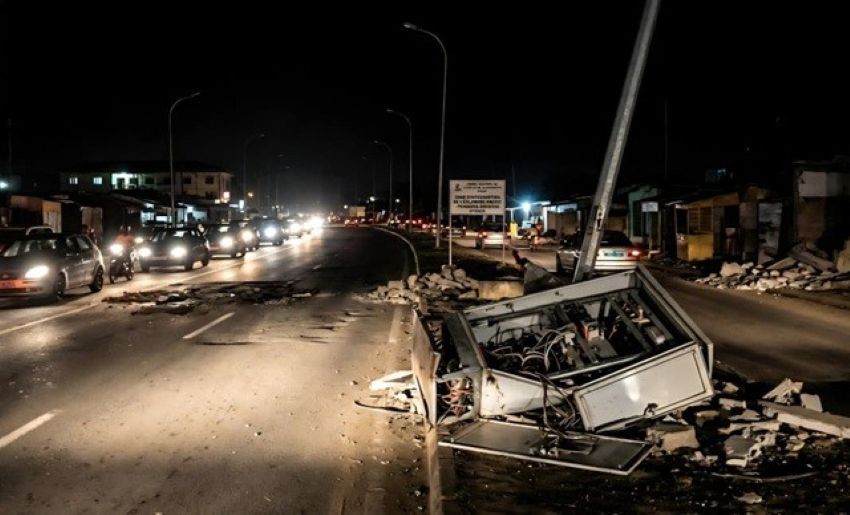
Libreville — November 12, 2026 — Urban renewal in Gabon’s capital is unfolding a high-cost lesson in what happens when infrastructure protection takes a backseat to demolition. The recent déguerpissements—forced evictions and clearance operations—have inadvertently plunged entire neighborhoods into darkness after a critical electrical cabinet supplying streetlights was destroyed. Behind this localized blackout lies a systemic failure in coordination that threatens both safety and public trust.
The incident came to light through an official communication from the National Council for Water and Electricity (CNEE) on November 10, which warned motorists and residents of complete blackouts along the Democracy Roundabout to Charbonnages Roundabout corridor. The outage resulted directly from the partial demolition of a primary electrical switching hub during clearance activities in the area. An urgent reassessment of electrical infrastructure protection protocols appears to be the only viable path forward.
Emergency repair teams from CNEE are working to restore power, conducting urgent surveys to identify critical replacement components and reconnect streetlight circuits. In the meantime, officials have urged the public to practice extreme caution—reducing vehicle speeds and using extra vigilance when walking—due to the heightened risks of accidents at night. The unlit corridor, once a well-lit transport spine of the capital, now epitomizes the collateral damage of poorly coordinated urban interventions.
The breakdown in governance: why did this happen?
This is not merely a technical oversight—it is a governance failure. The destruction of a vital public service node during demolition activities suggests a fundamental breakdown in inter-agency coordination. No demolition should proceed without a prior joint survey involving urban planning authorities, utility managers, telecommunications providers, and local governance structures. Essential public assets—especially those serving safety and mobility—must be mapped, protected, or temporarily rerouted before any clearing begins.
The absence of such safeguards doesn’t only result in service interruptions—it erodes public confidence, forces emergency repairs at public expense, and introduces avoidable risks to residents. The paradox is stark: operations intended to “modernize” the city are instead dismantling its foundational infrastructure.
Lessons from the darkness: what needs to change
The CNEE’s blackout alert is not just a warning—it is a call for systemic reform. Urban renewal cannot succeed if it comes at the cost of existing utility networks. A city’s modernization is measured not by the number of structures removed, but by the continuity of essential services it preserves. The following measures are essential:
- Pre-demolition joint audits: All clearance operations must include a multi-agency technical review to identify and protect buried and aerial utility assets.
- Stakeholder inclusion: Local communities, transport operators, emergency services, and utility providers must be informed and consulted prior to any demolition.
- Contingency planning: Temporary rerouting of power lines or installation of mobile lighting in high-risk zones during clearance to maintain safety.
- Accountability and training: Enhanced training for demolition contractors on public infrastructure protection, with clear penalties for violations.
Beyond the blackout: rebuilding trust in urban development
Libreville’s future as a modern, safe, and functional capital depends on more than bricks and mortar—it depends on systems. The latest blackout is a symptom of a deeper issue: the gap between urban ambition and operational readiness. Modernization policies must be implemented with foresight, not force.
It is time for authorities to treat urban renewal not as a series of isolated demolitions, but as a holistic, coordinated process that preserves the city’s lifelines. The lights must come back on. Not just on the streets of Libreville—but in the corridors of decision-making where future blackouts can be prevented.