Gabon’s economic diplomacy: from Paris meetings to tangible results for citizens
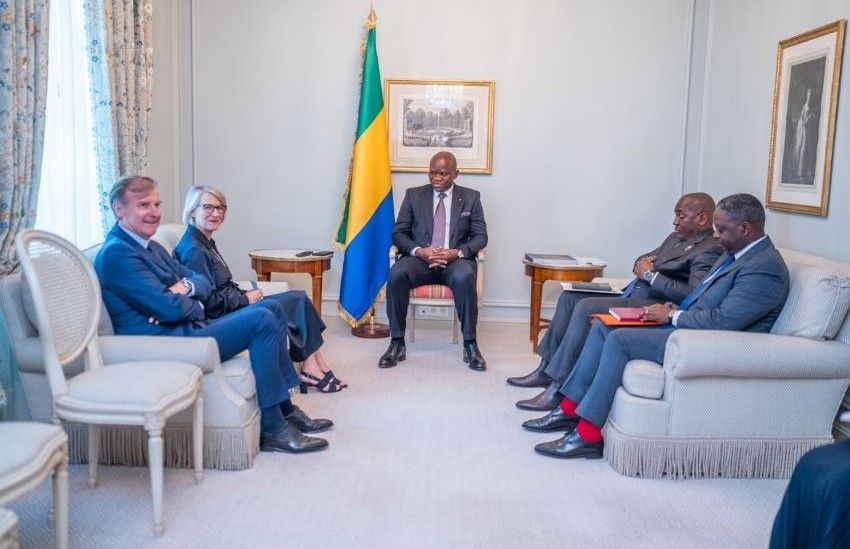
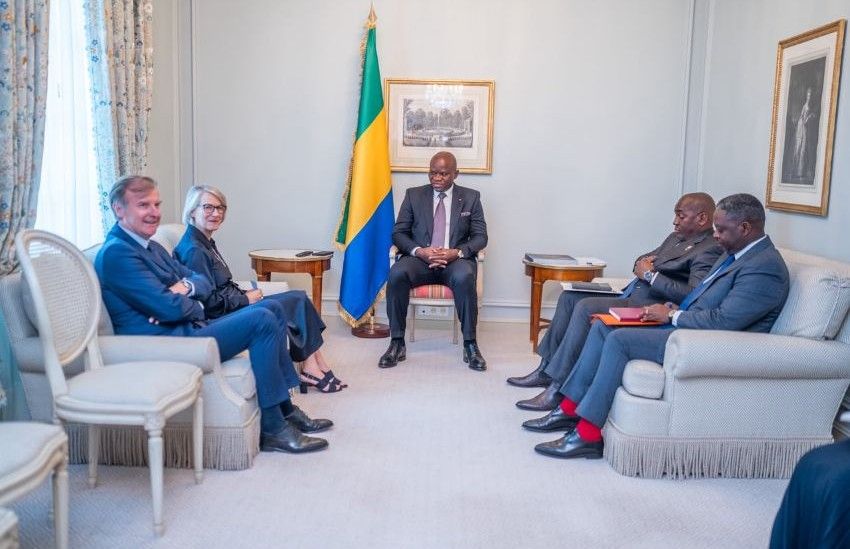
Libreville, August 4, 2026 — The state visit by President Brice Clotaire Oligui Nguema to Paris from July 19 to 22 was more than just ceremonial pomp and diplomatic pageantry. Beyond the military honors at Les Invalides, the stroll through the gardens of Versailles, and the state dinner at the Élysée Palace, Libreville had a clear agenda: securing concrete economic commitments that could translate into tangible benefits for Gabonese citizens.
The delegation accompanying the President numbered over 80, including key figures from Gabon’s private sector. While the identities of French corporate leaders received by the Head of State remained undisclosed for weeks, official communications now reveal the scale of discussions and the sectors involved.
From aviation to manganese: sectors poised for transformation
On arrival in Paris on July 19, President Oligui Nguema met with Anne Rigail, CEO of Air France. The aviation dossier is critical, with Air France and Fly Gabon already engaged in commercial partnerships. A code-sharing agreement, expected to be finalized before year-end, would allow Fly Gabon to market flights to Paris under its own branding. Though no binding agreement was signed during this meeting, the timeline demands close scrutiny. For Gabon, improved air connectivity is not merely about airline cooperation—it directly impacts the mobility of business leaders, tourists, investors, and skilled professionals.
The next day, at the Élysée Palace, the focus shifted to mining. Eramet and its subsidiary Comilog engaged in discussions with Gabonese authorities on a protocol for local manganese processing. Under the leadership of CEO Christel Bories, the group presented a roadmap described as co-developed with Gabonese officials. The ambitious target includes processing up to 700,000 tons of manganese locally by the end of 2031. Several scenarios are still under review, alongside plans for a “Made in Gabon” fund and the development of a biocharcoal industry. Crucially, this remains a framework for now—not a finalized investment commitment. The real test will be whether these plans translate into jobs, infrastructure, and economic value for Gabonese communities.
Booué’s hydroelectric project: a credibility test for energy transition
Energy also took center stage, with Gabon’s government, EDF Power Solutions, and Gabon Power Company formalizing an agreement for the Booué hydroelectric project on the Ogooué River. The proposed facility would generate 400 megawatts, addressing a persistent gap: while Gabon boasts significant hydroelectric potential, current production hovers around 700 megawatts—far below the national demand exceeding 1,000 megawatts. The Paris agreement, however, is not the final step. Partners have set an October 31 deadline to finalize development terms, with monthly meetings scheduled to advance the dossier. This timeline will serve as a critical benchmark for progress.
The visit also included talks with Omega Consortium, a specialist in water and electricity infrastructure, aimed at improving access to essential services—a top priority for Libreville. Official communications highlighted progress across mining, energy, water, security, and investment sectors, though specific figures and details of commitments remain undisclosed, fueling public anticipation.
Gabonese citizens await action, not announcements
The Paris visit has mapped out partnerships, set deadlines, and launched initiatives with Air France for connectivity, Eramet/Comilog for manganese processing, EDF/Gabon Power Company for electricity, and Omega Consortium for water and energy infrastructure. Yet the true measure of success will come from implementation. Gabonese citizens are not interested in the names of CEOs or the number of meetings held—they want jobs, reliable electricity, improved water access, smoother mobility, and greater local value addition that ultimately enhances their quality of life.
The October 31 deadline for Booué, the year-end target for the aviation agreement, and the evolution of the manganese roadmap will be closely watched. Diplomatic engagement must now prove its worth not in the volume of signed documents, but in the real-world changes it delivers for the people of Gabon.