Gabon’s RPM faces a pivotal moment: will Barro Chambrier’s party integrate with the ruling UDB?
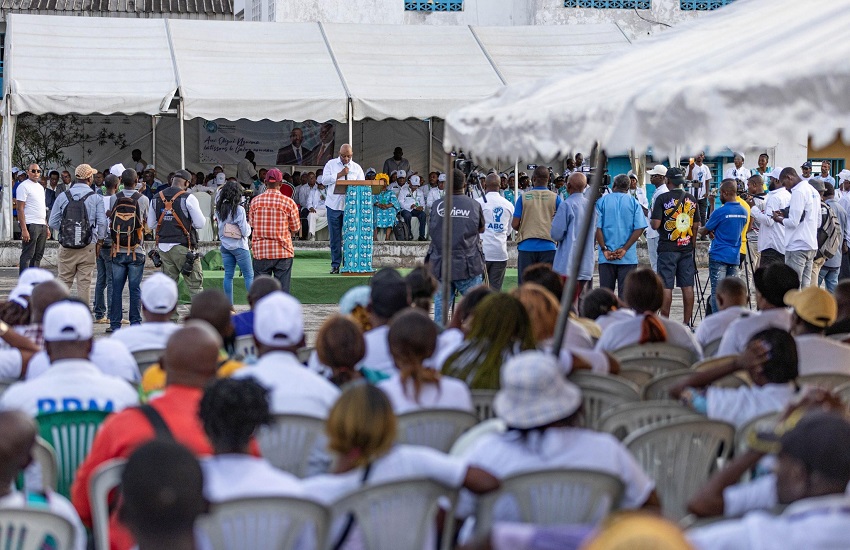
Libreville, November 26, 2026 — Gabon’s political landscape is poised for another historic shift today as the Rassemblement pour la patrie et la modernité (RPM) convenes its fourth extraordinary congress in Libreville. Officially framed as a strategic review, this closed-door meeting comes against a backdrop of intensifying discussions between the RPM and the ruling Union démocratique des bâtisseurs (UDB), founded by President Brice Clotaire Oligui Nguema.
The central question looming over the proceedings: Is Alexandre Barro Chambrier’s party preparing to dissolve into the UDB, or will it seek a new form of political cooperation while retaining its autonomy?
The congress as a watershed moment
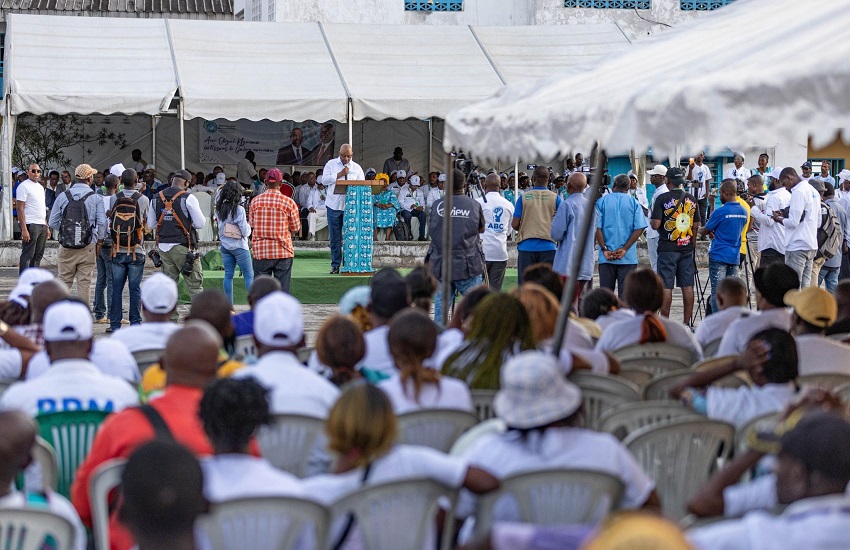
The RPM’s executive secretariat announced on November 24 that the congress would begin at 2:00 PM in Salle Carré F, within the fourth arrondissement of Libreville. Delegates from across Gabon’s provinces have been summoned to address “issues relating to the party’s political positioning” — a deliberately broad phrasing that offers no insight into the outcomes under consideration.
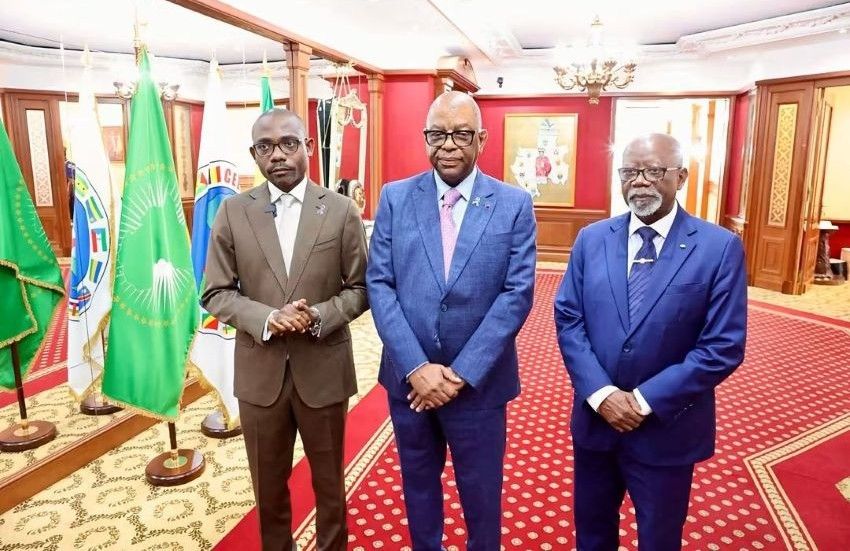
Yet the timing is telling. Just two days before the congress, a joint delegation led by Alexandre Barro Chambrier — including Jean-Robert Goulongana and Mays Mouissi, the secretary-general of the UDB — met privately with President Oligui Nguema in his capacity as the UDB’s founding president.
Following the closed-door session, Mouissi confirmed that ongoing negotiations between the UDB and RPM aim to formalize their alignment, potentially culminating in concrete measures at the UDB’s upcoming congress scheduled for December 5. Barro Chambrier emphasized the need for enhanced synergy, though he deferred detailed explanations to the conclusion of his party’s own congress.
These remarks lend credence to what had been speculative discourse. The rapprochement is no longer confined to media rumor; it has entered the realm of official dialogue. What remains unclear are its exact mechanisms and the degree of institutional integration envisaged.
The path from political alignment to structural merger
To grasp the significance of this moment, one must look back to August 30, 2023, when the RPM pledged support for the transitional government led by Oligui Nguema. That alliance deepened during the November 2024 constitutional referendum and again during the 2025 presidential election, in which Barro Chambrier served as campaign coordinator in the Estuaire region.
His subsequent appointment as Vice President of the Government, and later Vice President of the Republic, solidified his integration into the new governmental structure. The proposed fusion between the RPM and UDB reflects a political convergence years in the making.
Another marker of this trend occurred on November 20, when François Ndong Obiang and former members of the RÉAGIR movement officially joined the UDB. While framed as individual party switches, this wave of re-alignments underscores a broader strategy: consolidating political support around the ruling entity.
Yet the RPM’s situation is distinct. Whereas RÉAGIR activists have transitioned as individuals, negotiations with the RPM involve inter-party integration — a process that directly challenges the autonomy and future identity of Barro Chambrier’s formation.
The existential stakes for the RPM’s legacy
That is the crux of the congress: a potential merger would spell the end of the RPM as an independent entity, absorbed into the UDB. Alternatively, a negotiated integration could unfold under specific conditions preserving roles for current leaders and grassroots members.
For a party with a distinct history, leadership corps, and network of supporters, such a decision carries profound implications. It would require transparent terms regarding the fate of its decision-making bodies, its activists’ future role, and their integration into the new governing structure.
In Libreville, speculation is already rife. Regardless of the buzz, the delegates convened in Salle Carré F will face a moment of reckoning — one that could redefine not only the RPM’s trajectory but also the internal balance of the presidential majority and the UDB’s broader strategic vision.
Today, the RPM is not merely reaffirming its place within the ruling coalition. It is confronting a existential choice: to continue as an autonomous force or to merge into a larger political organism. For Alexandre Barro Chambrier, the hour demands clarity. The congress will reveal whether the projected rapprochement heralds a strengthened alliance — or a fundamental reshaping of Gabon’s political chessboard.