What’s really driving Côte d’Ivoire’s push to shrink its informal economy
Behind the bold headline numbers lies a complex set of pressures pushing Côte d’Ivoire to rethink how its 9.9 million informal workers operate — and how much of the country’s €45 billion economy remains off the books. Officials now admit that the hidden cost of informality is no longer sustainable for a nation betting on faster growth and deeper social protections.
Under the National Programme for Reducing Informality (PNRI), the government is targeting a drop from 82.4 % to 73.5 % informal employment by 2030. The move is part of the larger 2026–2030 National Development Plan (PND), which frames the shift not just as a tax issue but as a make-or-break step toward joining Africa’s next tier of upper-middle-income economies.
The numbers game: GDP share, jobs and the 1.4 million micro-businesses
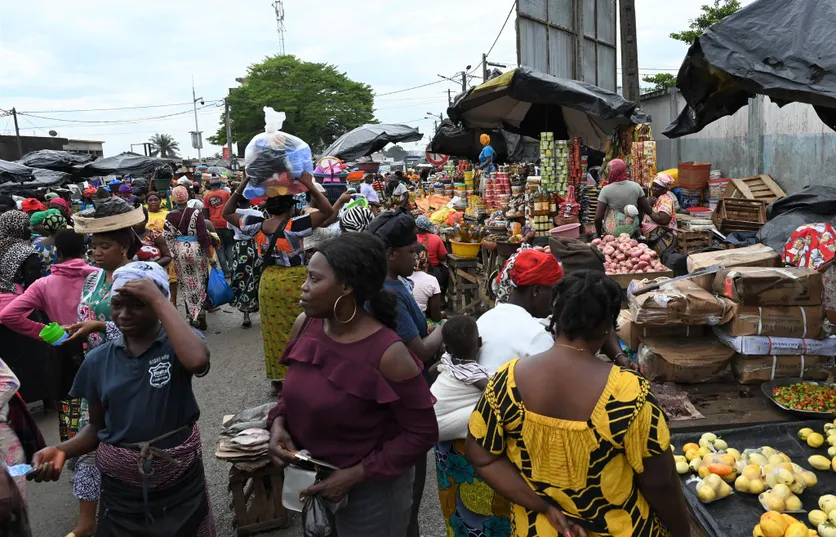
The PNRI’s targets are backed by sobering data. In 2025, Côte d’Ivoire’s informal economy still generated roughly 45 % of GDP while supporting almost 10 million jobs across 1.4 million unregistered enterprises nationwide. From rural cocoa middlemen in Daloa to bustling roadside repair stalls in Yopougon, these micro-businesses fuel daily life but escape standard regulatory safeguards.
Policy makers argue that formalisation will unlock three critical levers. First, it expands social safety nets — health insurance, pensions, maternity leave — for millions now working without protection. Second, it levels the playing field so small traders can compete for larger contracts tendered by the state or multinational buyers. Finally, it shifts tax revenues from 10 % to nearer 30 % of total collections, freeing cash for infrastructure and public services.
Why the PNRI window runs 2027–2030
The three-year programme sits inside the five-year PND 2026–2030 cycle, deliberately aligning financial, legal and digital reforms. The government is already piloting a simplified single-window registration system in Bouaké and Korhogo, cutting the time to legalise a business from 21 days to two. Parallel drives include a national digital ID rollout and a tax amnesty for street vendors who declare income for the first time.
The human side: promises and pushbacks from market traders
Not everyone is embracing the change. Market leaders in Abidjan’s Plateau district warn that higher compliance costs could push up food prices. Women in the cassava trade fear losing their flexible, cash-based supply chains. Meanwhile, unionised taxi drivers in Abidjan have staged spontaneous strikes, insisting new registration fees will price them out of business.
Proponents reply that the alternative — stagnant productivity and donor aid dependency — is the real risk. One senior trade official pointed to Senegal’s 20 % rise in formal employment over five years after a similar push, arguing that Côte d’Ivoire can replicate the trajectory if it balances carrots (subsidised micro-loans) and sticks (strict penalties for undeclared workers after 2028).A benchmark no one mentions openly: Africa’s upper-middle-income club
Indirectly, the 73.5 % target is a signal that Côte d’Ivoire wants to join peers such as Ghana and Morocco in the World Bank’s upper-middle-income bracket by 2035. That classification hinges on metrics like tax-to-GDP ratio, female labour-force participation and the size of the formal private sector. By shrinking informality, officials aim to lift per-capita income from €2,400 to over €3,600 in real terms within a decade.