Accra has drawn a line in the sand, turning down a sweeping health agreement with Washington over medical data access, pathogen information, and alleged constraints on drug oversight. The move signals a decisive shift in Africa’s health sovereignty debate.
ACCRA — Ghana has just posed a question that reaches far beyond the walls of its health ministry: what is a nation’s sovereignty worth when foreign financial aid comes with sensitive strings attached?
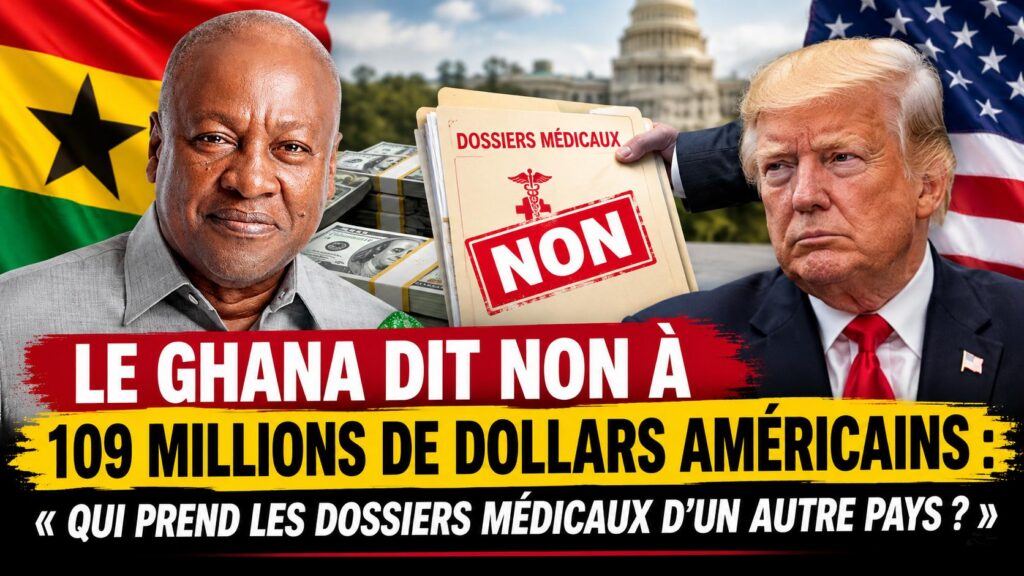
Accra’s answer is now clear: not $109 million.
The Ghanaian government turned down a new health agreement proposed by the United States, which would have delivered roughly $109 million in American funding over five years. The overall package was valued at around $300 million, factoring in expected complementary contributions from Ghana.
President John Dramani Mahama confirmed and explained the rejection during an appearance at the Council on Foreign Relations in New York on September 25.
And his words hit home.
“Who takes another country’s medical records?”
According to the Ghanaian president, the draft agreement included provisions for transmitting Ghana’s pathogen profiles and medical data to the United States. He also stated that the text imposed a counterpart funding obligation on Ghana and contained clauses concerning control over medical products entering the country.
For Mahama, these conditions were simply “humiliating.”
What Washington was actually asking for
The matter deserves scrutiny beyond the headline-grabbing phrase.
Ghana did not reject a $100 million envelope merely because it came from the United States. The sticking point lies in the conditions attached to the funding.
The Associated Press reported in May that the draft agreement, valued at approximately $300 million overall, would have provided Ghana with about $109 million over five years. Arnold Kavaarpuo, executive director of Ghana’s Data Protection Commission and a participant in the negotiations, indicated that certain provisions would have allowed access to sensitive health data under circumstances that could potentially identify individuals. According to him, the scope of that access went well beyond what is typically necessary.
The BMJ also reported that the Ghanaian draft envisioned access to health data and pathogens for 16 American companies. The journal noted, however, that several clauses in the new US health agreements remain difficult to examine publicly, as not all negotiated texts have been made public.
A nuance is therefore in order: it would be excessive to claim that the United States was demanding unrestricted access to “all Ghanaians’ medical data.” What is documented, however, are Ghanaian concerns about the extent of access to health data and pathogen information.
Why this data matters so much
Behind medical records lies a genuine question of power.
Health data reveals which diseases are circulating, where they are spreading, which populations are most exposed, and how epidemics are evolving.
Pathogen data can also hold considerable scientific value. It can contribute to research on vaccines, treatments, and surveillance of emerging outbreaks.
This is precisely what fuels concerns among several African governments.
In February 2026, Jean Kaseya, director general of the Africa Centres for Disease Control and Prevention (Africa CDC), had already voiced serious concerns about provisions regarding data and pathogen sharing in the new US health agreements. Reuters reported at the time that some agreements required rapid sharing of sensitive data without guaranteeing African countries access to treatments or vaccines that might result from that information.
Ghana is therefore not an isolated case.
Accra no longer wants to depend entirely on foreign aid
The rejection also comes in a particular context.
Since the suspension of a large portion of US aid programs, Ghana has been seeking to reduce its reliance on external funding. In February 2025, the Ghanaian presidency had already estimated the shortfall caused by the suspension of USAID funding at $156 million, of which $78.2 million directly concerned essential health programs.
The Mahama government is now pushing the idea of “health sovereignty.”
This direction was reinforced in September with the launch of the report A Sovereign Future for Health, presented under the Accra Reset initiative. The document proposes, among other things, reducing Southern countries’ dependence on external funding and strengthening their own health systems.
Accra’s message is therefore relatively clear: Ghana wants to continue working with its foreign partners, but on the basis of agreements it considers more balanced.
Another friction point: medicines
The other element revealed by Mahama is particularly sensitive.
According to the president, the draft agreement provided that certain medicines and medical products supplied under the program would not be subject to controls by Ghana’s Food and Drugs Authority (FDA).
This claim has not been publicly confirmed in detail by the US government, which, when questioned by the Associated Press, said it does not comment on the details of bilateral negotiations.
But if this provision does indeed match the text presented to the Ghanaian government, it explains part of Accra’s firmness: for the authorities, health funding should not lead to reducing the national regulator’s ability to oversee medical products used on its territory.
And the American response?
Washington has not publicly detailed the contested clauses.
A US State Department spokesperson said the United States does not disclose details of bilateral negotiations, while affirming that Washington is still seeking ways to strengthen its partnership with Ghana.
This lack of full publication of the text therefore prevents resolving certain essential questions.
What data would exactly have been accessible?
To which American companies or institutions?
Under what circumstances could individuals have been identified?
How long would the data have been retained?
What legal guarantees would have protected Ghanaian patients?
On these points, public information remains incomplete.
Ghana opens a debate that goes beyond Ghana
The real stake in this affair may lie there.
For decades, many African health systems have depended on funding, medicines, equipment, and programs from abroad. These partnerships have saved lives and fought major diseases.
But the digital transformation of health is now changing the nature of cooperation.
Aid is no longer just about money, medicines, or equipment. It can also grant access to a strategic resource: data.
And Ghana has just reminded the world that it intends to retain control of that resource.
John Mahama says his government rejected the draft after review by the Ministry of Health and its passage through Cabinet. He also says the decision had the support of the entire government and that the rejection was decided very quickly.
Ghana will now have to demonstrate that it can fill the abandoned funding gap without compromising its health programs.
But for Accra, the choice seems deliberate:
better to seek other partners than to conclude an agreement the government considers incompatible with health sovereignty and the protection of Ghanaians’ data.
The question Ghana now poses to its foreign partners is simple:
When Africa receives aid to care for its populations, must it also surrender control over information about those populations?
The debate has probably only just begun.