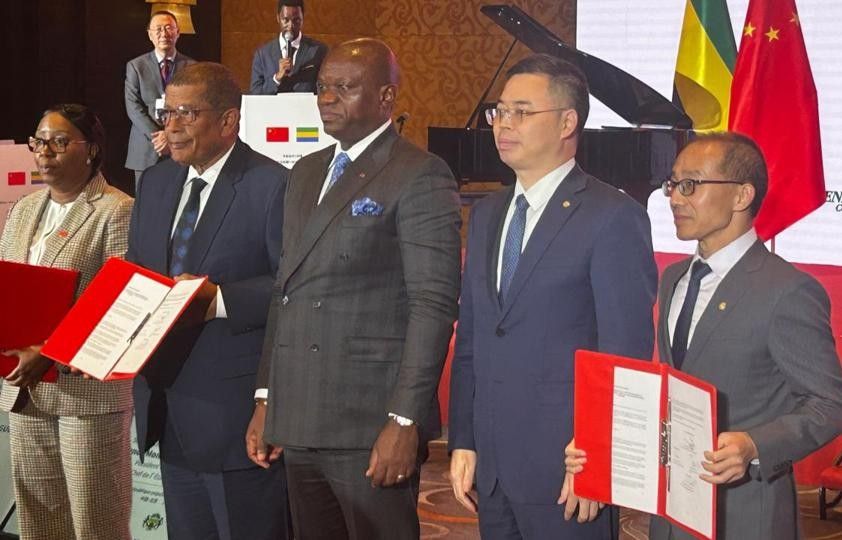
Libreville, November 2026 — The recent agreement signed in Beijing between Gabon’s government, Eramet-Comilog, and Sinohydro is more than a memorandum—it’s a strategic rethink of the entire manganese value chain. But beneath the headlines lies a deeper question: can Gabon break free from decades of raw material exports and finally anchor its mining wealth in homegrown industry?
The Gabonese government is no longer content with shipping unprocessed manganese across the globe. Its new objective is to capture more value by transforming the mineral locally into higher-value alloys. Yet, transforming ore into metal is an electricity-intensive process. Without a reliable, cost-effective power supply, even the most advanced smelter can become a financial liability rather than an economic driver.
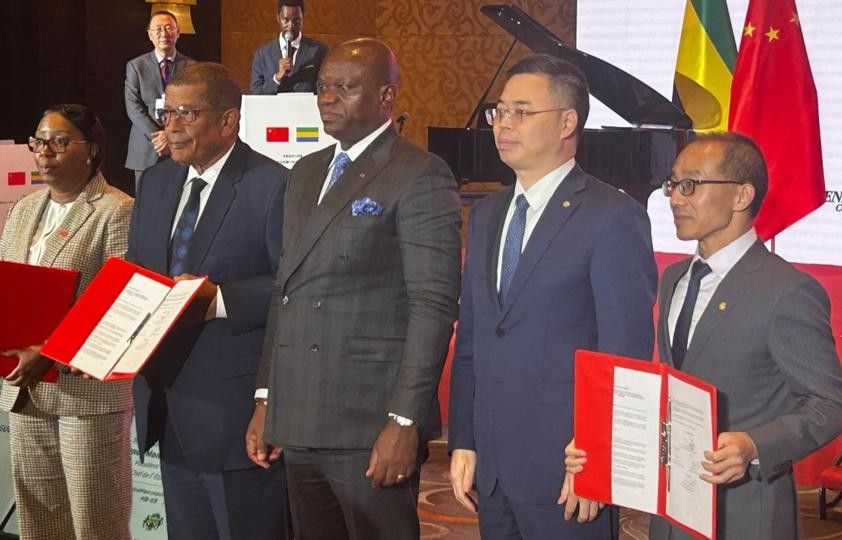
Enter the tripartite agreement signed in Beijing on the sidelines of President Brice Clotaire Oligui Nguema’s state visit to China. The accord sets in motion a feasibility study to evaluate how hydroelectric power—potentially from the Ngoulmendjim dam or other sources—could support a future manganese alloys plant. By bringing in Sinohydro, a subsidiary of China Power Construction Corporation, the deal adds a critical energy infrastructure partner to a project already rooted in mining expertise.
From Extraction to Industry: The Hidden Logic Behind Gabon’s Shift
Gabon’s manganese reserves are among the world’s richest, yet its mining model has long been rooted in export-oriented extraction. Historically, up to 90% of production left the country as raw ore. That model has yielded steady revenue, but it has also limited job creation, technology transfer, and economic diversification.
The new strategy aims to reverse that trend. Under the framework agreed with Eramet-Comilog in July 2026, Gabon plans to process up to 700,000 tonnes of manganese annually by 2031—transforming it into oxides and alloys. This would represent a major leap in local value addition, generating downstream industries, technical training, and spin-off businesses across the country.
Yet, ambition alone won’t fuel a furnace. Metallurgical plants require steady electricity—for electrolysis, furnaces, and refining. That’s why the hydroelectric option is central to the new agreement. The Ngoulmendjim dam, among others, is being studied not just for energy output, but for its potential to anchor long-term industrial expansion.
Why Power Is the Real Gatekeeper of Industrial Independence
The manganese transformation process is energy-hungry. Producing one tonne of manganese alloy can consume as much electricity as powering several hundred households for a year. For a project to remain competitive, the energy source must not only be abundant—it must also be cheaper than imported power or coal-based alternatives.
That’s where hydroelectric power offers a decisive advantage. Unlike thermal plants, which depend on volatile fuel prices, hydroelectric dams provide stable, low-cost electricity—ideal for energy-intensive industries. The feasibility study will assess whether Ngoulmendjim or other sites can deliver the required capacity without overburdening the national grid or triggering costly external dependencies.
Shared Infrastructure, Divided Benefits?
The proposed collaboration reflects a careful balance of strengths: Gabon contributes its mineral wealth and political will, Eramet-Comilog brings decades of metallurgical expertise, and Sinohydro provides energy infrastructure know-how. Together, they aim to align industrial investment with energy supply—two conditions that, if not jointly secured, could derail the entire project.
But the stakes go beyond the three partners. Successful localization could catalyze local entrepreneurship, vocational training, port development, and ancillary services. The question is whether Gabon can negotiate agreements that ensure a fair share of returns stay within the country—transforming mineral wealth into broad-based prosperity rather than concentrated gains.
The Timeline: From Letters of Intent to Concrete Output
- 2026: Feasibility studies begin; Ngoulmendjim hydroelectric plant assessed for viability
- 2027: Energy supply agreements finalized; first manganese oxide plant planned near Libreville
- 2028: Pilot production of manganese oxide expected
- 2031: Full-scale alloy production at coastal facilities, integrating smelting and refining
Each milestone carries its own risk. Delays in energy infrastructure could stall metallurgical plans. Conversely, overbuilding power capacity without sufficient industrial demand could leave Gabon with underutilized assets. Success hinges on coordination between the Ministry of Energy, the mining sector, and industrial planners.
A Question of Economic Sovereignty
This initiative is ultimately about sovereignty—not isolation. Gabon’s manganese is already in global demand. The real challenge is to ensure that the processing, technology, and profits remain anchored in Gabonese hands. By integrating mining with energy and industry, the country seeks to move from passive exporter to active innovator in the manganese market.
The true measure of success won’t be the number of agreements signed in Beijing or Paris, nor the volume of ore extracted. It will be the share of manganese processed within Gabon’s borders, the number of skilled jobs created, and the resilience of the energy-industry ecosystem. In that sense, the memorandum signed in China marks not the end of a process, but the beginning of a transformation—one that demands as much rigor in execution as it does vision in design.