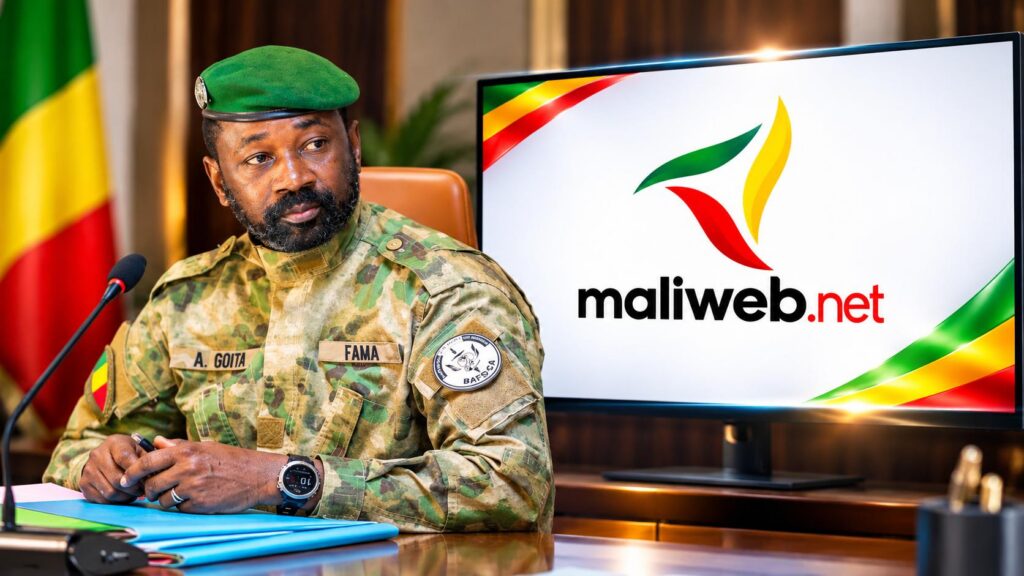
In Mali, the real question is no longer whether the line between factual reporting and wartime communication has blurred — it is whether anyone still has room to say so. Maliweb.net, once a showcase for the diversity of the country’s online press, now occupies a very different position: it works as a central relay for the official line, even when that line contradicts what happened in the field. The stakes are blunt, and they concern every reader: what becomes of public debate when the pages people turn to for news stop asking questions?
What the fighting at Dioura and Mondoro laid bare
The events of 15 September 2026 offer a telling case. Converging accounts, backed by observations from the ground, described deadly clashes in which more than 150 Malian soldiers were killed or captured around Dioura and Mondoro. The version presented to readers bore almost no resemblance to that reality.
By republishing the statements of the General Staff of the Armed Forces with no filter and no independent verification, the outlet recast a heavy setback as a triumphant counteroffensive. The story handed to the public was one of heroic pursuit and the methodical destruction of terrorist bases — with the human toll paid by the Malian Armed Forces (FAMa) carefully kept out of sight.
The three gears that keep a distorted war narrative turning
This lopsided treatment of security news is not improvised. It runs on mechanisms that have been tested over time.
Institutional statements, republished and never checked
By running almost exclusively the releases of the DIRPA or the copy of state-run press without any prior cross-referencing, the portal grants unilateral validation to the government’s communication strategy. The official version of events and the verification of that version are treated as one and the same thing.
Losses and setbacks that vanish from the record
Casualty figures on the FAMa side are systematically played down or passed over in silence. The purpose is clear enough: to sustain a sense of military infallibility in public opinion, at the cost of any honest reckoning with the reality of the front.
Dissent quietly pushed to the margins
Any attempt at independent cross-checking, or any mention of operational difficulties, is indirectly sidelined — branded as disinformation or as an attack on the morale of the troops. The space for a second reading of events shrinks with every publication.
The democratic stakes of an asphyxiated news space
This drift raises a question that goes well beyond one outlet. By abandoning its duty of restraint, verification and balance, Maliweb.net is not merely passing on press releases: it takes an active part in constructing a distorted account of the war.
For citizens and observers alike, the search for objective information has turned into an obstacle course. When a space meant for information becomes an ideological echo chamber, the media players aligned with that line erode public confidence in the local press — and deprive society of a lucid view of the country’s real security situation.
The dilemma facing Malian readers is therefore anything but abstract. It comes down to a choice between a comfortable, single-voice story and the harder work of finding out what is actually happening.