After Makotipoko clash, both capitals promise action and compensation
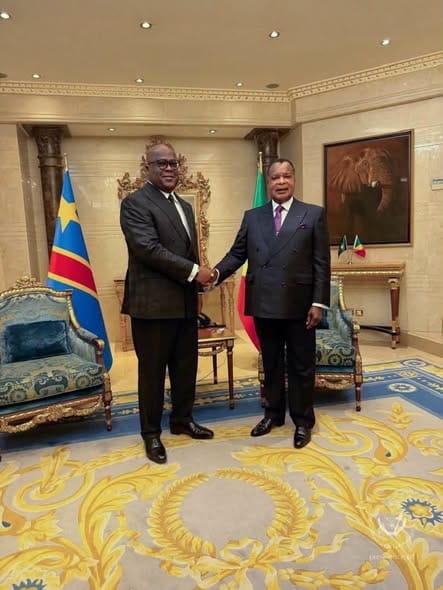
In a bid to shore up bilateral ties between the Democratic Republic of the Congo (DRC) and the Republic of the Congo, President Félix-Antoine Tshisekedi Tshilombo held talks with his counterpart Denis Sassou Nguesso in Brazzaville on Saturday, October 3, 2026.
At the top of the agenda was the recent border incident at Makotipoko, a Congolese locality near Yumbi in the Maï-Ndombe province of western DRC, where soldiers from both countries clashed.
Both heads of state stressed the need to safeguard the fraternal and neighbourly bonds that have long united their nations.
President Tshisekedi moved to ease tensions, insisting that the people of Kinshasa and Brazzaville are one. “I brought along my interior and defence ministers so they can work together on preventing such slips in the future. We are one people, we share the same culture. We are meant to live together,” he said.
He also announced plans to meet the victims of the incident soon and to launch a compensation process for them.
Finally, the two leaders discussed the security and humanitarian situation in eastern DRC, calling for strict adherence to the Washington agreements.
What the Makotipoko incident means for DRC-Congo relations
The Makotipoko clash, which pitted elements of the two national armies against each other, had threatened to strain ties between Kinshasa and Brazzaville. Saturday’s meeting in Brazzaville appears to have put the relationship back on track, with both sides committing to dialogue and concrete measures to prevent future flare-ups.
Observers will be watching closely to see whether the promised compensation for victims materialises and whether the joint efforts by the interior and defence ministers yield a lasting mechanism to avoid similar incidents along the shared border.
Regional implications and next steps
The two presidents also turned their attention to the volatile eastern DRC, where conflict and humanitarian needs persist. Their call for full respect of the Washington accords signals a shared desire to see regional stability reinforced.
As the fallout from Makotipoko continues to be felt, the coming weeks will test whether the pledges made in Brazzaville translate into real change for border communities and for the broader DRC-Congo relationship.