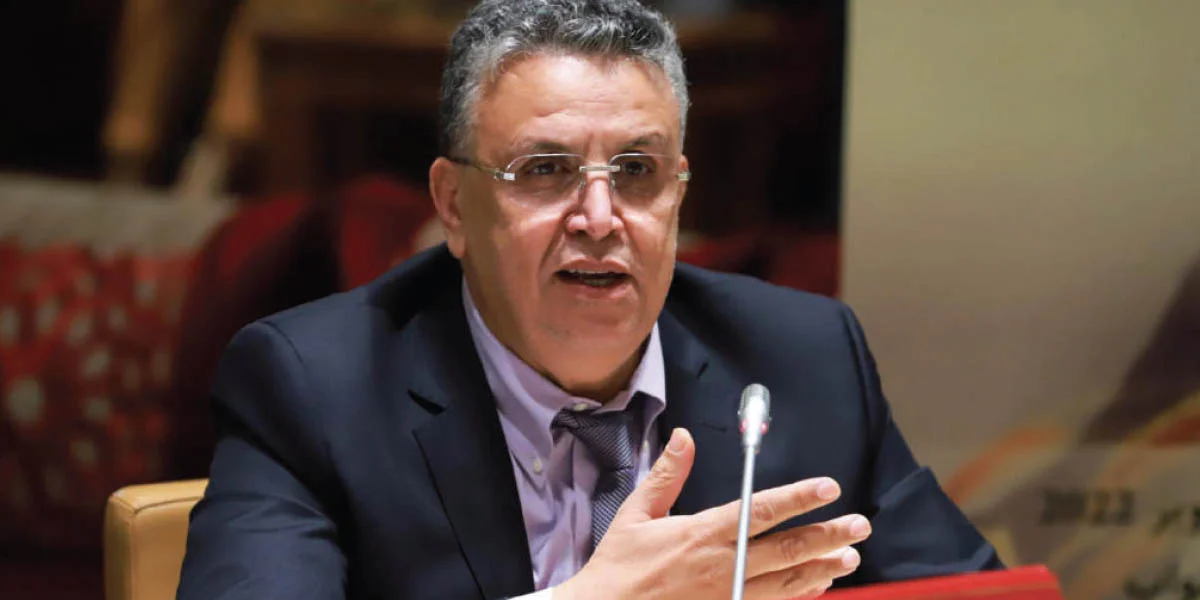
The Moroccan Minister of Justice, Abdellatif Ouahbi, has once again brought up the long-standing issue of Ceuta and Melilla, asserting that Morocco seeks formal negotiations with Spain to reclaim what it considers its sovereign territories. In a recent interview, Ouahbi emphasized that Rabat’s historical claims remain on the table as part of a patient, dialogue-driven strategy, particularly given the recurring nature of this topic in high-level bilateral meetings.
Addressing the mass migrant crossings into Ceuta on July 30 and 31, the minister stressed Spain’s obligation to handle and repatriate unaccompanied Moroccan minors who entered illegally. He also criticized Madrid’s requests for Morocco to curb irregular departures, arguing that those who successfully reach Spanish soil are granted legal access to procedures—undermining the premise of such demands.
Ouahbi further highlighted the need for both nations to align on legal frameworks and operational mechanisms to combat irregular migration, warning that Morocco cannot be expected to serve as Europe’s sole enforcer in this regard.
The following day, Spain’s Ministry of Foreign Affairs firmly rejected Morocco’s sovereignty claims over Ceuta and Melilla, declaring in no uncertain terms that their status as integral parts of Spain’s internationally recognized territory is non-negotiable and has never been—and will never be—up for discussion.
Spanish officials split: diplomacy vs. rhetoric
During a visit to Ceuta, Spanish Foreign Minister José Manuel Albares sidestepped the sovereignty debate entirely, focusing instead on the recent migration surge. The PSOE-affiliated minister acknowledged Morocco’s willingness to accept the return of unaccompanied minors who entered during the latest influx.
Meanwhile, Juan José Imbroda, President of Melilla and a member of the opposition Partido Popular (PP), took a sharply critical tone, questioning the utility of holding Ceuta and Melilla if Morocco cannot manage its own challenges—particularly the exodus of young people. Imbroda framed the migration crisis as an international embarrassment for Morocco, urging dignified crisis management.
In response, Morocco’s Ministry of the Interior underscored the shared responsibility of both nations in addressing mass crossings toward Ceuta. A statement warned against online calls for new attempts on August 15, reaffirming that combating irregular migration and human trafficking cannot fall solely on one party’s shoulders.