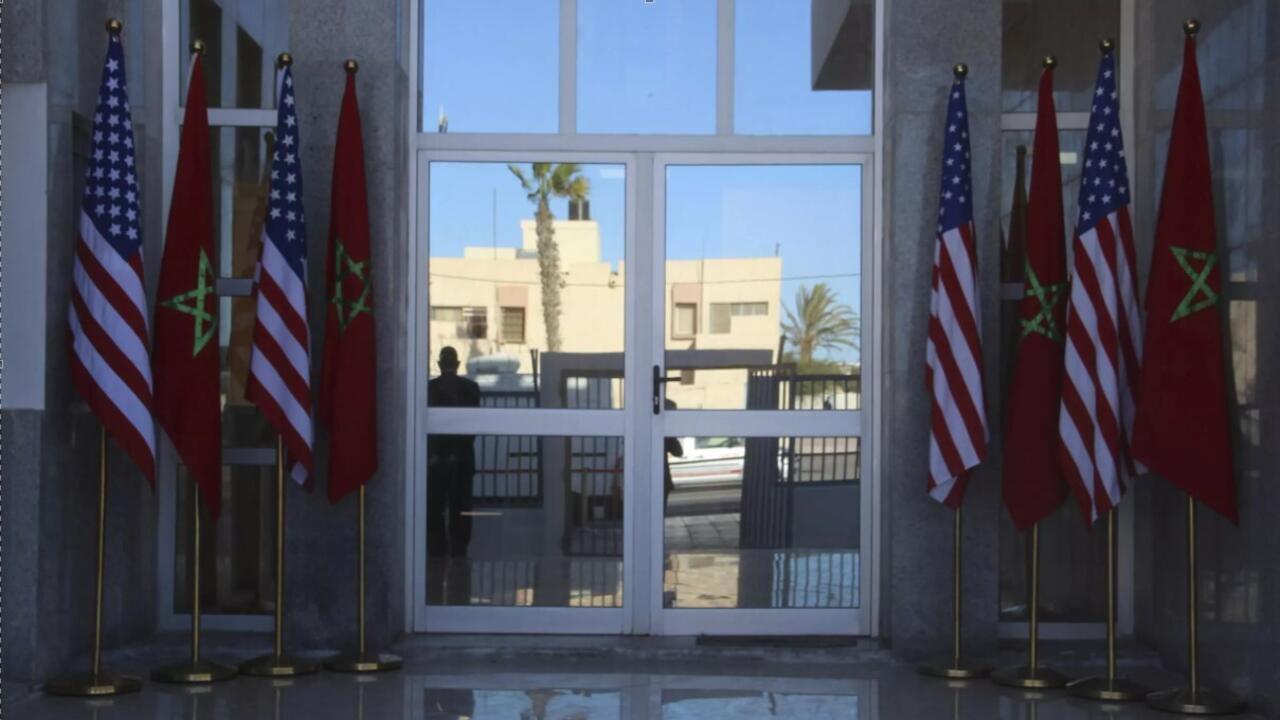
The Moroccan government senses a historic opportunity as the United States intensifies its diplomatic and economic engagement in North Africa. Since late July, Washington has demonstrated unprecedented alignment with Rabat’s strategic priorities, including renewed support for Morocco’s autonomy plan in Western Sahara—a position established during the Trump administration’s final years. Now, the question arises: could the U.S. also endorse Morocco’s claims over the Spanish enclaves of Ceuta and Melilla?
The escalating pressure on Spain
The timing of these developments coincides with a surge in cross-border movements into Ceuta, where tens of thousands of Moroccan nationals and sub-Saharan migrants crossed into the Spanish territory within days. The influx has placed immense strain on local authorities, prompting urgent discussions between Madrid and Rabat. While Spain has historically resisted Moroccan territorial assertions, the shifting geopolitical landscape may weaken its position.
Washington’s growing influence in North Africa
U.S. engagement in the region has evolved beyond traditional alliances, with economic incentives playing a pivotal role. The normalization of Morocco-Israel relations in 2020 served as a catalyst for deeper cooperation, but recent signals suggest an even broader agenda. Analysts note that Washington’s strategic calculus now includes strengthening Morocco’s regional standing as a counterbalance to other external actors in the Maghreb.
Rabat’s confidence stems from what it perceives as Washington’s willingness to reaffirm its commitments. With the autonomy proposal for Western Sahara gaining traction in international forums, Moroccan officials are leveraging this momentum to push for further concessions, including territorial disputes long considered settled by European partners.
The geopolitical implications
If the U.S. formally backs Morocco’s claims over Ceuta and Melilla, it could reshape the balance of power in the western Mediterranean. Spain, already grappling with domestic challenges, would face heightened pressure to negotiate or risk further isolation within NATO. The ripple effects could extend to broader EU-Morocco relations, particularly in trade and security cooperation.
The unfolding scenario underscores a critical juncture in North African geopolitics, where U.S. influence is increasingly dictating the terms of engagement. As Morocco navigates this delicate phase, its next moves may well determine the trajectory of regional stability—or instability—for years to come.