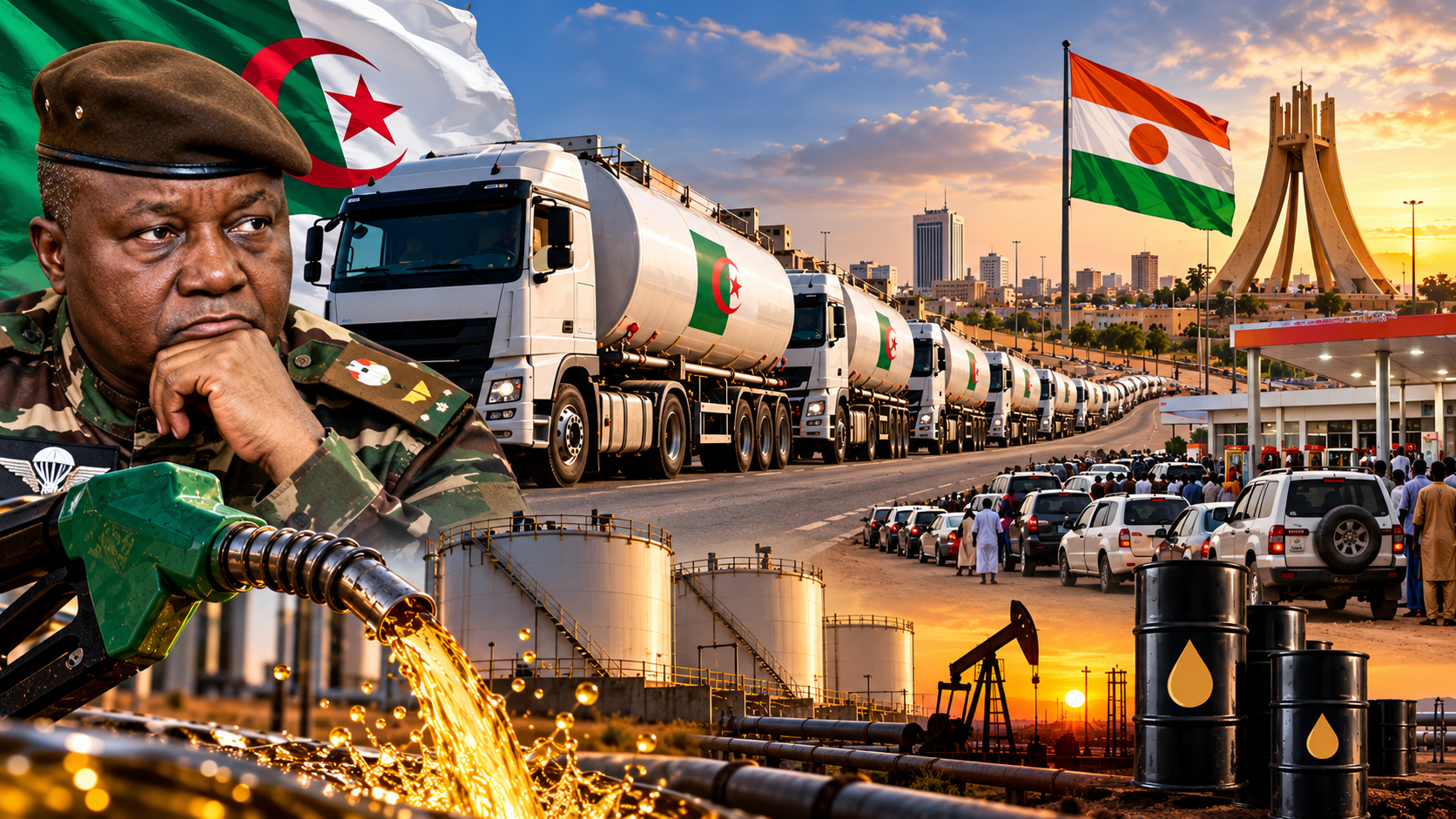
After months of uncertainty and fluctuating supply chains, Niamey has received an unexpected lifeline in the form of 3.75 million liters of diesel from Algeria. The shipment, originally intended for Agadez, has triggered a wave of questions about priorities, costs, and the long-term resilience of Niger’s fuel infrastructure. As public scrutiny intensifies, policymakers face mounting pressure to clarify the rationale behind the delivery and justify the financial and strategic implications of this emergency supply.
From Agadez to Niamez: why the cargo changed course
The 150 tankers, each carrying 25,000 liters, were initially slated to reinforce fuel reserves in Agadez a city grappling with chronic shortages and logistical bottlenecks. Yet, in a move that has surprised many observers, authorities now acknowledge that a significant portion of the shipment will be diverted to Niamey instead. The shift raises immediate concerns: Was this a last-minute adjustment driven by escalating demand in the capital, or does it signal a broader recalibration of national fuel priorities?
Without official clarification on the final distribution plan, speculation has flourished. Some analysts suggest the move reflects Niamey’s precarious position as the economic engine of Niger, where fuel shortages can paralyze public transport, hospitals, and local businesses within hours. Others caution that the redirection may have come at the expense of Agadez, leaving a regional hub vulnerable to further disruptions. The absence of transparent communication has only deepened skepticism about the decision-making process behind this high-stakes rerouting.
A pricing paradox: why is Algerian fuel more expensive than Nigeria’s?
One of the most contentious aspects of the deal is its cost. According to insider accounts, each liter of Algerian diesel costs Niamey 800 FCFA upon delivery a sharp contrast to the 702 FCFA per liter previously paid for Nigerian fuel, including transport. At first glance, the difference seems minor, but when applied to the full shipment of 3.75 million liters, the disparity balloons to 367.5 million FCFA. That figure, while illustrative, does not account for additional variables such as the value of crude oil earmarked for repayment or the long-term financial burden on Niger’s already strained budget.
Critics argue that the premium for Algerian fuel cannot be justified solely by proximity or speed of delivery. They point to the opaque nature of the agreement, particularly the repayment mechanism, which requires Niger to settle the debt in crude oil rather than cash. While this may offer short-term flexibility, it also ties the country’s energy security to a single supplier in a volatile geopolitical landscape. Meanwhile, stakeholders question whether the higher price is offset by reliability, given Niger’s historical dependence on the Nigerian corridor a route that has proven vulnerable to strikes, sabotage, and cross-border tensions.
Beyond the sticker price: the hidden costs of emergency fuel
The debate extends far beyond the per-liter cost. Industry insiders highlight three critical factors often overlooked in public discourse:
Opportunity cost: Could the 367.5 million FCFA difference have been invested in local refining capacity, pipeline maintenance, or renewable energy projects to reduce long-term dependency?
Supply chain fragility: Does Niger’s reliance on emergency shipments expose it to geopolitical leverage, particularly amid shifting alliances in the Sahel?
Regional equity: How will Agadez’s fuel needs be met if Niamey’s consumption takes precedence, and what are the economic consequences for communities already struggling with price surges?
From crisis response to strategic foresight: can Niamey build lasting fuel reserves?
While the immediate arrival of 3.75 million liters offers temporary relief, it also underscores a glaring vulnerability: Niamey’s chronic lack of fuel reserves. A capital city of over two million people cannot function without a buffer against supply shocks. Yet, without clear data on daily consumption, storage capacity, or distribution quotas, it remains unclear whether this shipment will merely alleviate short-term shortages or contribute to a sustainable stockpile.
Experts warn that band-aid solutions no matter how well-intentioned are not enough. A true fuel security strategy requires more than ad-hoc deliveries; it demands infrastructure upgrades, diversified sourcing, and transparent inventory management. Questions linger: How many days of fuel does Niamey currently have on hand? How much of this shipment will be allocated to strategic reserves versus immediate consumption? And what safeguards are in place to prevent theft, leakage, or mismanagement of the stockpile?
Lessons from the field: what other cities can teach Niamey
Comparative studies of fuel management in African capitals reveal stark contrasts in preparedness. Cities like Dakar and Addis Ababa have invested in underground storage facilities and diversified their suppliers to cushion against regional instability. Others, such as Abuja, have implemented automated monitoring systems to track fuel movements and prevent diversion. Niamey, by contrast, appears to be playing catch-up a reality that becomes increasingly risky as climate change and regional conflicts threaten to disrupt supply lines further.
The arrival of Algerian fuel may have averted a crisis in the short term, but it also serves as a wake-up call. For Niger’s policymakers, the challenge now is to transform reactive measures into a proactive vision. That means not only securing reliable fuel sources but also building the institutional capacity to forecast demand, audit supply chains, and communicate openly with the public. In an era of energy transition and geopolitical uncertainty, the difference between a city that stumbles through shortages and one that thrives with foresight may come down to the choices made today.
The road ahead: transparency, accountability, and long-term planning
The public reaction to this shipment has been swift and unforgiving. Citizens, business owners, and opposition figures alike are demanding answers: Why was Agadez’s allocation reduced? What is the true cost of this deal, including the crude oil repayment clause? How will future shortages be prevented?
For the government, the path forward hinges on three priorities:
Clarity: Publish a detailed breakdown of the shipment’s distribution, including the volumes earmarked for Niamey’s immediate use versus strategic reserves.
Cost disclosure: Provide a full accounting of the financial implications, including the value assigned to the crude oil repayment and the long-term budgetary impact.
Preparedness: Outline a multi-year plan to enhance storage capacity, diversify suppliers, and reduce reliance on emergency imports.
Without these steps, the Algerian fuel shipment risks becoming little more than a stopgap measure one that distracts from the deeper structural issues plaguing Niger’s energy sector. The fallout from this delivery will extend far beyond the headlines, shaping not only public trust in institutions but also the country’s economic stability in an increasingly unpredictable region.
In the words of a local economist, “A capital without fuel reserves is like a clockmaker without time its movements may seem precise today, but tomorrow, it could grind to a halt.” For Niamey, the time to act is now.
By Ousmane Tandja — Journalist