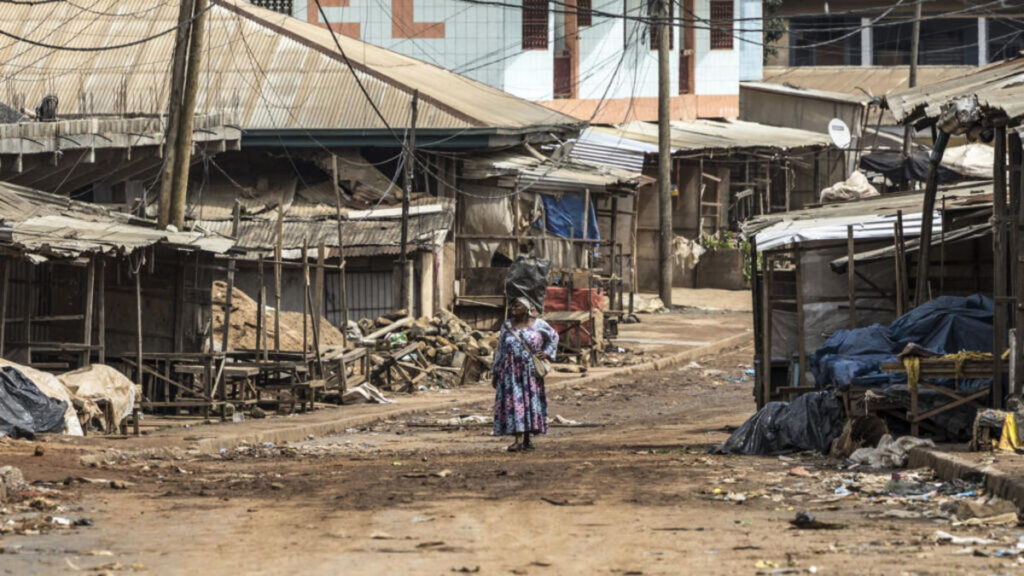
Tillabéri under renewed pressure
The evening of August 7, 2026, saw a violent episode in the Tillabéri region of Niger, where an improvised explosive device detonated against a vehicle belonging to the Nigerien Armed Forces (FAN) along the Kabaji-Belongam axis. The attack, later claimed by the Group for the Support of Islam and Muslims (JNIM), has once again thrust the country’s security crisis into the national spotlight.
While the authenticity of the claim awaits independent verification, the incident is not an isolated one. It reflects a broader pattern of persistent insecurity in western Niger, where armed groups maintain a significant operational presence despite ongoing military efforts.
The use of an improvised explosive device (IED) underscores the sophistication of these attacks. Such operations typically require detailed reconnaissance, local intelligence, and precise timing evidence that armed factions retain substantial freedom of movement across key transit routes.
The challenges of territorial control
For Niger’s military, securing cities, bases, and strategic positions does not equate to full control over rural roads, villages, or remote areas. Tillabéri, a region bordering Mali and Burkina Faso, remains one of the country’s most volatile zones. Its vast, rugged terrain and porous borders facilitate cross-border movements by jihadist groups, complicating surveillance and counter-insurgency efforts.
Both the JNIM and the Islamic State in the Sahel continue to operate within Niger’s borders despite military operations aimed at curbing their influence. This sustained threat raises a critical question for the transitional government led by General Abdourahamane Tiani: has the junta’s promise of improved security materialized in tangible ways?
A shift in alliances, unmet expectations
Since the withdrawal of French and American forces, Niamey has pivoted toward new military partnerships, particularly with Russia, as well as closer cooperation with Mali and Burkina Faso under the Alliance of Sahel States. While framed as a sovereign choice, this reorientation now faces a decisive test: delivering on security promises.
Changing military partners alone does not guarantee victory in asymmetric warfare. The real measure of success lies in whether these new alliances translate into fewer attacks, safer roads, and greater protection for rural communities. Can civilians travel, farm, and trade with reduced risk? Have armed groups truly lost their ability to strike?
The recent attack in Tillabéri offers a sobering answer. For now, the outlook remains uncertain.
Beyond military operations
Niger’s security crisis is not purely a military issue. Armed groups exploit structural weaknesses weak administrative presence, economic deprivation, poor infrastructure, and unguarded borders to sustain their operations. A purely military strategy may recapture territory temporarily, but without sustained state engagement, long-term stability remains elusive.
The proliferation of armed factions further complicates the landscape. Niger contends with multiple jihadist organizations, including rival groups like the JNIM and the Islamic State in the Sahel, whose overlapping zones of influence create a fluid and unpredictable threat. This fragmentation forces Nigerien forces to contend with a diffuse enemy that can strike military or civilian targets and vanish into inaccessible rural areas.
The limits of political rhetoric
Government statements on sovereignty, critiques of former partners, and announcements of new military initiatives shape the national narrative. Yet none of these address the fundamental concern of Nigerien citizens: are they truly safer today?
General Tiani’s leadership will ultimately be judged not by the strength of his rhetoric, but by the reality on the ground. Sovereignty, in its fullest sense, is measured by the state’s capacity to protect its people whether a soldier on patrol, a trader on a rural route, a farmer in the field, or a family in a vulnerable village.
The attack on the Kabaji-Belongam axis underscores a harsh truth: political control over Niamey does not automatically translate to effective governance of the entire nation. As long as armed groups can plant explosives and ambush security forces on strategic roads, the question of tangible results will persist.
This is especially critical for a regime that has staked its legitimacy on restoring security and asserting sovereign authority. The true benchmark of success will not be the volume of speeches delivered or alliances forged, but the enduring safety of Niger’s land and people.