US diplomatic circles stunned by sudden death of Moscow’s ambassador
The sudden death of Alexander Dartsev, Russia’s ambassador to the United States, has sent shockwaves through international diplomacy. The 66-year-old envoy passed away on November 11, according to a terse statement from the Russian foreign ministry. The announcement, issued without immediate details on the circumstances, has already sparked intense speculation about its implications for Moscow’s diplomatic strategy and the already fragile US-Russia relationship.
The timing of Dartsev’s death could hardly be more sensitive. Arriving in Washington in March 2025, he stepped into one of the world’s most scrutinized diplomatic roles at a moment when relations between Russia and the US were undergoing a fragile reconfiguration. With high-stakes negotiations looming on Ukraine, sanctions, and European security, his sudden absence raises immediate questions about the future of bilateral diplomacy.
From Ottawa to Washington: a diplomat shaped by North American challenges
Dartsev was no ordinary ambassador. His career reflected a deep immersion in the complexities of North American diplomacy. Before taking up his post in Washington, he served as Russia’s envoy to Canada from 2014 to 2021, during a period marked by fluctuating bilateral relations and periodic flare-ups in tension.
His background included key roles within Russia’s foreign ministry, particularly in departments focused on US affairs. This expertise positioned him as a critical interlocutor within Moscow’s diplomatic corps. Colleagues and observers noted his ability to navigate the nuances of American politics, making him an essential figure in efforts to revive dialogue between the Kremlin and US leadership.
His appointment in early 2025 was widely seen as a strategic move by Moscow to reopen communication channels at a time when geopolitical rivalry was intensifying. Yet the war in Ukraine continued to cast a long shadow over every conversation, complicating his mission.
An unexplained passing fuels public debate
The Russian foreign ministry initially provided no cause of death, referring only to a ‘sudden’ passing. The lack of clarity sparked immediate questions: Was this an illness? An accident? Something more sinister?
Days after the initial announcement, Foreign Ministry spokesperson Maria Zakharova clarified that Dartsev had died in Moscow from an unspecified chronic illness. While this explanation has been accepted in diplomatic circles, it has not quelled all rumours. Without further medical or investigative details, public discourse remains divided between respect for the official narrative and lingering uncertainty.
What comes next for Russia’s Washington mission?
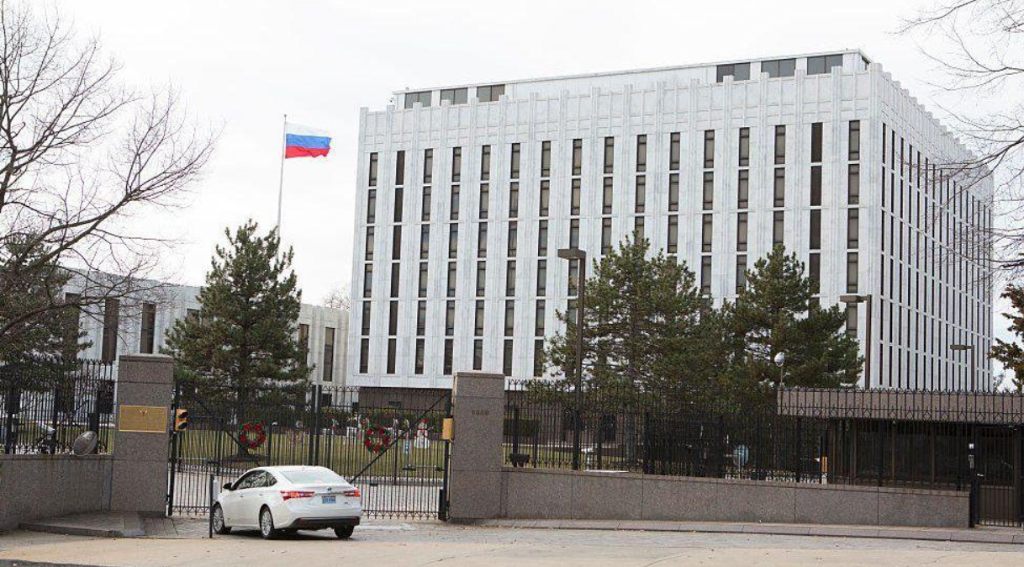
The ambassador’s post is not merely symbolic; it is a hub for intelligence gathering, policy advocacy, and crisis management. Dartsev’s disappearance leaves a void that the Kremlin will need to fill swiftly to maintain operational continuity in one of its most critical embassies abroad.
His successor’s appointment will be closely watched. Will Moscow prioritize continuity by choosing another seasoned diplomat with deep US experience? Or could this be an opportunity to signal a shift in strategy in the face of ongoing sanctions and geopolitical confrontation?
In the short term, the embassy is expected to continue functioning under interim leadership. But the long-term impact on US-Russia dialogue remains uncertain, especially as both nations grapple with unresolved conflicts, arms control talks, and divergent visions for European security.
Legacy of a diplomat in a fractured world
Dartsev’s death arrives at a pivotal moment in international relations. Ambassadors are often the unsung architects of crisis prevention, even when headlines focus on summits and summits fail. In Washington, he represented more than a bilateral link; he embodied Russia’s attempt to preserve influence amid isolation.
As nations reassess their diplomatic networks in response to shifting power balances, the loss of a figure of Dartsev’s experience serves as a reminder of how fragile professional continuity can be. His passing will inevitably trigger a reevaluation of Moscow’s approach to its most critical diplomatic outpost.
What remains clear is that the absence of a permanent ambassador will be felt in both capitals. Whether this moment accelerates new channels of engagement or entrenches further division may well define the next chapter in one of the world’s most consequential relationships.