how the us-Morocco partnership shaped a century-old alliance and its role in the ceuta migration surge
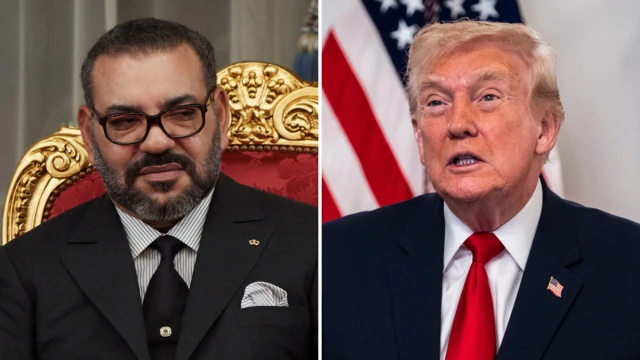
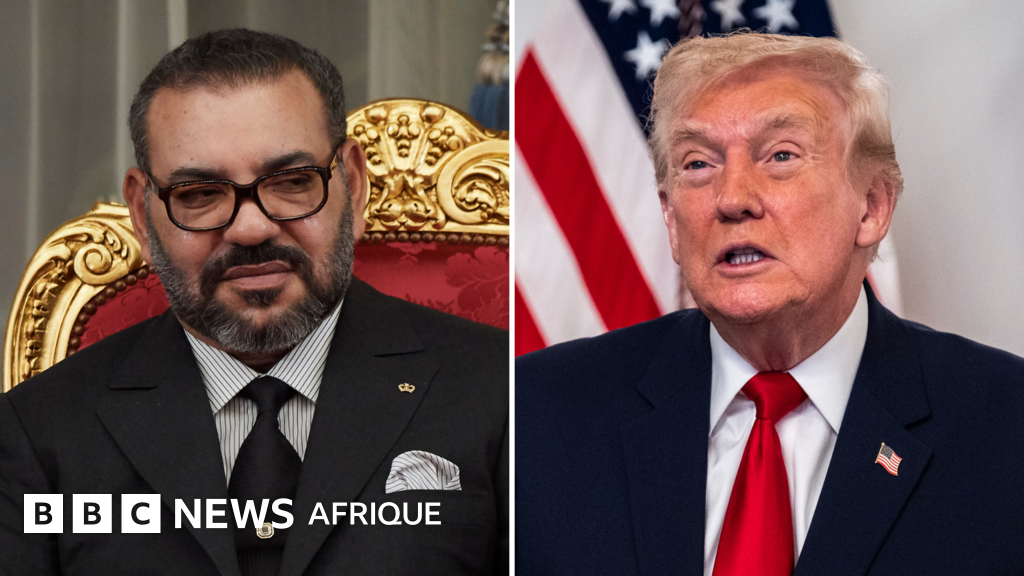
For over two centuries, the bond between the United States and Morocco has defied geography and evolved into a strategic partnership that now plays a pivotal role in one of Europe’s most pressing migration crises. When more than 70,000 people surged into the Spanish enclave of Ceuta earlier this year—leaving at least 140 dead along the border—the United States stood firmly by Morocco’s side, refusing to challenge its ally even as tensions flared with Spain.
The US response underscored the depth of ties between Washington and Rabat, marking a stark contrast with the criticism directed at Madrid. President Donald Trump labeled the events a “catastrophe” comparable to an “invasion,” while the State Department openly criticized Spain’s immigration policies and accused globalist circles of exacerbating the crisis. Yet, not once did the White House question Morocco’s actions or demand accountability from its long-standing partner.
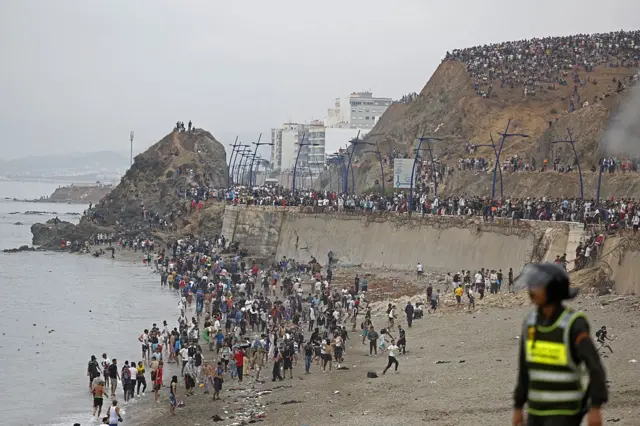
This unshaken support reflects a relationship built on mutual trust, forged long before today’s migration challenges. But how did this alliance begin, and what forces have shaped its evolution over the decades?
From early diplomacy to modern alliances
The roots of US-Morocco relations stretch back to the dawn of American independence. In 1776, as the newly formed United States declared freedom from British rule, the Alaouite Sultanate of Morocco—led by Sultan Mohammed III—stood as one of the few sovereign states outside Europe willing to engage with the young republic.
Just 18 months after the United States declared independence, Morocco became the first country in the world to grant American ships unrestricted access to its ports. This gesture was not merely diplomatic; it was a lifeline for the fledgling nation. With the British navy no longer protecting American vessels, US merchant ships were vulnerable to pirate attacks along the North African coast. The 1786 Treaty of Peace and Friendship signed in Marrakech provided safe passage, opened Moroccan markets to US trade, and bolstered America’s international standing.
“Morocco’s strategic location at the gateway to the Mediterranean, its ties to Europe, Africa, and the Islamic world, made it a critical partner for the United States as it sought global recognition and trade opportunities,” explains Timothy W. Kneeland, professor of history and political science at Nazareth University in New York.
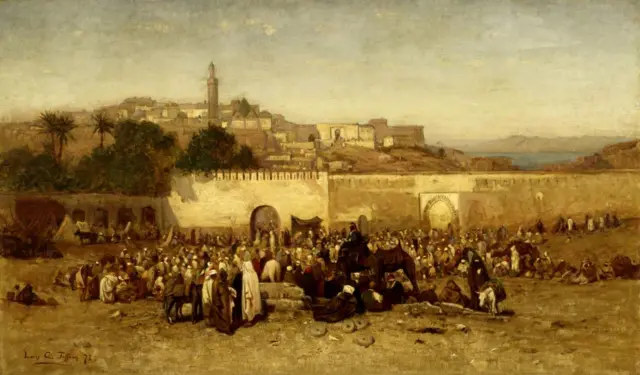
The treaty, renegotiated in 1836, remains in force today—making it the oldest continuous agreement in US diplomatic history. “As Moroccans are quick to point out, the 1786 treaty is the longest-standing accord the United States has ever maintained,” notes Sarah Yerkes, associate fellow at the Carnegie Endowment for International Peace and expert on US foreign policy in the Middle East and North Africa.
Despite this historic foundation, the relationship did not always translate into close cooperation. During Morocco’s colonial division in 1912 between French and Spanish spheres, the US hesitated before recognizing the new colonial order—finally doing so in 1917. But upon Morocco’s independence in 1956, Washington swiftly recognized the new state and opened its embassy in Rabat within months.
Security, trade, and the Western Sahara question
Security cooperation between the US and Morocco predates Moroccan independence. In 1950, while Morocco was still under French protection, Washington and Paris agreed to develop several air bases in the country—laying the groundwork for future military collaboration.
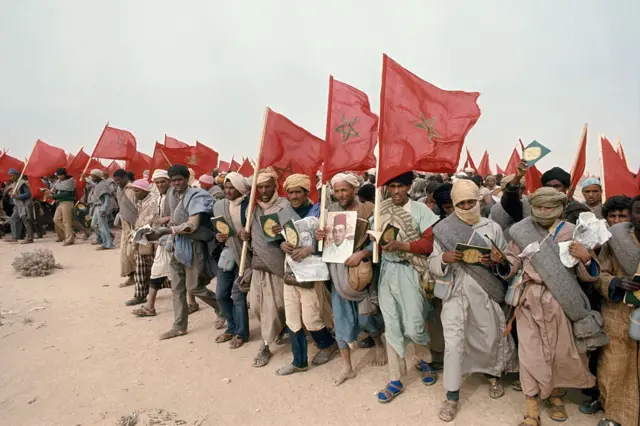
By the mid-1970s, US support for Morocco intensified during a pivotal moment in North African history. As Spain’s dictator Francisco Franco lay dying, King Hassan II orchestrated the Green March—a mass civilian mobilization of 350,000 people—to pressure Madrid into relinquishing control of Western Sahara. Spain eventually transferred administrative authority to Morocco and Mauritania.
While publicly advocating for a negotiated solution, declassified documents reveal that Washington privately aligned with Rabat. In 1974, Henry Kissinger told Hassan II that, in his position, he would have acted similarly. By 1976, US officials acknowledged they had placed “no significant obstacles” in Morocco’s path in Western Sahara—a stance later described in diplomatic reports as “essentially pro-Moroccan.”
The security partnership took on new significance after the 9/11 attacks. “Geopolitically, Morocco has become a steadfast US ally in the global fight against terrorism,” says Professor Kneeland.
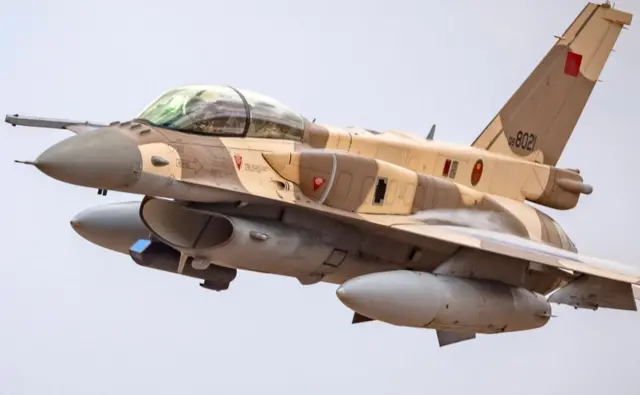
In 2004, under President George W. Bush, Morocco was designated a Major Non-NATO Ally, granting it privileged access to US military technology and training. The kingdom hosts African Lion, the largest annual exercise conducted by US Africa Command (AFRICOM), and jointly trains special forces with Washington. The two nations co-chair the Africa working group of the international coalition against ISIS, coordinating counterterrorism efforts across the continent.
According to the Stockholm International Peace Research Institute (SIPRI), the US supplied 60% of Morocco’s major weapons imports between 2021 and 2025—far exceeding Israel (24%) and France (10%).
Economically, the 2006 US-Morocco Free Trade Agreement—the first of its kind between the US and an African nation—has dramatically reduced trade barriers. By 2025, bilateral trade reached $7.4 billion, nearly eight times the $927 million recorded in 2005. While modest compared to the US economy, where Morocco ranks as its 46th export market, the agreement has fostered deeper commercial integration.
The alliance reached its most visible diplomatic milestone in 2020, when the Trump administration recognized Morocco’s sovereignty over Western Sahara as part of the Abraham Accords normalization process with Israel. Washington continues to uphold this position today, advocating for Rabat’s autonomy plan as the only viable path to resolving the conflict.
“Morocco is the most successful participant in the Abraham Accords. Its normalization with Israel has endured despite the Gaza war and remains firmly established,” observes Yerkes.
The US-Morocco-Spain triangle and the Ceuta crisis
The Ceuta migration surge exposed deep cracks within the triangular relationship between the US, Morocco, and Spain—all NATO allies. While Madrid serves as a key US military partner—hosting American forces at Rota and Morón bases—it also relies heavily on Moroccan cooperation to manage migration flows from Africa.
Yet when thousands crossed into Ceuta in a single day, triggering a humanitarian and political crisis, Washington’s response sided unequivocally with Rabat. The administration did not question Morocco’s role nor demand explanations, instead blaming Spain’s immigration policy and criticizing its NATO allies for perceived weak border controls.
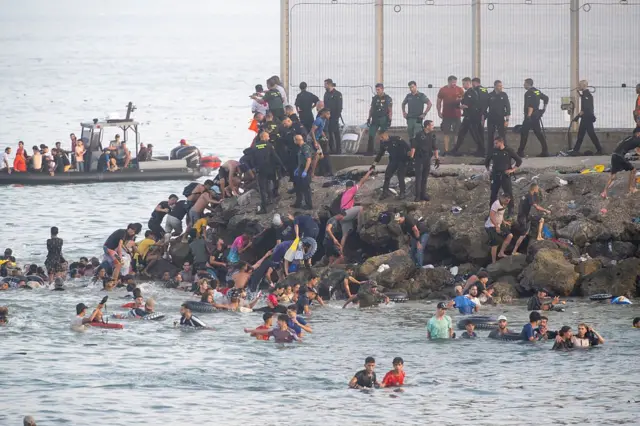
“I don’t believe Washington views the Ceuta events as a Moroccan initiative,” says Yerkes. “The White House was far more critical of Spain—blaming its border management for the crisis.”
This unconditional support for Morocco, even amid rising tensions, highlights the alliance’s resilience. It also signals Morocco’s growing value to the US as a regional partner—especially after Spain blocked American use of its bases and airspace for potential strikes against Iran. In a message marking Morocco’s Throne Day, Trump reinforced the partnership’s strength:
“This year, we celebrate 250 years of American history and an unbreakable friendship with Morocco—built on trust and mutual respect.”
He went on to reaffirm US recognition of Western Sahara as Moroccan territory and expressed hope for continued cooperation “for the next 250 years.”
The Ceuta crisis and Morocco’s recent renaming of a 1,000-kilometer highway in the Western Sahara to honor Trump underscore how deeply this alliance has evolved—from a historic treaty to a modern partnership shaping North African stability and transatlantic security.