Relations between the United States and Morocco are entering a new phase, with Washington’s stance on both the Western Sahara dispute and Spain’s North African enclaves of Ceuta and Melilla showing signs of alignment with Rabat’s positions. This shift could reshape geopolitical dynamics in the western Mediterranean and place Madrid in an unprecedented position.
Since late July, signals from Washington toward Rabat have intensified across multiple fronts: the Western Sahara dossier, economic cooperation, regional security, and now the status of Ceuta and Melilla. The two nations appear determined to deepen a partnership that has grown increasingly strategic over time.
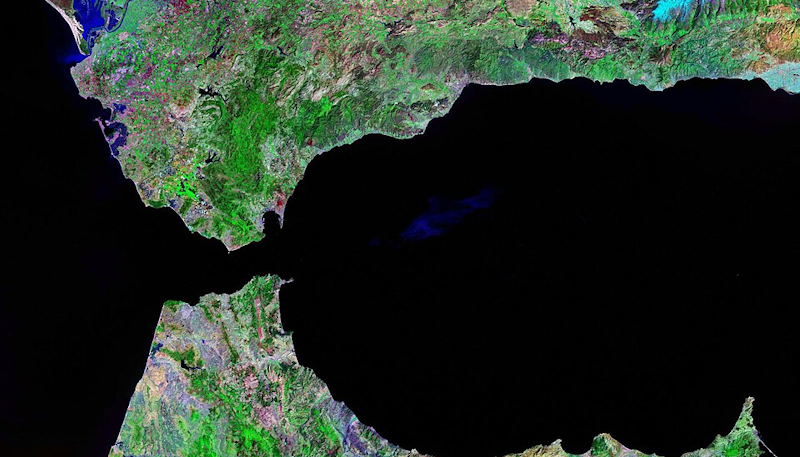
The timing of this development coincides with a recent migration crisis in Ceuta, where tens of thousands of people crossed into the Spanish enclave within 24 hours, overwhelming local authorities and drawing significant concern from European Union officials.
Western Sahara remains a cornerstone of Morocco’s strategy
In December 2020, the Trump administration recognized Morocco’s sovereignty over Western Sahara in exchange for the normalization of relations between Rabat and Tel Aviv. This move marked a turning point in the decades-long conflict between Morocco and the Polisario Front.
Six years later, Morocco continues to prioritize maintaining this American support, particularly as international negotiations on Western Sahara enter a critical phase. The decision to name a major highway in Western Sahara the “Donald J. Trump Highway” serves as a deliberate political gesture, underscoring Rabat’s efforts to secure continued backing from Washington.
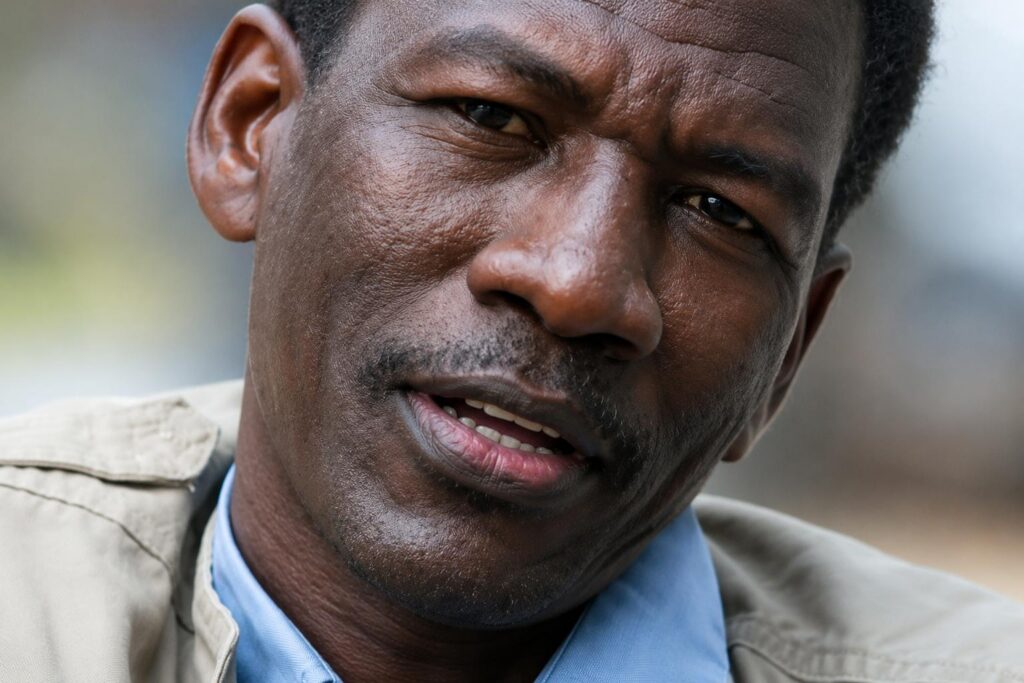
“This is part of Morocco’s broader strategy to align with the priorities of the Trump administration,” explains Riccardo Fabiani, North Africa Project Director at the International Crisis Group. “Rabat’s primary goal is to ensure that the United States maintains its backing for the Moroccan autonomy plan, especially as the conflict nears a potentially decisive phase.”
Economic interests drive diplomatic momentum
Morocco’s diplomatic push extends beyond political symbolism. In late July, the U.S. ambassador to Morocco traveled to Laâyoune, in the heart of Western Sahara, to finalize an agreement granting American funding for a new hydrogen and ammonia production facility.
According to Fabiani, this project reflects Washington’s growing focus on investments and contracts that benefit U.S. businesses, aligning with the Trump administration’s economic priorities. The strengthening ties between the two nations are built on multiple pillars: political support for Morocco, American economic interests, security cooperation, and shared strategic alignment regarding Israel.
Congress takes aim at the Polisario Front
Another development has raised concerns among supporters of the Polisario Front. Two U.S. lawmakers recently introduced a proposal to explore the possibility of designating the Sahrawi independence movement as a foreign terrorist organization. The same legislators also seek to investigate alleged links between the Polisario and Iran.
This initiative unfolds against the backdrop of escalating tensions between Washington and Tehran, with some U.S. politicians eager to counter what they perceive as Iranian influence networks in the Middle East and North Africa. Fabiani, however, points out that there is no verifiable evidence linking the Polisario Front to Iran or Hezbollah.
He suggests that Morocco is leveraging the current anti-Iran sentiment in Washington to frame the Western Sahara conflict in a way that aligns with U.S. geopolitical priorities. “Rabat consistently links conflicts involving Israel to its own confrontation with the Polisario,” Fabiani notes. “This strategy aims to present the Western Sahara issue through a lens that resonates with American strategic interests.”
Ceuta and Melilla: a growing point of contention
The most significant shift involves Ceuta and Melilla. Long regarded by Washington as Spanish territories, recent statements from U.S. officials suggest a subtle but meaningful departure from this stance, according to Fabiani.
“There have been clear indications that the United States no longer strictly views Ceuta and Melilla as Spanish territories,” he observes. This evolving position implies a growing, if implicit, endorsement of Morocco’s territorial claims over the enclaves—a stance Rabat has long maintained while Madrid insists on their Spanish sovereignty.
Should Washington adopt a more assertive stance on this issue, it could introduce a new fault line in relations between the United States and Spain, a traditional ally of Washington in the region.
The Ceuta migration crisis: deliberate or opportunistic?
The backdrop to this diplomatic shift is a dramatic migration surge in Ceuta, where tens of thousands of people arrived within a short period, overwhelming Spanish border forces and sparking alarm across the European Union. The origins of the crisis remain hotly debated: was it a spontaneous event or a calculated move by Moroccan authorities?
Fabiani dismisses the idea that the crisis was entirely manufactured by Rabat. Instead, he argues that it was largely spontaneous before being politically exploited by Morocco to send a clear message to Spain. “The incident allowed Rabat to reinforce the message that Ceuta’s status remains an open question from its perspective,” he says.
Spain adapts to a shifting strategic landscape
In response, Spanish Prime Minister Pedro Sánchez visited Algiers in a bid to strengthen bilateral ties, particularly in energy cooperation. While this move may raise eyebrows in Rabat, Fabiani believes it does not fundamentally alter Spain’s stance on Western Sahara, where Madrid continues to support Morocco’s autonomy plan.
Sánchez’s visit to Algeria should not be interpreted as a major shift in Spanish policy but rather as a response to the broader territorial dispute with Morocco, with Ceuta serving as the focal point.
Could U.S. backing for Morocco redefine alliances?
For Spain, the implications extend beyond its bilateral tensions with Morocco. A U.S. realignment toward Morocco’s position on Ceuta and Melilla could destabilize the strategic framework that has long underpinned Spain’s security environment, which relies heavily on its alliances with the West, particularly the United States and NATO.
Fabiani warns that the question of Spanish sovereignty over Ceuta and Melilla could resurface in future political negotiations. While he does not foresee an imminent crisis, he suggests that current trends could lay the groundwork for a potential renegotiation of the enclaves’ status in the coming years.
A reshaping of alliances in North Africa
Beneath the surface of diplomatic posturing, a new power dynamic is emerging in North Africa. Morocco is seeking to solidify its partnership with Washington to secure sustained support for its positions on Western Sahara—and now on Ceuta and Melilla. The United States appears to be prioritizing a strategy rooted in strategic and economic interests, while Spain grapples with the uncertainty of a less predictable transatlantic relationship.
For Rabat, the current moment presents an opportunity to advance its long-standing territorial claims. For Madrid, it represents an unprecedented strategic challenge. The Western Sahara dispute and the Ceuta issue, once distinct, may now converge into a single battleground for American influence in the Maghreb and the broader western Mediterranean.