Public backlash grows over Niamey’s education crisis amid fallout from school closures and teacher shortages
The first Education and Training Ministers’ Conference of the Alliance of Sahel States (AES), held today in Niamey, opened under heavy scrutiny as Niger, Burkina Faso, and Mali grapple with the fallout of a deepening education crisis. The gathering, presided over by Niger’s Prime Minister Ali Mahamane Lamine Zeine, brings together delegations from all three countries to debate a sobering question: how can education sovereignty be built when classrooms are empty and qualified teachers are scarce?
The event arrives at a pivotal moment. Behind the ambition to integrate curricula, recognize diplomas, and strengthen teacher training lies a stark reality: thousands of Sahelian children are being denied their right to education, not only due to a lack of resources but because of violence forcing schools to close and teachers to flee.
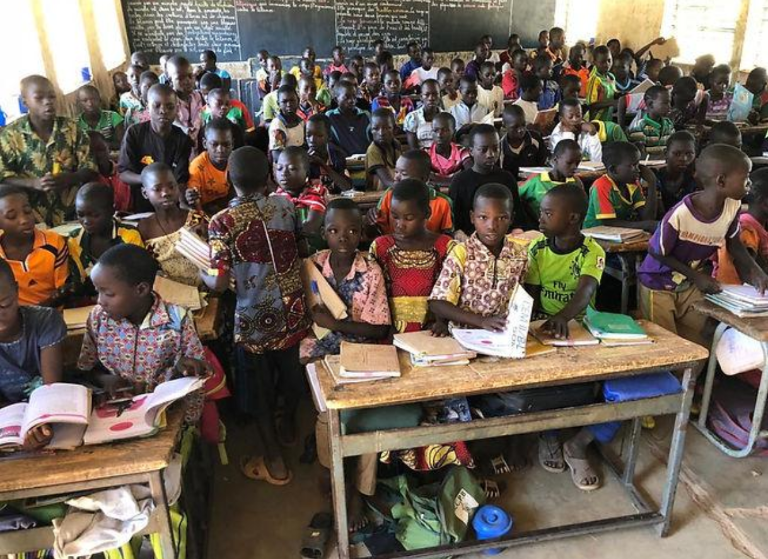
From empty classrooms to overcrowded desks: the human cost of teacher shortages
The numbers tell a troubling story. In Niger, the 2023–2024 school year saw 69,636 primary school teachers responsible for over 3 million students — an average of 43 pupils per educator. While the deficit is numerical, the deeper issue is one of quality. In May 2026, Education Minister Élisabeth Shérif acknowledged that the education system still relies heavily on underqualified contract teachers, with 78.5% of public school teachers in 2017 lacking proper pedagogical training.
In Burkina Faso and Mali, security threats and the inability to deploy educators to remote areas have only worsened the shortfall. Nearly five million children remain out of school in Niger alone — a figure that underscores the scale of the challenge ahead.
Armed violence and displacement: when terror closes the door to learning
The education crisis in the Sahel is no longer just about resources — it is a security issue. In Burkina Faso, over 5,300 schools were closed in early 2024, removing 820,000 students and 24,000 teachers from the classroom. Mali faces similar struggles, with 2,444 schools still non-functional as of mid-2026, impacting 733,200 children. In Niger, 1,097 schools were shuttered by the end of 2025 due to insecurity, affecting 93,676 students, nearly half of them girls — many in the Tillabéri region.
These closures are not temporary. They represent a structural breakdown in access to education. Families fleeing violence often leave behind schools, homes, and livelihoods, disrupting years of education for their children. With over 2 million internally displaced persons in Burkina Faso and half a million in Niger, the pressure on host communities’ schools is intensifying, pushing more children toward permanent dropout.
Can Niamey’s conference turn the tide?
The AES Education Ministers’ Conference is meant to do more than debate policy — it aims to chart a path forward. Proposed measures include harmonized curricula, pooled teaching resources, accelerated teacher training, and emergency interventions: reopening closed schools, securing classrooms, recruiting educators in high-risk zones, and creating alternative learning pathways for displaced children.
But the gap between ambition and action remains wide. If the conference fails to deliver tangible commitments — such as guaranteed funding for teacher recruitment, faster certification of qualified educators, and rapid school reopenings — the dream of an integrated, sovereign education system could remain just that: a dream.
The road to education sovereignty: beyond declarations, real results
The true test of success will be measured not in ministerial speeches but in classrooms across the Sahel. Will Niamey’s conference lead to more teachers in classrooms? To more schools opening their doors? To fewer children left behind?
The stakes are existential. A sovereign education system is one that protects its youth, equips them with knowledge, and prepares them for the future. For the AES, the question is no longer theoretical. It is urgent, practical, and deeply human: will every child in the Sahel have a seat in a classroom — or will the crisis of today define the future of a generation?