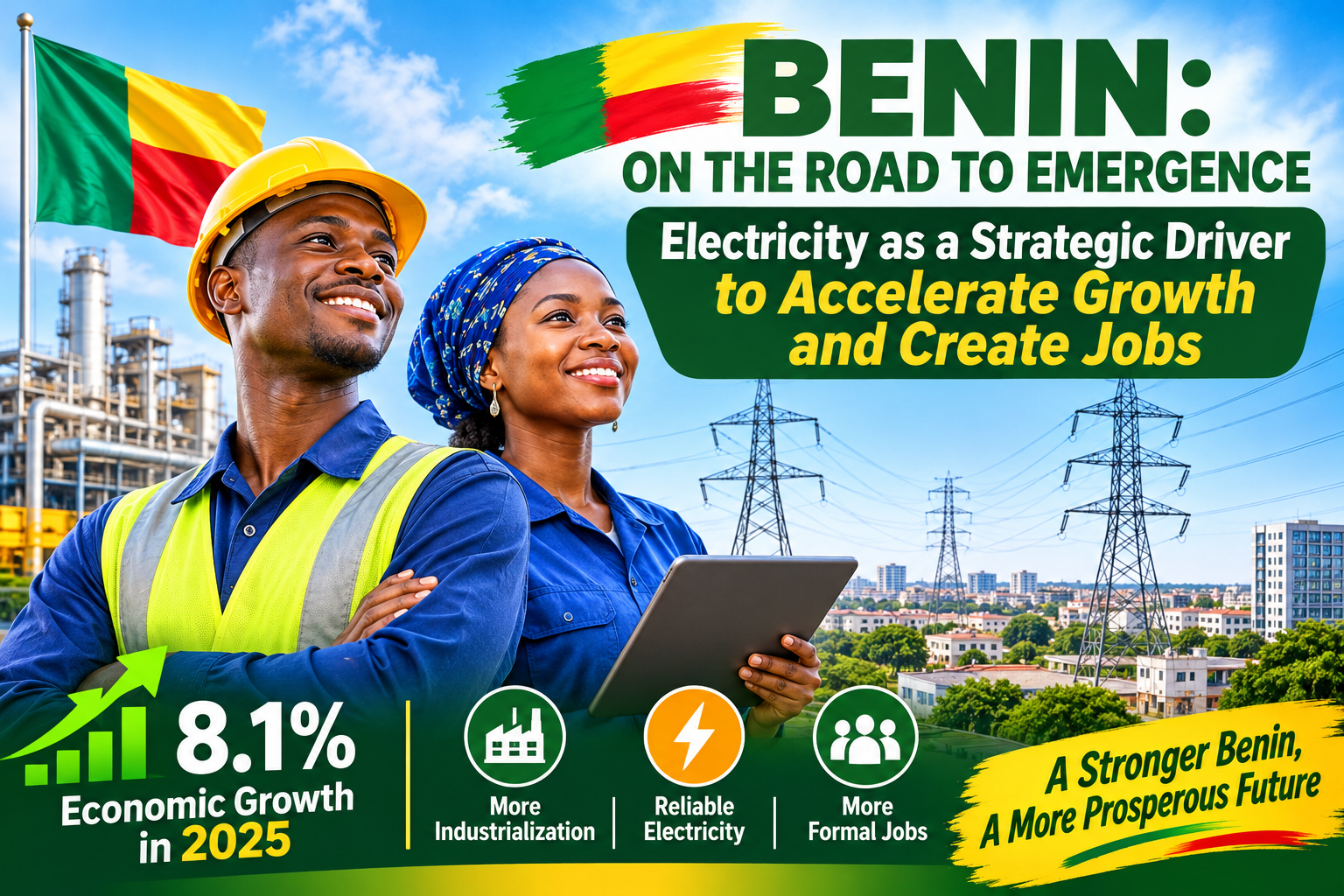
As Benin celebrates an average annual economic growth rate of 7.1% between 2021 and 2025, surpassing 8% in 2025 alone, the West African nation stands out as one of the region’s most resilient economies. Massive infrastructure investments, industrial expansion, and economic modernization have fueled this expansion. Yet, despite these strong macroeconomic indicators, a troubling disconnect persists: growth is failing to generate sufficient formal, stable, and well-paid employment opportunities.
This paradox is at the heart of the ongoing public debate in Benin, as highlighted in the latest economic outlook reports. In 2022, a staggering 96.3% of workers were trapped in the informal economy, according to labor market data. The situation is particularly acute among young people, with only 9% in formal employment. Eight out of ten new jobs created remain self-employed positions with no contract, no guaranteed income, and no social protections. The challenge is no longer about growth itself it’s about transforming that growth into productive, sustainable jobs.
The industrial hubs are growing, but the energy gap threatens progress
Industrial zones such as the Glo-Djigbé Industrial Zone (GDIZ) offer a glimpse of hope. By 2025, the GDIZ employed 22,798 people a 28.8% increase from 2024. However, this progress is uneven and fragile. Businesses across the country continue to grapple with a major obstacle: reliable access to electricity.
The energy crisis is not just a logistical issue it is a direct threat to competitiveness. Nearly half of Beninese businesses cite electricity as a major barrier to their operations. A staggering 86.1% report frequent power cuts. For small and medium enterprises (SMEs), these interruptions are costly: lost production time, spoiled raw materials, missed export deadlines, and soaring operational costs from reliance on diesel generators. In 2024, technical and commercial losses on the national grid reached 24.7%, and nearly half of transmission lines and substations were over 25 years old. With declining natural gas supply, Benin has been forced to rely more on heavy fuel oil an expensive and environmentally taxing solution.
Public outcry and policy pressure intensify
The energy shortfall has ignited heated public discourse. Trade unions, youth associations, and the private sector are demanding urgent reforms. Critics argue that without reliable electricity, Benin cannot compete in regional markets, attract foreign investment, or sustain industrial growth. The energy sector, they say, has become the weakest link in the country’s economic transformation strategy.
In response, the government has accelerated partnerships with international development agencies. The Mission 300 initiative led jointly by the World Bank and the African Development Bank aims to bring electricity to 300 million Africans by 2030. For Benin, this includes a National Energy Compact focused on scaling up generation, modernizing transmission and distribution networks, and mobilizing private finance.
New solar and thermal projects aim to close the gap
Key projects are already in motion. Four solar plants in Natitingou, Djougou, Bohicon, and Parakou are under development, with a combined capacity of 50 MW. A new 128 MW thermal plant in Onigbolo is also planned. These initiatives promise not only to increase supply but to diversify Benin’s energy mix and reduce vulnerability to fuel price fluctuations.
Yet, the real test lies in execution. The World Bank estimates that successful implementation of the Mission 300 Compact could generate or improve nearly 159,000 jobs in Benin by 2030. But this potential will only materialize if reforms are implemented rigorously: reducing technical and commercial losses, improving governance in the energy sector, stabilizing fuel supply costs, and accelerating connections to the grid.
From growth to jobs: the next phase of Benin’s economic journey
The question now is whether Benin can move beyond headline GDP growth and translate its industrial and energy investments into real opportunities for its people. The GDIZ’s employment gains show progress is possible. But for the broader economy especially SMEs, agribusinesses, and young entrepreneurs reliable electricity is non-negotiable.
If Benin succeeds in stabilizing its power supply, lowering business costs, and fostering an enabling environment for private investment, it could unlock a new wave of job creation. The stakes are high: will this growth translate into formal employment? Can young people find decent work? Can small businesses grow without fear of blackouts?
The answers to these questions will define whether Benin’s economic rise becomes a story of shared prosperity or another case of growth without transformation.
By Aïcha Abdou — Journalist