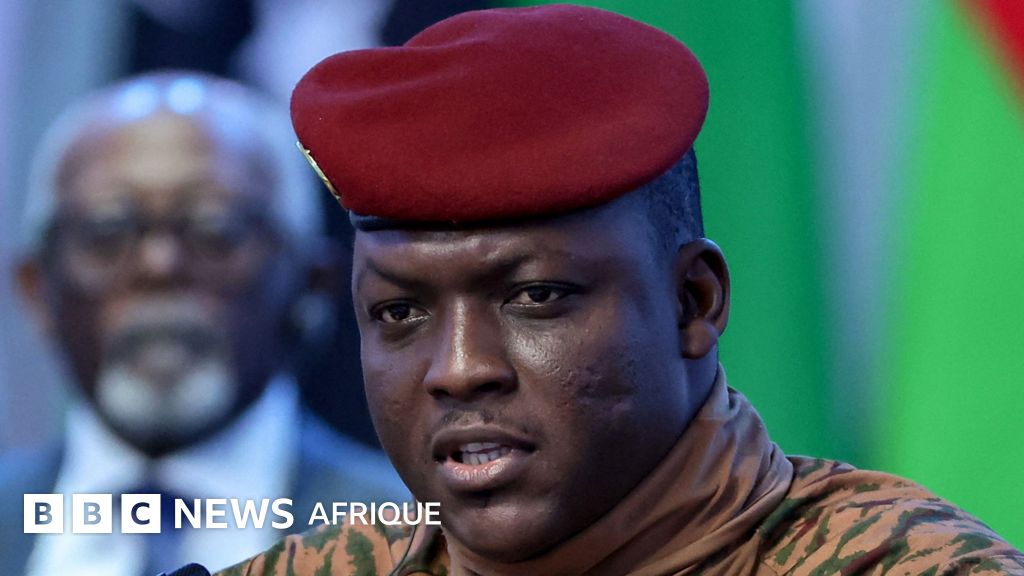
Ibrahim Traoré, the military ruler of Burkina Faso, has declared that the nation must “forget” democracy, calling the system incompatible with the country’s needs. Speaking on national television, the 38-year-old captain claimed that most Africans do not desire democratic governance and that Burkina Faso would pursue an alternative path, though he provided no further details.
From promised democracy to prolonged military rule
Traoré seized power three years ago, pledging to restore democratic governance by July 2024. However, with the deadline approaching, the junta extended its mandate by five years, citing the need for stability and reform. In January, authorities banned all political parties, framing the move as part of a broader effort to “rebuild the state.”
A revolutionary model inspired by Libya
“Look at Libya—it’s a close example,” Traoré stated, referencing the North African nation’s decades-long rule under Muammar Gaddafi. While Gaddafi’s authoritarian regime provided social services, his ousting in a Western-backed rebellion led to prolonged instability, with no elections held since. Traoré argued that Western-imposed democracy often results in bloodshed, contrasting it with Burkina Faso’s planned revolutionary system.
Criticism of traditional politics
The military leader dismissed conventional politics as inherently corrupt, stating, “In Africa—at least as we’ve seen in Burkina Faso—a real politician embodies all vices: liars, flatterers, and mere talkers.” He framed his administration as a break from the past, emphasizing sovereignty, patriotism, and grassroots mobilization as pillars of the new order. Economic and military self-reliance were highlighted as critical to the nation’s progress, with Traoré advocating for longer working hours to accelerate development.
Crackdown on dissent
Traoré’s tenure has been marked by repression of opposition, media, and civil society groups. Critics have accused his government of silencing dissent by deploying opponents to frontline combat against Islamist militants. Despite these measures, his anti-Western rhetoric and pan-Africanist stance have garnered significant support across the continent.
Shifting alliances in the Sahel
Like neighboring Mali and Niger, Burkina Faso has distanced itself from Western partners in the fight against Islamist insurgencies. Instead, it has turned to Russia for military assistance, though violence in the region continues unabated. A recent report by Human Rights Watch (HRW) revealed that over 1,800 civilians have been killed in Burkina Faso since Traoré’s 2023 takeover, with two-thirds of the deaths attributed to state forces and allied militias.