Coordinated assaults in Mali’s Mopti region intensify security crisis
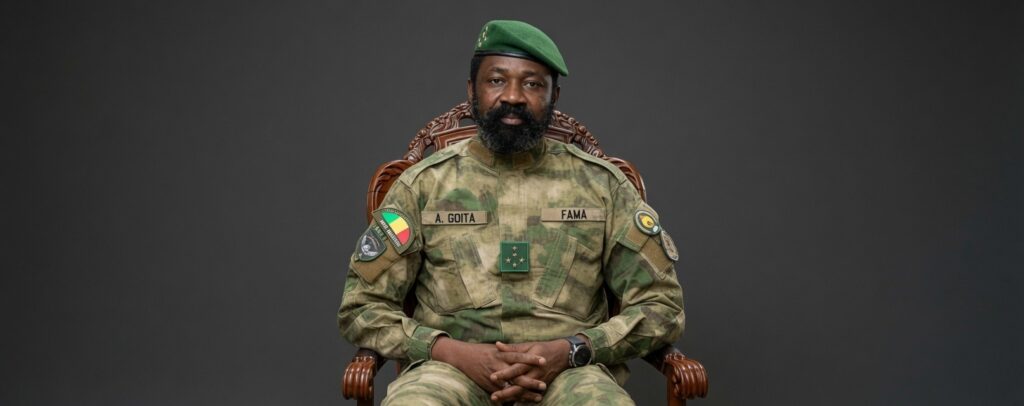
On Sunday, July 19, the Group for the Support of Islam and Muslims (JNIM) launched a series of synchronized attacks across Mali’s Mopti region, targeting government forces, Russian-backed Africa Corps troops, and local militias. The militant faction, affiliated with Al-Qaeda, claimed responsibility for four simultaneous assaults, underscoring its operational capability despite widespread counterterrorism efforts. Five years after Colonel Assimi Goïta’s takeover, the junta’s pledge to restore Mali’s territorial integrity remains unfulfilled, as the country grapples with an unprecedented security and humanitarian collapse.
Wave of violence disrupts Mopti’s fragile stability
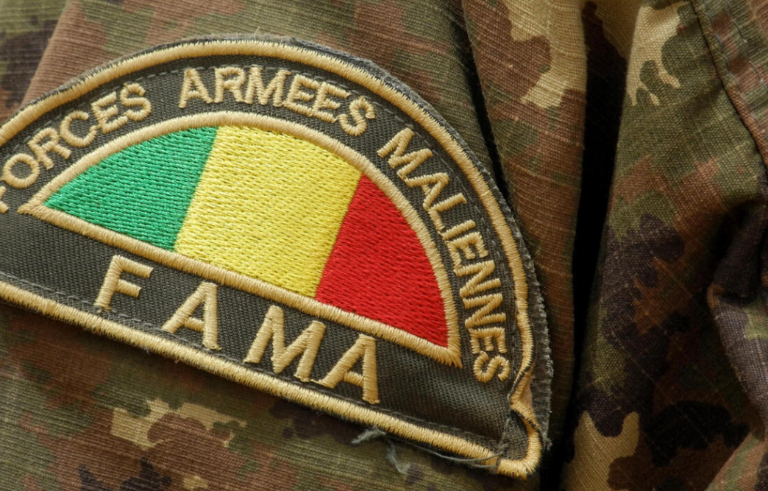
The July 19 offensive highlighted the JNIM’s growing boldness and tactical sophistication. In the Douentza area, militants detonated three improvised explosive devices (IEDs), striking a supply convoy, a military truck, and a motorcycle detachment. These strikes deliberately targeted Malian Armed Forces (FAMa) soldiers alongside Russian mercenaries from Africa Corps—formerly Wagner Group—demonstrating the group’s ability to exploit gaps in security. Further west, near Kansila, JNIM fighters launched a direct assault on a local Dozo militia, a traditional hunter group often deployed as auxiliary forces by Bamako. The militants reported killing three Dozo fighters, though independent verification remains scarce.
Goïta’s regime faces damning security and humanitarian statistics
When Goïta seized power in 2019, his junta vowed to reclaim all lost territories and stabilize regions abandoned by democratic governments and Western partners like France’s Barkhane operation. Yet conflict data reveals a starkly different reality. Research centers tracking violence, including the Armed Conflict Location & Event Data Project (ACLED), show a sharp rise in fatalities: deaths from political violence and terrorist attacks have doubled—or even tripled—in several provinces compared to pre-coup levels. The surge in violence has also fragmented the conflict landscape, with the emergence of Africa Corps and deliberate targeting of ethnic communities fueling inter-communal tensions and jihadist recruitment. Roadside bombings and ambushes, once sporadic, have become near-daily occurrences, crippling key transport arteries across the country.
State retreat fuels humanitarian disaster
Despite official declarations of military progress—such as the 2023 retaking of Kidal—Bamako’s control over vast swathes of territory remains tenuous. Central and northern Mali are now lawless zones where state institutions have collapsed. According to United Nations agencies, over 400,000 Malians are internally displaced, fleeing both jihadist atrocities and the collateral damage of military operations. Blockades imposed by JNIM and the Islamic State in the Greater Sahara (EIGS) have triggered severe food shortages in entire regions. With roads unsafe, humanitarian aid cannot reach besieged populations, turning a security crisis into a hidden humanitarian catastrophe.
Russia’s Africa Corps fails to deliver on security promises
To fill the vacuum left by departing French forces and the UN’s MINUSMA mission, Bamako turned to Moscow. After Wagner Group’s controversial withdrawal, Africa Corps—directly linked to Russia’s Defense Ministry—deployed several hundred paramilitaries. However, their impact has been minimal. Tactically, Africa Corps has struggled to contain the insurgency, suffering regular casualties and lacking the manpower for effective counterinsurgency across Mali’s vast terrain. More critically, human rights monitors have documented repeated abuses by Russian forces, including the alleged massacre in Moura, which have driven civilians toward militant groups offering protection. Rather than quelling violence, Africa Corps’ presence has exacerbated local grievances and deepened distrust in state institutions.
Aerial strategy fraught with technical and tactical flaws
Facing a shortage of ground troops, the Goïta regime invested heavily in aerial assets, purchasing drones and attack helicopters—primarily from Russia and Turkey. Initially, these platforms enabled large-scale airstrikes. But today, the strategy is faltering. Maintenance issues plague the fleet: several aircraft, including Albatros L-39 jets and Mi-24 helicopters, have crashed due to technical failures or been shot down by rebels. Compounding the problem, Russia’s logistical delays in supplying spare parts have grounded key assets. Meanwhile, insurgents have adapted, moving in smaller units, blending into civilian areas, and using dense vegetation to evade detection. As a result, airstrikes have become less effective—and tragically imprecise—often causing civilian harm and failing to degrade militant capabilities.
Military-first approach reaches a dead end
The July 19 attacks in Mopti are not isolated incidents; they reflect a systemic failure. Bamako’s reliance on a purely military strategy—marked by severed dialogue channels, alienated regional partners, and partnerships with Russian mercenaries more interested in resource extraction than peace—has led to a deadlock. Without a comprehensive political solution that restores governance, re-establishes public services, and protects civilians, Mali’s territory will continue to erode under the relentless pressure of a resurgent Sahelian jihadism.