The northern regions of Togo are grappling with an escalating terrorist threat spilling over from the Sahel, and the suspected presence of foreign military and paramilitary forces is igniting fierce debate in Lomé. In a joint statement released in July 2026, several opposition coalitions and civil society movements have directly challenged the government led by President Faure Gnassingbé. At the center of the controversy are concerns over institutional opacity, the undisclosed numbers of Russian Africa Corps personnel, and security contracts with the Turkish firm SADAT. The national sovereignty and transparency of these arrangements are now under intense public scrutiny.

Unified opposition demands answers from the government
Political pressure is intensifying in the Togolese capital as a coalition of opposition groups, including the Dynamique Monseigneur Kpodzro (DMK), the Dynamique pour la majorité du peuple (DMP), the Lumière pour le développement dans la paix (LDP), and the Front « Touche pas à ma Constitution », has broken its silence with a joint statement. Their primary concern revolves around the deployment of foreign military and paramilitary personnel, particularly in the Savanes region—Togo’s northern frontier with Burkina Faso—where armed terrorist groups have been active for years.
The signatories argue that while national security is paramount, the complete lack of official communication is unacceptable. With the government remaining silent, these political and civic organizations are insisting on a transparent clarification regarding the legal status, specific missions, and framework governing the presence of these foreign actors on Togolese soil.
Controversial actors fueling speculation
The opposition’s concerns focus on two key entities with strong regional ties: the Africa Corps and the Turkish private military company SADAT.
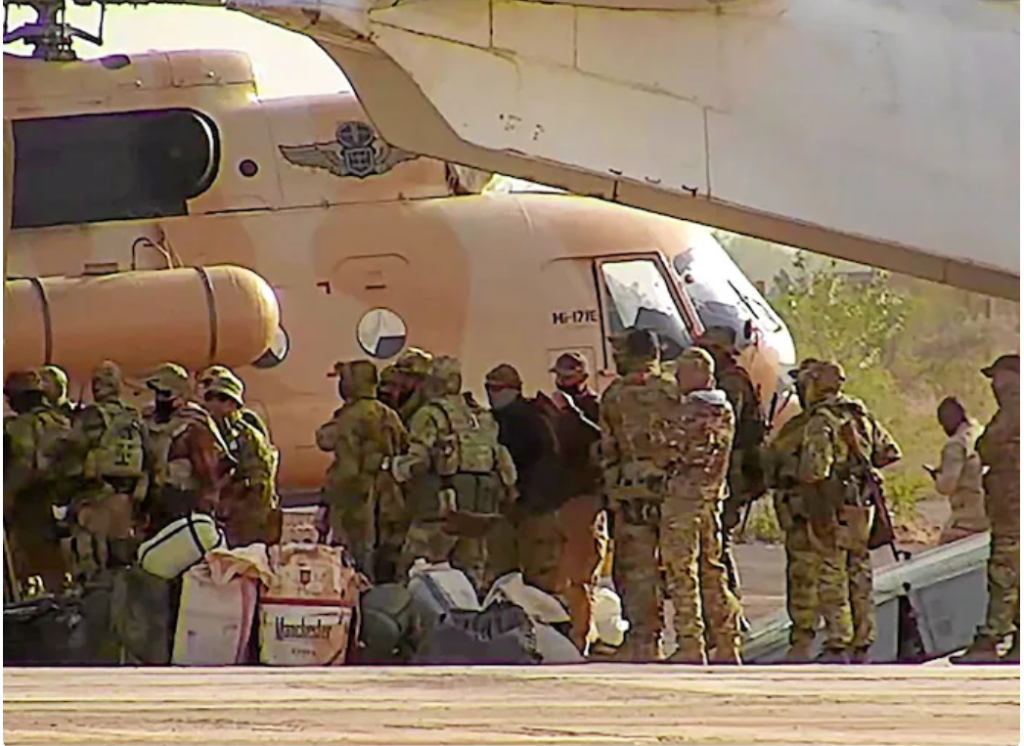
The Africa Corps, a restructured Russian security presence on the continent, is reportedly deploying around 350 personnel in Togo, according to widely circulated international reports. Meanwhile, SADAT, known for its close ties to Ankara, is suspected of providing technical assistance, training, or operational support to local forces. To date, neither Lomé, Moscow, nor Ankara has provided verified figures or formal confirmation, leaving room for speculation about the true nature of their roles—whether as technical instructors, intelligence experts, or combat units directly involved in tactical operations.
Legal, financial, and sovereignty concerns
The opposition’s critique does not outright dismiss the necessity of strategic partnerships to safeguard national territory. However, it highlights critical gaps in institutional and legal oversight that undermine good governance.
The chain of command
A major point of contention is the authority under which these foreign personnel operate. The opposition is demanding strict guarantees that any foreign presence must be fully subordinated to the Forces armées togolaises (FAT) and must comply with both national and international legal frameworks.
Civil liberties at risk
Another major fear expressed in the joint statement is the potential for foreign interference in domestic politics. The opposition is adamant that these foreign personnel must not be involved in public order operations, targeted arrests, surveillance, or intimidation of civilians or local political figures.
The financial burden on taxpayers
The debate extends beyond military matters to financial accountability. How much is the Togolese public treasury spending on these security arrangements? With no parliamentary debate or budgetary oversight on these expenditures, the signatory parties are calling for increased citizen oversight of public spending.
Faure Gnassingbé’s strategic pivot
While the government has yet to publicly address the coalition’s demands, this engagement with international partners aligns with a broader diplomatic realignment pursued by President Gnassingbé over recent years. Faced with limitations from traditional Western allies, Togo has increasingly diversified its defense partnerships.
As early as 2021, Lomé signed a military cooperation framework with Turkey, resulting in the delivery of Bayraktar TB2 combat drones—now crucial for monitoring northern borders. Concurrently, strengthened ties with Moscow have led to agreements on military intelligence, officer training, joint exercises, and access to logistical infrastructure. This strategy is now formally embedded in the Togo-Sahel 2026–2028 Strategy, a government roadmap aimed at deepening security cooperation with foreign partners to secure the territory and curb the jihadist advance toward the Atlantic coast.
Is a national debate unavoidable?
The question of deploying foreign troops or instructors transcends technical military decisions. In a Sahelian region marked by political instability and shifting geopolitical alliances, the demand for clarity has become essential for political stability.
For Togolese civil society and opposition groups, national security cannot be negotiated behind closed doors. A parliamentary or public debate would help ease tensions, provide clear answers on the legal framework of these interventions, and prevent security concerns from becoming a source of internal political friction. For now, all eyes remain on the government, whose clarifications are eagerly awaited by a significant portion of public opinion.