Yaoundé has already set up working groups to scrutinise Tripoli’s proposal in depth — but can a direct Libya-Cameroon air link realistically take off amid lingering security concerns?
On 23 September 2026, Cameroon’s Minister of Transport, Jean Ernest Masséna Ngallè Bibehè, held a meeting with a Libyan delegation led by Adel Shawi, Chargé d’affaires at the Libyan embassy in Cameroon. The two sides discussed the possibility of opening a direct air route between their countries.
Cameroon welcomed the initiative and proposed establishing technical working groups that would bring together the relevant officials to thoroughly examine the various issues tied to reviving this cooperation. Both parties also agreed to step up preparatory work and identify concrete pathways for implementing the project.
Yaoundé has signalled its willingness to support any moves that could strengthen air connectivity between Yaoundé and Tripoli, as well as broader economic and logistical ties between the two nations.
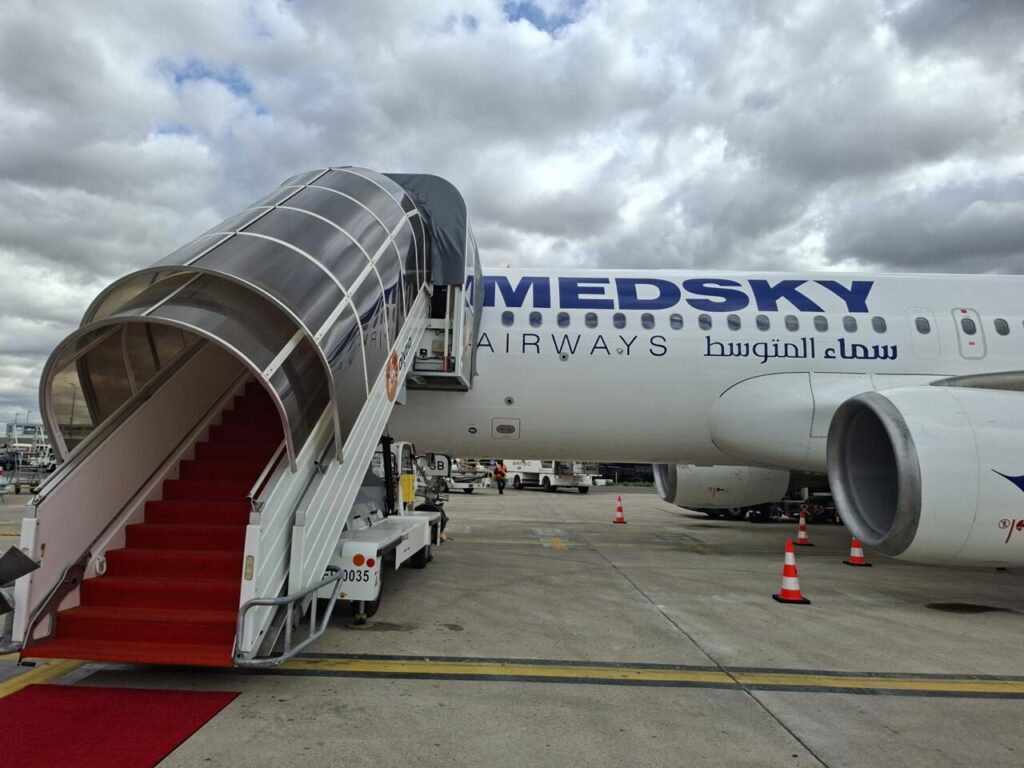
The proposal comes as Libya gradually reopens its airspace. On 17 September 2026, Libyan carrier MesSky operated its first direct flight from Tripoli to Paris, with a service from Benghazi also planned. This revival is unfolding against a backdrop of persistent security risks that continue to weigh on Libyan aviation.
Why Cameroon is proceeding with caution
Rather than rushing into a bilateral air services agreement, Cameroon has opted for a measured approach. The creation of working groups signals that Yaoundé wants to assess operational, regulatory and safety dimensions before committing to any deal.
For Cameroon, the potential benefits are clear: a direct link to Tripoli could open new trade corridors, ease travel for business communities and reduce reliance on indirect routes through other hubs. But the risks — from security volatility in Libya to questions over insurance and compliance — are equally real.
Libya’s push to reconnect with Africa
Tripoli’s overture to Yaoundé fits a broader pattern. After years of isolation, Libya is seeking to rebuild its air connections with African partners. The MesSky flight to Paris marked a symbolic milestone, but expanding southward into Central and West Africa would carry even greater strategic weight.
For Libya, a route to Cameroon would not only generate revenue for its carriers but also reinforce its diplomatic and economic footprint on the continent.
What happens next
The working groups are expected to examine several key questions: which carriers would operate the route, what traffic rights would be granted, how safety oversight would be handled, and what infrastructure exists at both ends.
Until those issues are resolved, the project remains a proposal rather than a scheduled service. But the fact that both sides have agreed to formalise discussions suggests the idea is no longer merely aspirational.
For now, travellers and businesses watching the Libya-Cameroon aviation file will need to wait for the technical groups to report back — and for both governments to decide whether the strategic case outweighs the operational hurdles.