mayo-tsanaga crisis: years of terror and state neglect in Cameroon’s forgotten region
Over 50 abandoned villages, thousands displaced, and the guilty silence of an absent state
The menace of Boko Haram is no longer a distant threat. In the Mayo-Tsanaga department of Cameroon, it has become an inescapable daily reality. Originating in Nigeria’s Borno State in the early 2000s, this Islamist insurgency crossed international borders in 2014. The first Cameroonian locality struck was Tourou village near the Gossi mountain, approximately 35 kilometers from Mokolo.
Since then, hundreds of Boko Haram fighters have maintained a stronghold on Gossi mountain in Tourou, and attacks have escalated to unprecedented levels. The group systematically burns villages, executes civilians, loots property, rapes women, and kidnaps residents. No aspect of life is spared: farms, markets, places of worship, police stations, schools, and health centers all become targets. After nearly 13 years of relentless violence, the region’s villages are being emptied—either through mass killings or forced abandonment. Yet despite the mounting human toll, no durable solution has emerged. The silence from authorities persists. The Mayo-Tsanaga is withering away, and it appears no one cares.
From Mokolo to Koza and extending into the Mayo-Moskota area, the scene is one of unprecedented territorial abandonment. More than 50 villages in the Mayo-Tsanaga have been completely or partially deserted by their inhabitants. Among the most affected are: Gossi, Tourou, Vizik, Ldamang, Magoumaz, Ldubam, Dinglding, Chougoulé, Oupai, Houdahai, Vouzoud, Ldama, Ziver Montagne, Houva, Gouzda Wayam, Tchébé-Tchébé, Koza, Locktcha, Toufou, Guedjele-Guibedrom, Zelevet, Krawa-Mafa, Ldaoutsaf, Merekouet, Dzamadzaf, Hitéré, Bavangola, Vreket, and Gouzou-dou.
In May 2022, during a gathering in Tourou and Mokolo, Mahadek Nicolo Nouhou, fifth deputy mayor of Mokolo, presented a grim report to the Minister of Public Health, Manaouda Malachie: ten villages had been fully deserted, two were under Boko Haram control, and seven others faced regular assaults. Terrorists now maintain a near-permanent presence in Gossi, Toufou 1, Toufou 2, Roum, and Hitawa—areas that local residents have gradually fled.
Since then, the situation has deteriorated further. Residents of Tourou express growing despair: “We feel abandoned to our fate. Why do our leaders and the government remain silent in the face of this tragedy? Do we, the people of the Mayo-Tsanaga, not count as true Cameroonian citizens?”
For more than a decade, people have lived in constant fear. By night, men flee their homes. By day, they return to tend to their land. Across the region—from Mokolo to Koza—no one sleeps in their own house after dark. When darkness falls, villagers seek refuge in mountain caves, sharing the space with snakes and other wildlife, risking bites and contamination. Only at sunrise do they descend to resume their daily labor.
Facing a heavily armed insurgency, Cameroon’s military presence remains woefully inadequate. During the early morning attack on June 18, 2026, at Ldamang and Ldubam—where dozens were injured or kidnapped—only two soldiers were deployed on the ground. Two soldiers against a heavily armed terrorist group. How can they possibly respond effectively? In many areas, vigilance committees—composed of civilians armed with machetes and sticks—find themselves on the front lines, outgunned and outmatched.
The silence of local elites is not mere inaction; it is complicity. The Mayo-Tsanaga is home to numerous high-ranking administrators and influential figures who could amplify the voices of suffering citizens. They appear at campaign rallies, deliver speeches, and make promises—but when villages burn and lives are lost, they fall silent. This is not oversight. It is a deliberate political choice. Ministers have visited the region, held meetings, and issued statements. Yet the promises remain in Mokolo. The attacks continue unabated.
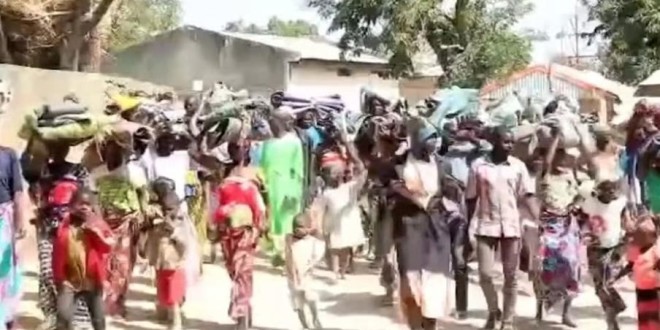
Mokolo yesterday. Koza before that. What comes tomorrow? No one knows. No one can say. Over 9,000 people displaced by Boko Haram violence have not been able to return home, and the number grows with each new incursion. Just in early June 2026, the International Organization for Migration recorded 482 newly displaced individuals—78 households—who fled attacks in Mokolo, Koza, and Mayo-Moskota. The crisis extends beyond departmental borders. By early July 2026, a local authority in Kalfou, Mayo-Danay department, reported receiving nearly 300 displaced persons who had fled Boko Haram violence from Mokolo. Located over 210 kilometers by road from Mokolo, this exodus underscores the scale of the humanitarian disaster: families travel hundreds of kilometers, abandoning homes, land, and livelihoods in search of safety.
Those who flee do not just leave their land—they leave behind their dead. Identity documents, birth certificates, and national IDs are often destroyed in the flames that consume their homes. But the deepest tragedy lies in the fracturing of families. During chaotic evacuations, parents and children become separated. Some escape with nothing but the clothes on their backs, unable to carry their loved ones. Children and adolescents, left to fend for themselves, lose access to education and protection. Their futures darken before their eyes: some abandon schooling, others turn to crime, and many young girls lose hope for a better life.
The Mayo-Tsanaga is emptying out. Agriculture is collapsing. Schools are closing. Local economies are vanishing. Without urgent intervention, the region faces irreversible depopulation. The state cannot afford to ignore its citizens simply because they live far from Yaoundé. The question lingers: how many more villages must be abandoned before this crisis becomes a national priority?