Morocco had cautioned Spain in advance about the potential migration surge triggered by a recent Spanish court decision, a senior Moroccan official asserted, refuting any lapses in the country’s border security measures.
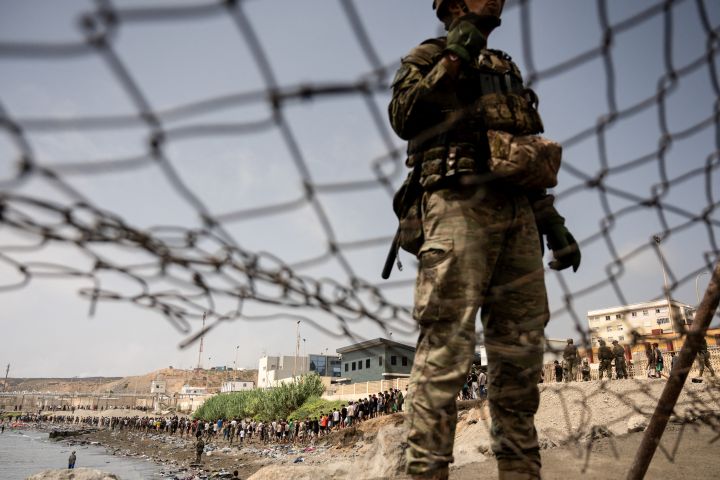
In the past few days, nearly 60,000 individuals—primarily Moroccans—have either entered or attempted to enter the Spanish enclave of Ceuta, either on foot or by swimming from the nearby city of Fnideq. This unprecedented influx quickly overwhelmed Ceuta’s resources before prompting thousands of returnees to Morocco.
According to the high-ranking official, who spoke anonymously late Monday, Moroccan authorities had notified Madrid of the risks posed by a Spanish Supreme Court ruling that prohibits immediate deportation of migrants arriving by sea. The official emphasized that Rabat had clearly communicated the likely consequences of this judgment.
«We explained that this ruling would create problems, and it did,» the official stated.
The Spanish Prime Minister, Pedro Sánchez, had attributed the unfolding crisis in Ceuta to rumors spread by «human trafficking mafias,» claiming they misinterpreted the court’s decision.
The Moroccan official noted that discussions with Spanish counterparts began around July 22–23, when smuggling networks started circulating information about the ruling.
He firmly rejected any suggestion of a failure in Morocco’s security apparatus, asserting that authorities had acted responsibly throughout the crisis.
«It’s simplistic to claim Morocco should have simply used force to stop them. That misses the complexity of the situation,» he argued, pointing out that law enforcement could not realistically confront such a large crowd.
He also stressed that migration management was not Morocco’s burden alone, highlighting the kingdom’s annual expenditure of approximately €500 million on migration-related challenges.
Despite the turmoil, the official praised the ongoing partnership between Rabat and Madrid, calling their cooperation on migration issues «flawless.»
«Now, it’s Spain’s turn to address the challenges posed by this ruling,» he concluded.