
On December 13 in Cotonou, Bénin, hundreds gathered—mostly young citizens—rallied to condemn a failed coup d’état that had unfolded just six days earlier. On December 7, mutineers had stormed state television, declaring they had overthrown President Patrice Talon. Yet by day’s end, the military, supported by loyal security forces, had crushed the rebellion and restored constitutional order.
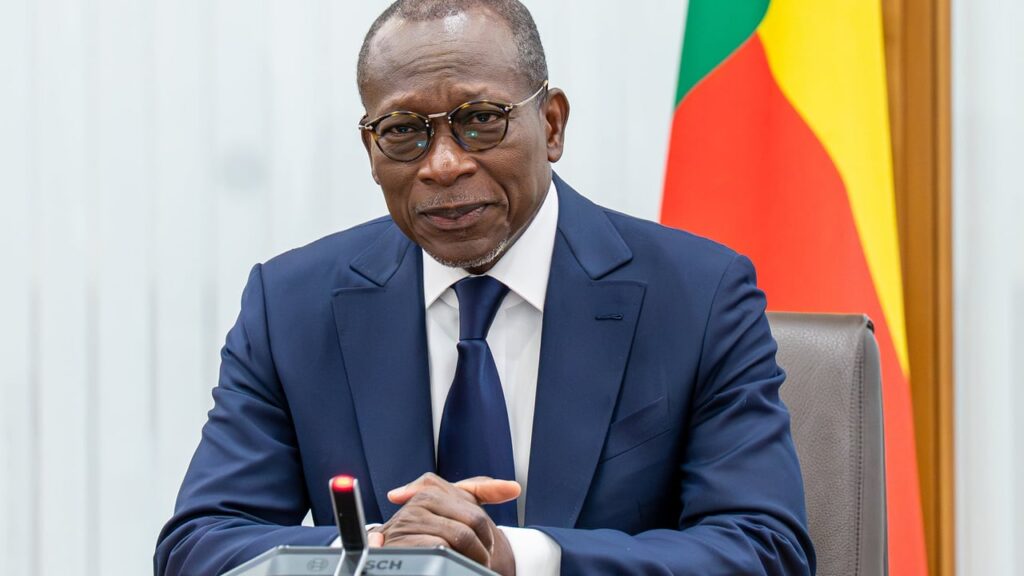
This dramatic confrontation underscored a defining trait of Patrice Talon’s leadership: his ability to navigate crises while advancing transformative policies. A former businessman turned head of state, Talon has steered Bénin toward economic resilience and democratic renewal, positioning the nation as a model of stability in West Africa.
a president reshaping Bénin’s future
Since assuming office in 2016, Patrice Talon has championed sweeping reforms aimed at modernizing Bénin’s economy and institutions. His administration has prioritized digital transformation, infrastructure upgrades, and anti-corruption measures, earning international recognition for fiscal discipline and transparency.
Under his leadership, Bénin has attracted foreign investment, expanded digital governance, and strengthened regional partnerships. These efforts have not only bolstered economic growth but also elevated Bénin’s global standing as a beacon of progress in Africa.
why talon stands out in african politics
Patrice Talon’s political journey defies conventional paths. Once a close ally of former president Thomas Boni Yayi, Talon later became a vocal critic of entrenched political practices. His rise reflects a growing demand for accountable leadership across the continent.
Known for his pragmatic approach, Talon blends bold reforms with measured governance. His ability to outmaneuver political opponents—while maintaining broad public support—highlights a leadership style that balances reformist zeal with national cohesion.
lessons from the december 2025 crisis
The failed coup in early December 2025 revealed both the fragility of political institutions and the resilience of democratic norms in Bénin. The swift military response demonstrated the strength of Talon’s security alliances, while the public’s defiance of the mutineers underscored widespread trust in his leadership.
This episode serves as a reminder of the challenges facing reformist leaders in Africa. It also highlights the importance of inclusive governance, economic opportunity, and transparent institutions in preventing political instability.
the road ahead for Bénin
With Patrice Talon at the helm, Bénin continues to chart a course toward sustainable development. His vision for a technologically advanced, corruption-free economy positions the nation as a regional leader in innovation and governance.
As Bénin moves forward, the lessons of December 2025 will shape its future. The resilience of its institutions, the determination of its people, and the boldness of its reforms will determine whether Bénin fulfills its promise as a model of progress in West Africa.