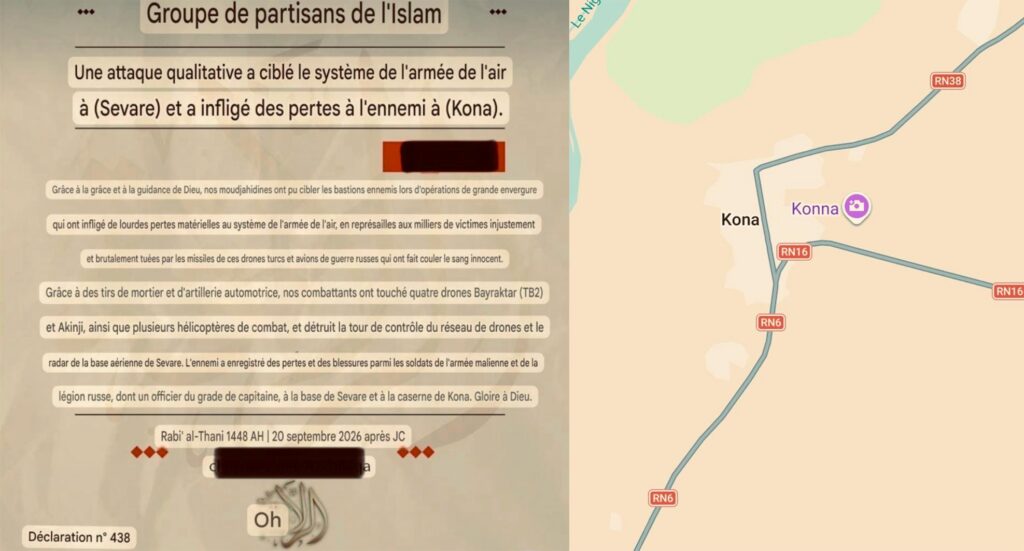
What is Mali’s security model actually protecting? That is the uncomfortable question left behind by the assault on the Sévaré airbase and the Konna barracks, claimed on Sunday 20 September by the Group for the Support of Islam and Muslims (JNIM), Al-Qaeda’s branch in the Sahel. The strike does not simply add another incident to a crowded list. It puts the central wager of Bamako’s defense policy on trial: the idea that sophisticated hardware, fresh alliances and a clean break with Western partners would finally secure the country.
In its own account of the operation, the JNIM says it hit several military facilities at Sévaré, destroying or damaging four Bayraktar TB2 and Akıncı drones, along with several helicopters, a radar installation and a control tower. The group also claims losses among Malian soldiers and Russian fighters stationed at the site. Whatever the final tally, the message is unchanged: the jihadist movement still has both the reach and the ambition to strike at the heart of Mali’s military architecture.
The contradiction running through Mali’s new security doctrine
After the coups of 2020 and 2021, Mali’s military authorities rebuilt their defense policy from the ground up. The rupture with Western capitals, Paris above all, opened the way to a strategic partnership with Moscow.
Officially, this shift is presented as an assertion of sovereignty: Bamako insists it is free to choose its allies, equip its army and fight armed groups without depending on outside powers. Politically, the argument lands well. On the ground, the picture is far messier.
New equipment, notably Turkish-made drones, and the deployment of Russian personnel have not made the jihadist threat disappear. Recent operations show that armed groups still possess a serious capacity to disrupt, ambush and strike. The real difficulty is not how many weapons Mali owns, but whether it can convert that arsenal into lasting control over terrain and people.
Africa Corps and the hard lesson of asymmetric warfare
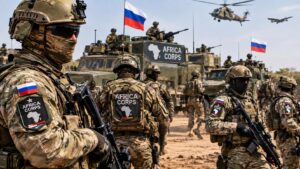
The Russian presence is one of the load-bearing pillars of the reorganized security apparatus. Following the French withdrawal and the end of Operation Barkhane, Bamako made an exclusive choice: Moscow.
The Africa Corps, which has taken over from the Wagner group in several African countries, is now woven into Mali’s security arrangements. Yet that presence runs straight into a deeply rooted insurgency. JNIM fighters move through familiar terrain, read the landscape better than any outsider and rely on asymmetric tactics that blunt the advantage of superior technology.
That gap is precisely what the Sévaré raid exposes. Modern drones can watch and strike precise targets, helicopters can back up troops on the ground, and foreign fighters can stiffen certain units. None of these tools, on its own, guarantees durable control of a vast country.
Firepower that struggles to secure the ground
The episode fits a broader and worrying pattern. Malian forces keep absorbing deadly attacks claimed by jihadist groups, aimed at military positions, strategic roads and the infrastructure that keeps the national system running.
A structural weakness stands out: the army concentrates enormous means around its main bases while failing to dominate the countryside and the roads linking them. Sévaré is the clearest illustration. As a major military hub in central Mali, the town hosts air infrastructure built for surveillance and combat. The fact that this base was struck shows the JNIM can still reach highly strategic installations.
Repetition matters too. A security strategy is not measured by the number of drones purchased, strikes carried out or operations announced. It is measured by whether attacks are prevented, civilians protected and state authority sustained over time.
The trap hidden inside high-end technology
The prominence given to the Bayraktar fleet illustrates an operational contradiction. Mali has acquired capable platforms for intelligence gathering and stand-off strikes, a genuine step forward for its military.
But advanced technology becomes vulnerable when it is clustered on fixed, identifiable sites. Should the JNIM’s claims about the equipment at Sévaré hold up, the symbolic setback for Bamako would be considerable: proof that part of its technological investment can be neutralized where it is parked.
Mali’s conflict keeps demonstrating that fighting a jihadist organization demands far more than high-end hardware. It requires human intelligence, mobile forces, protection for civilians, secure logistics corridors and a permanent state presence in remote areas.
What the raid costs the junta politically
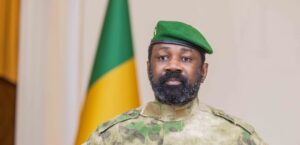
For Mali’s military leadership, the stakes reach well beyond the battlefield. Since taking power, the junta has built its political legitimacy on national sovereignty and the fight against terrorism. The departure of French forces and the pivot to Russia are presented as the emblems of a security policy freed from old dependencies.
Every attack on a strategic position chips away at that narrative and forces the authorities to confront the tangible results of swapping partners. At Sévaré, as elsewhere, the policy is judged only by what happens on the ground.
Beyond the bases, what Malians are asking for
For ordinary Malians, the strategic debate about France, Russia, Wagner, the Africa Corps or Turkish drones is secondary. What matters is whether villages, roads, markets and towns are safe.
A security policy proves itself not through weapons paraded at ceremonies, but through threats neutralized and the state’s presence restored for good.
The Sévaré attack confirms how deep Mali’s security crisis runs. The junta has reshuffled its alliances, expanded its arsenal and declared its intention to seize the initiative. Yet military strength alone will not defeat the JNIM.
The question Bamako has yet to answer
The challenge now is to turn military means into lasting security. As long as strategic bases come under attack, communication routes stay exposed and jihadist groups set the tempo of the conflict, the junta’s security model will remain under critical strain. At Sévaré, power is being judged on one thing only: results.