What does the JNIM’s deadly Dioura and Sévaré offensive mean for Mali’s future?
In a matter of days, a wave of coordinated attacks by the jihadist group JNIM has left around 150 people dead, striking Malian army positions and their Russian partners in Dioura and Sévaré. The scale of the losses has sent shockwaves through Bamako and raised urgent questions about the country’s ability to contain an escalating insurgency.
A multi-front assault that caught defenses off guard
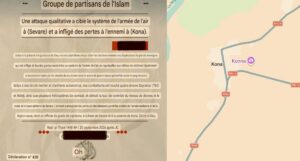
The attacks unfolded over several days, targeting military installations in two separate locations. Dioura and Sévaré, both strategic points in central Mali, became the stage for some of the deadliest confrontations this year. The assailants struck with precision and force, overwhelming local defenses and inflicting heavy casualties on both Malian troops and their foreign allies.
The dual nature of the offensive — hitting two distinct areas in quick succession — suggests a level of coordination and operational planning that has alarmed security analysts. It also underscores the growing reach of jihadist groups in the region, who appear increasingly capable of launching complex operations against hardened targets.
Assimi Goïta convenes emergency meeting in Bamako
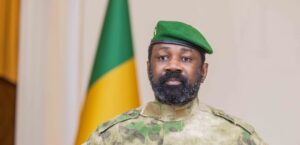
In response to the unfolding crisis, Mali’s transitional leader, Assimi Goïta, convened a high-level meeting in Bamako on Sunday. The gathering brought together top security officials and military commanders to assess the situation and chart a path forward. While the exact details of the discussions remain undisclosed, the mere fact of the emergency session signals the gravity with which the authorities are treating the attacks.
The meeting also highlights the pressure mounting on Goïta’s government, which has staked its legitimacy on restoring security across the country. With each new attack, that promise becomes harder to sustain.
Why Dioura and Sévaré matter in the broader conflict
The choice of targets is far from random. Dioura and Sévaré occupy critical positions in Mali’s central region, an area that has become a focal point of jihadist activity in recent years. By striking these locations, the JNIM is not only demonstrating its military capacity but also sending a message about its ability to operate deep within government-controlled territory.
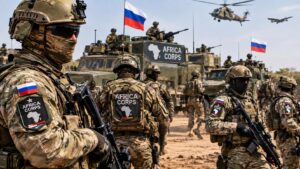
For the Malian army and its Russian partners, the attacks expose vulnerabilities in their defensive posture. They also raise uncomfortable questions about the effectiveness of the current counterinsurgency strategy, which has relied heavily on foreign military support.
The human and political toll
Beyond the battlefield, the attacks carry profound consequences for civilians caught in the crossfire. Communities in and around Dioura and Sévaré live under constant threat, their daily lives disrupted by violence and displacement. The psychological impact of such large-scale assaults reverberates far beyond the immediate areas of conflict.
Politically, the death toll of around 150 represents more than a statistic. It is a stark reminder of the human cost of Mali’s protracted conflict and a potential turning point in public perception of the government’s handling of security.
What comes next for Mali?
As the dust settles, the key question remains: can Mali’s leadership adapt its strategy to counter an increasingly bold and capable insurgency? The attacks on Dioura and Sévaré may serve as a wake-up call, forcing a reassessment of military tactics and alliances. But they may also deepen the sense of crisis, fueling further instability in a country already grappling with multiple challenges.
For now, the nation watches and waits, hoping that the response from Bamako will be decisive enough to prevent the next wave of violence.