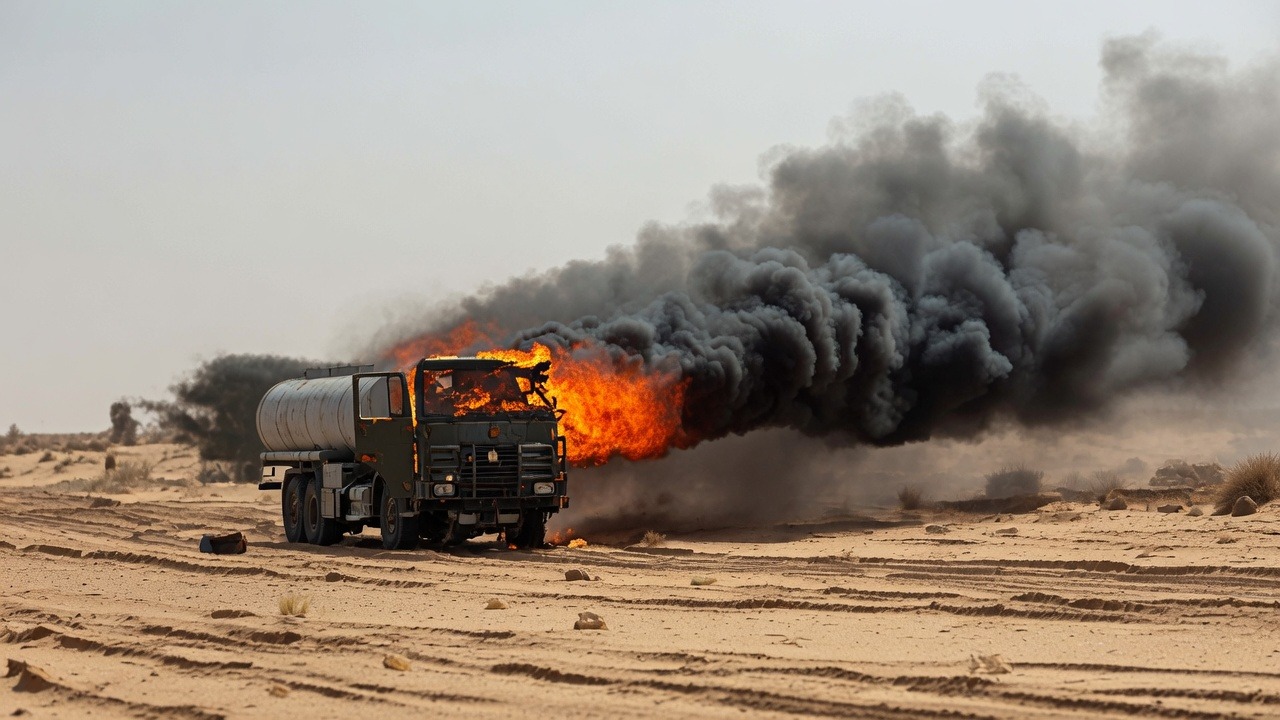
The night of July 18th marked a dark chapter in Mali’s ongoing conflict, when a military convoy carrying Malian Armed Forces (FAMa) troops and Russian paramilitary personnel from the Africa Corps fell victim to a devastating ambush near the village of Tabrichat in northern Mali. The attack, one of the deadliest in fifteen years, left over 50 soldiers dead and dozens more missing or captured, sending shockwaves through the nation and raising urgent questions about battlefield coordination and adherence to warfare norms.
Tabrichat ambush: a meticulously executed trap
Following weeks of intense fighting to secure the strategic Anéfis camp, military forces initiated a repositioning maneuver on July 18th. A massive convoy comprising dozens of armored vehicles and troop transports departed Anéfis, heading toward Gao, the northern metropolis. The column split into two distinct sections: Russian mercenaries from the Africa Corps at the front, followed by Malian troops at the rear.
The ambush was executed with precision just north of Tarkint, near the critical junction linking Gao, Bourem, and Kidal. Exploiting the convoy’s stretched formation and rugged terrain, fighters from the coalition of the Group for the Support of Islam and Muslims (JNIM) and the Strategic Framework for the Defense of the Azawad (FLA) launched a coordinated assault of unprecedented ferocity. The attack concentrated almost exclusively on the Malian rear section, leaving soldiers isolated under relentless fire.
A harrowing human toll and documented war crimes
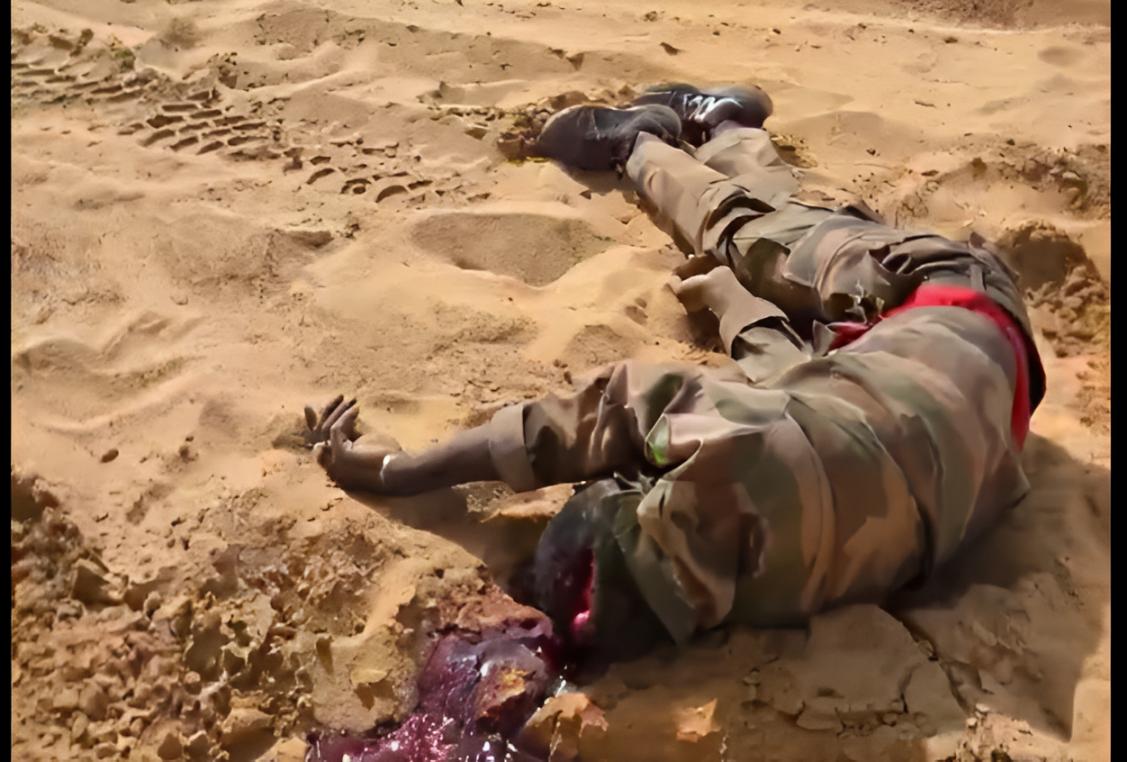
The aftermath of the ambush painted a grim picture. Official tallies indicate at least 50 Malian soldiers killed and another 30 missing or captured—one of the heaviest losses sustained by Mali’s military in more than a decade. Beyond immediate casualties, the treatment of prisoners escalated the tragedy. Despite being disarmed, approximately ten captured FAMa soldiers were executed at close range by JNIM/FLA fighters, flagrantly violating international humanitarian law.
The circulation of graphic images and videos documenting these atrocities ignited national outrage. The outrage intensified when footage initially surfaced through channels linked to the Africa Corps, amplifying public anger and distrust toward foreign allies operating in Mali.
Key leadership presence underscores strategic depth
Analysis of visual evidence collected post-ambush revealed a critical detail: the presence of Hamza Ag Gali, son of Iyad Ag Gali, the long-standing leader of JNIM and founder of Ansar Dine. This confirms high-level involvement by insurgent leadership in planning the operation and signals a generational shift in command within the jihadist movement. It also solidifies the operational reality of the alliance between JNIM and FLA factions, which have demonstrated renewed tactical cohesion and mobility along the Anéfis-Gao axis.
Unanswered questions surround Africa Corps’ response
The conduct of the Russian contingent has become a focal point of controversy. Despite being positioned at the front of the convoy and experiencing no immediate losses, the Africa Corps chose to continue its advance toward Gao without turning back to assist the beleaguered Malian troops. This decision has sparked intense debate:
- Coordination failure: Why were two elements of the same convoy so poorly synchronized, lacking mutual support protocols?
- Commitment breakdown: Did the withdrawal reflect a strategic order to preserve forces or an operational inability to respond in an ambush zone?
The failure to intervene raises serious doubts about the real efficacy of mercenary support in northern Mali’s complex battlefield environment.
Public anger and the future of Mali’s security strategy
From Bamako to the northern cities, public reaction has been swift and visceral. While the nation mourns its fallen soldiers, resentment toward foreign partners—particularly the Russia-linked Africa Corps—has reached boiling point. Calls for official explanations from military command and government officials have grown louder, demanding accountability for the convoy’s management and the conduct of allied forces.
The Tabrichat tragedy has laid bare the vulnerabilities of northern Mali’s communication and supply routes and cast doubt on the sustainability of current security policies. With the JNIM/FLA coalition showing renewed resilience and aggression, this devastating ambush may force authorities to fundamentally reevaluate their coordination with foreign allies on the ground.