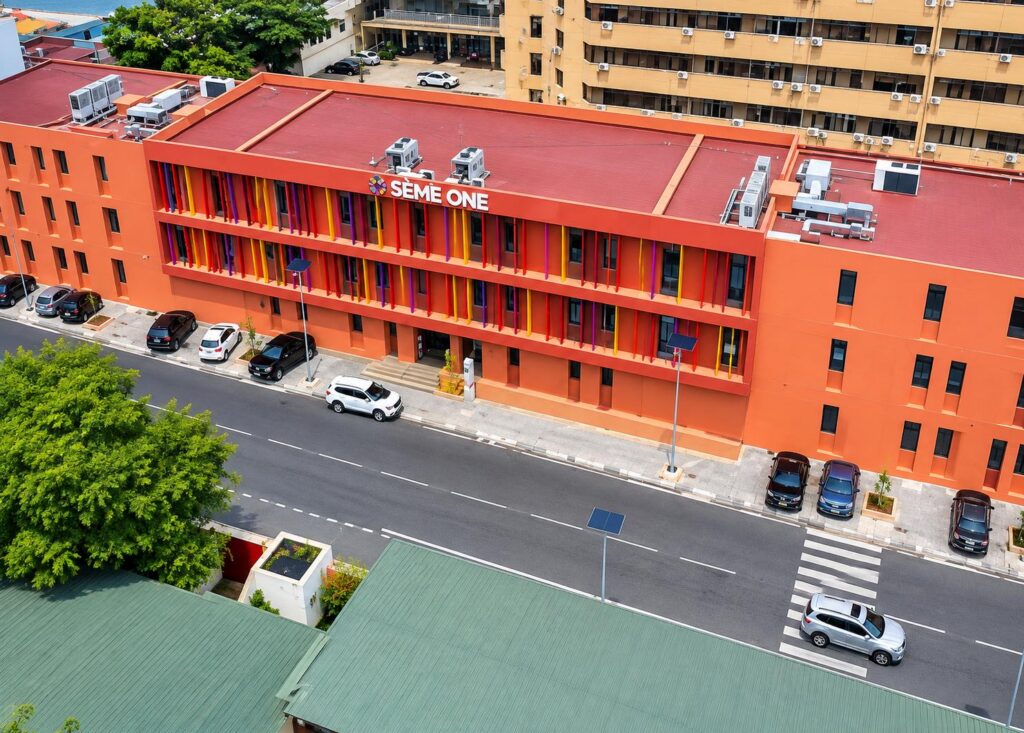
Benin is taking a decisive step toward self-sufficiency in engineering with the launch of a groundbreaking sustainable engineering master’s program at Sèmè City. In a landmark partnership, the Sèmè City Institute of Technology (SCITI) has teamed up with the University of Reims Champagne-Ardenne (URCA) to introduce the Master in Design Engineering – Sustainable Engineering Track, marking the first-ever master’s degree offered by SCITI.
This initiative represents a turning point for Benin’s higher education landscape, aligning with the government’s broader vision to transform the nation into a regional hub for innovation and industrial growth. The program is set to equip the next generation of engineers with the skills to design sustainable solutions tailored to local challenges, reducing the country’s long-standing reliance on imported technologies and foreign expertise.
Pioneering a new era in engineering education
The Master in Design Engineering – Sustainable Engineering Track is the first graduate-level program to be hosted at SCITI, an institution at the heart of Sèmè City’s innovation ecosystem. The curriculum is designed to cover the entire lifecycle of products and infrastructure, with a strong emphasis on integrating environmental, economic, and performance criteria from the earliest stages of design.
Students will engage in hands-on projects that challenge them to apply sustainable engineering principles in real-world contexts, ensuring they graduate with both theoretical knowledge and practical experience. The program’s launch signals a shift in Benin’s approach to engineering education—moving beyond traditional training to focus on innovation-driven problem-solving.
Redefining Benin’s role in Africa’s industrial future
Benin’s government has long recognized the need to cultivate local talent capable of driving industrial development. The sustainable engineering master’s program is a direct response to this need, positioning the country as a leader in West Africa’s burgeoning tech and innovation sector. By fostering homegrown expertise, the initiative aims to support key industrial zones such as the Glo-Djigbé Special Economic Zone (GDIZ), while contributing to the country’s broader economic transformation.
Graduates of the program are expected to play a pivotal role in shaping Benin’s future infrastructure, from green buildings to renewable energy systems and sustainable manufacturing. The goal is clear: to reduce dependence on foreign engineers and technology by empowering local professionals to design and implement solutions that meet the nation’s unique needs.
What sets this program apart?
- Industry-aligned curriculum: The program collaborates with leading industrial players to ensure graduates are job-ready and equipped to tackle real-world challenges.
- International recognition: The diploma is jointly validated by SCITI and URCA, providing graduates with a globally recognized qualification.
- Focus on sustainability: Unlike conventional engineering programs, this master’s emphasizes circular economy principles, reducing waste, and minimizing environmental impact throughout the design process.
- Entrepreneurial mindset: The curriculum encourages innovation and start-up culture, preparing graduates to launch their own ventures or lead sustainability initiatives in existing enterprises.
A catalyst for Benin’s industrial revolution
The launch of this program is more than an educational milestone—it’s a strategic move to position Benin as a competitive player in Africa’s industrial landscape. By nurturing a pipeline of sustainable engineering talent, the country is laying the groundwork for a future where local innovations drive economic growth and environmental stewardship go hand in hand.
As Benin strengthens its foothold in technology and industrialization, this master’s program stands as a testament to the nation’s commitment to shaping its own destiny. The first cohort of students is set to begin their journey in 2026, marking the beginning of a new chapter in Benin’s engineering legacy.