Burkina Faso’s military leader declares democracy incompatible, unveils revolutionary path
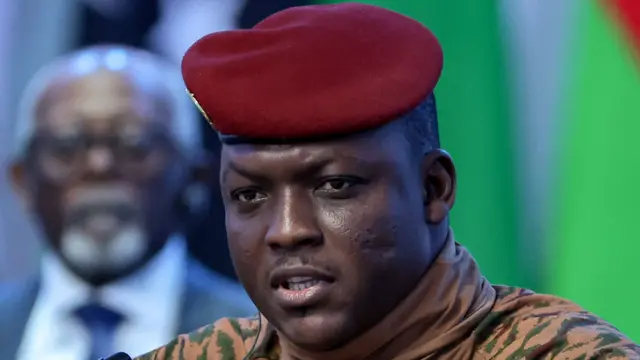
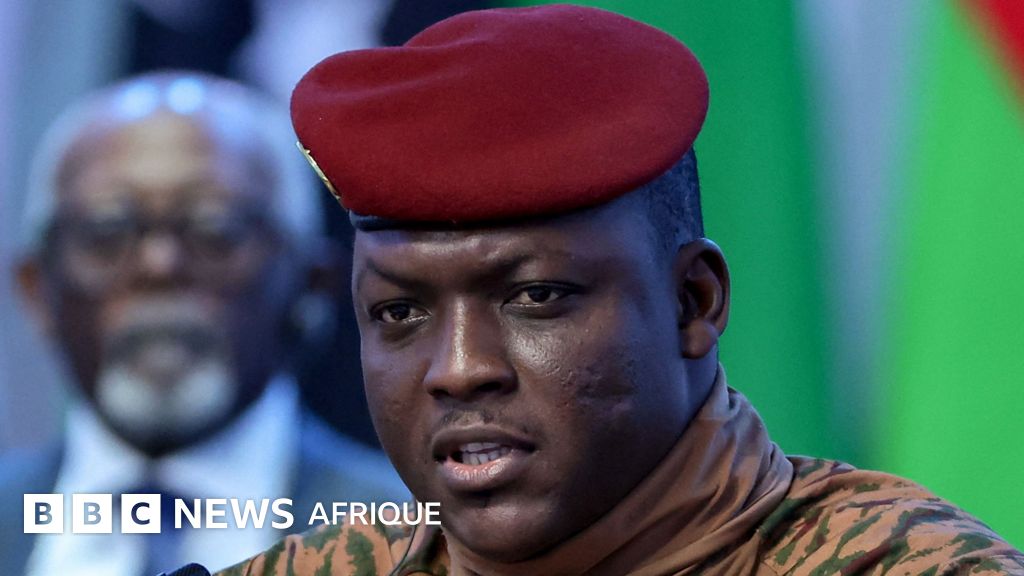
Captain Ibrahim Traoré, Burkina Faso’s military leader, has publicly dismissed democracy as unsuitable for the nation, calling for its abandonment in a televised interview. Speaking on national television, he asserted that the country must forge its own governance model, distinct from Western democratic frameworks.
The 38-year-old leader, who seized power in a 2023 coup, argued that democracy has failed Africa, citing the ongoing instability in Libya—once led by the late dictator Muammar Gaddafi—as evidence of democracy’s pitfalls. Gaddafi’s regime, though authoritarian, provided social services like free education and healthcare before his violent overthrow in 2011, which triggered years of conflict and political fragmentation in the country.
Rejection of democracy and political parties
Traoré’s comments come amid a broader crackdown on dissent. In January, his administration banned all political parties, accusing them of fostering division and hindering national unity. The move aligns with his vision of a revolutionary governance model centered on patriotism, military sovereignty, and grassroots mobilization.
During the interview, he criticized traditional politicians, describing them as corrupt and unreliable: “The truth is that in Africa—at least in Burkina Faso—real politicians embody every vice: liars, flatterers, and smooth-talkers.” He emphasized that Burkina Faso must reject external models, stating, “We have our own approach. We’re not trying to copy anyone. We’re here to completely change how things are done.”
The military leader also highlighted the need for economic and military self-reliance, insisting that shorter work hours are insufficient for national progress. He advocates for longer, more intensive labor to accelerate development.
Human rights concerns amid revolutionary rhetoric
Traoré’s leadership has drawn both domestic and regional support, particularly from those critical of Western influence in Africa. His government has aligned with neighboring military-led nations, Mali and Niger, in rejecting partnerships with Western powers—especially France—in the fight against Islamist insurgencies that have plagued the Sahel for a decade.
However, his rule has been marked by repression. Reports indicate that since the 2023 coup, over 1,800 civilians have been killed, with two-thirds of these deaths attributed to state forces and allied militias. Human rights organizations have raised alarms over the suppression of media, civil society, and political opposition.
Despite these controversies, Traoré’s anti-Western stance and call for a panafricanist revolution have resonated across the continent, positioning him as a prominent figure in the wave of military takeovers sweeping West Africa.
Regional shifts and ongoing insurgencies
Burkina Faso, Mali, and Niger have all severed ties with former colonial power France, opting instead for cooperation with Russia to combat Islamist militants. Yet, despite these strategic shifts, violence in the region continues unabated, leaving communities caught in the crossfire.
Traoré’s vision for Burkina Faso remains unclear beyond his rejection of democracy and traditional political structures. His emphasis on revolutionary change, economic independence, and military strength suggests a long-term commitment to reshaping the nation’s governance—with or without international approval.