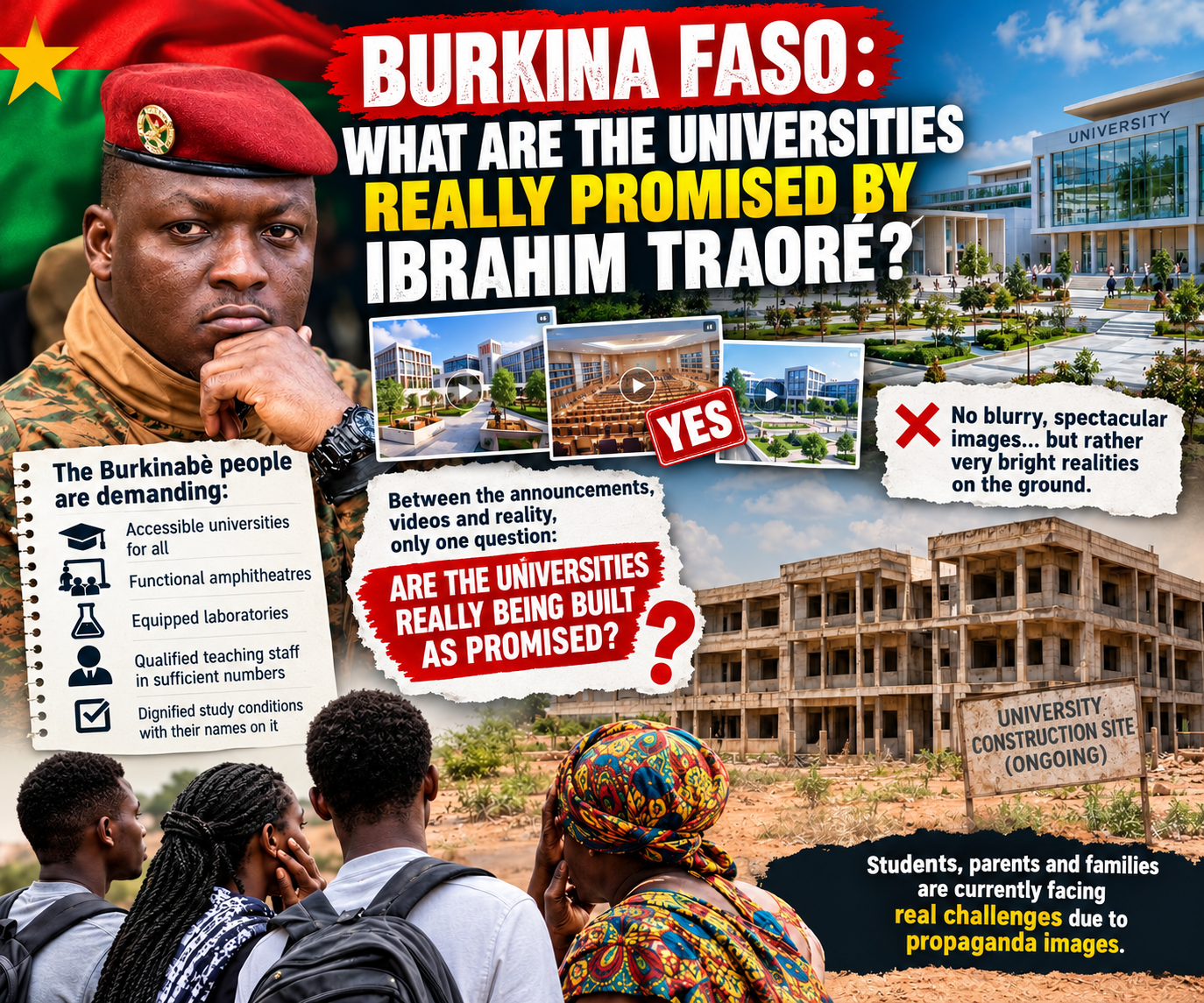
In the wake of Burkina Faso’s political narrative, a critical question lingers in the public debate: what has actually materialized from the much-publicized promises of world-class universities under Captain Ibrahim Traoré’s leadership? While social media feeds overflow with images of gleaming campuses and futuristic facilities, the families footing the bill for higher education demand tangible proof not just digital spectacles.
From digital propaganda to concrete expectations
Burkina Faso’s government has aggressively promoted its educational ambitions through viral content, showcasing what appear to be state-of-the-art university projects. Yet, for parents draining their savings to fund their children’s futures, and for students desperate for functional learning spaces, these visuals fall short. They seek more than symbolic announcements; they require accessible amphitheaters, fully equipped laboratories, a sufficient teaching workforce, and dignified study conditions.
This disconnect has fueled skepticism. Can polished online campaigns truly substitute for realized infrastructure? Families are no longer satisfied with flashy presentations they demand verifiable progress.
When virtual visions outpace reality
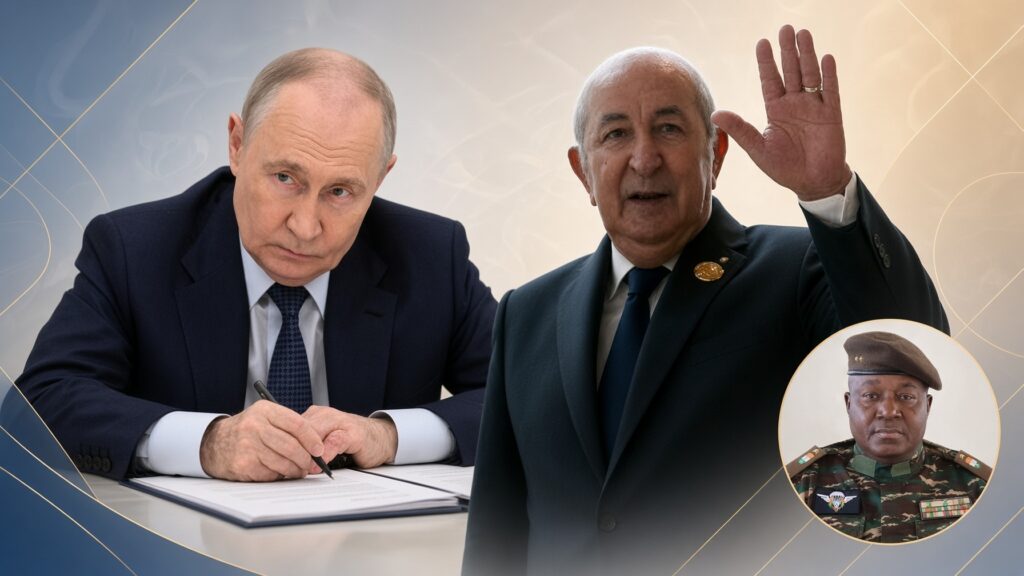
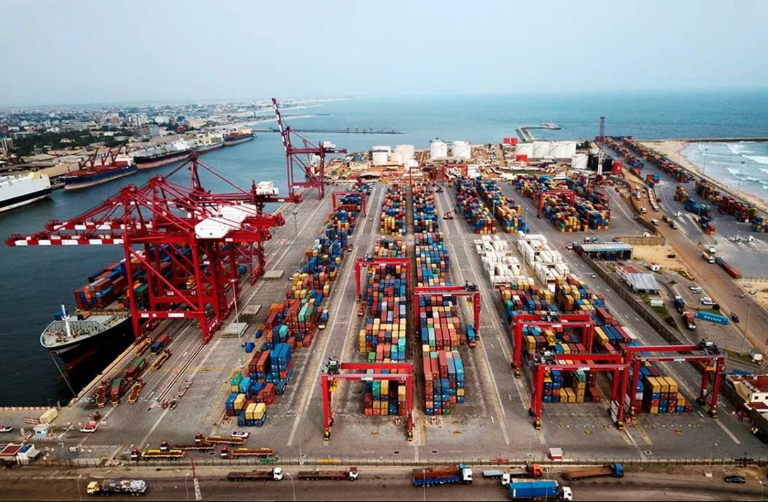
The rise of artificial intelligence in political messaging has further muddied the waters. Fabricated imagery and misattributed projects now circulate alongside genuine developments, blurring the line between fact and fiction. In one documented case, a video widely shared as proof of Burkina Faso’s cutting-edge construction prowess was traced back to an unrelated project in Algeria. Such incidents underscore a troubling trend: the weaponization of digital content to sculpt perceptions.
While these examples primarily involved non-educational projects, they highlight a systemic vulnerability. Without rigorous verification methods, how can citizens distinguish between aspirational content and authentic achievement? The burden of proof now rests squarely on those in power to substantiate their claims.
Announcements vs. achievements: the education sector’s reality check
Political rhetoric often paints an optimistic picture, but the gap between announcement and implementation can be vast. An inaugural ceremony or a cornerstone laying does not equate to an operational university. Critical details such as student enrollment capacity, faculty availability, and essential services remain conspicuously absent in promotional narratives.
Official statements, while offering a starting point, require independent scrutiny. For instance, the September 2026 inauguration of a 1,200-seat amphitheater and multiple laboratories at Nazi-Boni University in Bobo-Dioulasso marks progress, yet it raises further questions. Are these facilities fully operational? How many students currently benefit from them? What is the progress on other promised complexes under the Presidential Initiative for Quality Education for All?
Key questions demanding answers
How many university projects have reached completion?
Which establishments are actively enrolling students, and under what conditions?
What mechanisms are in place to ensure transparency and accountability?
The role of artificial intelligence in distorting public perception
The proliferation of AI-generated content has transformed political communication into a double-edged sword. A convincingly realistic video can be produced in minutes, lending an air of authenticity to non-existent achievements. This phenomenon disproportionately affects populations with limited technical resources to verify such claims.
Investigative reports have repeatedly exposed instances where Burkina Faso’s leadership was falsely associated with foreign projects or AI-manipulated footage. While not all instances can be definitively linked to state actors, the pattern raises serious concerns about the integrity of public information dissemination. A responsible government must actively combat misinformation, not by dismissing criticism outright, but by providing verifiable evidence and facilitating independent oversight.
Moving beyond the spectacle: what truly defines success
The credibility of Burkina Faso’s education revolution cannot be measured by the virality of its promotional materials. It will be determined by tangible outcomes: the number of students receiving quality instruction, the operational status of new infrastructures, and the government’s willingness to subject its claims to public scrutiny.
Parents and students are not merely spectators in this process. Their stakes are personal, their investments substantial, and their patience wearing thin. The time for vague assurances has passed. Burkina Faso’s future leaders, professionals, and innovators deserve institutions that deliver on their promises not just in pixel-perfect presentations, but in bricks, mortar, and real-world opportunity.
What comes next for Burkina Faso’s higher education
The path forward requires a commitment to three core principles:
Transparency: Regular, detailed reports on project timelines, budgets, and milestones must be made publicly accessible.
Verification: Independent audits and site visits should be prioritized to confirm claims and address discrepancies.
Accountability: Leaders must respond to public concerns with concrete action, not just rhetoric, ensuring that educational facilities serve their intended purpose.
The narrative of Burkina Faso’s educational transformation is still being written. The question is not whether progress exists, but whether it is substantial, equitable, and enduring enough to meet the demands of a generation waiting for answers.
By Aïcha Abdou — Journalist