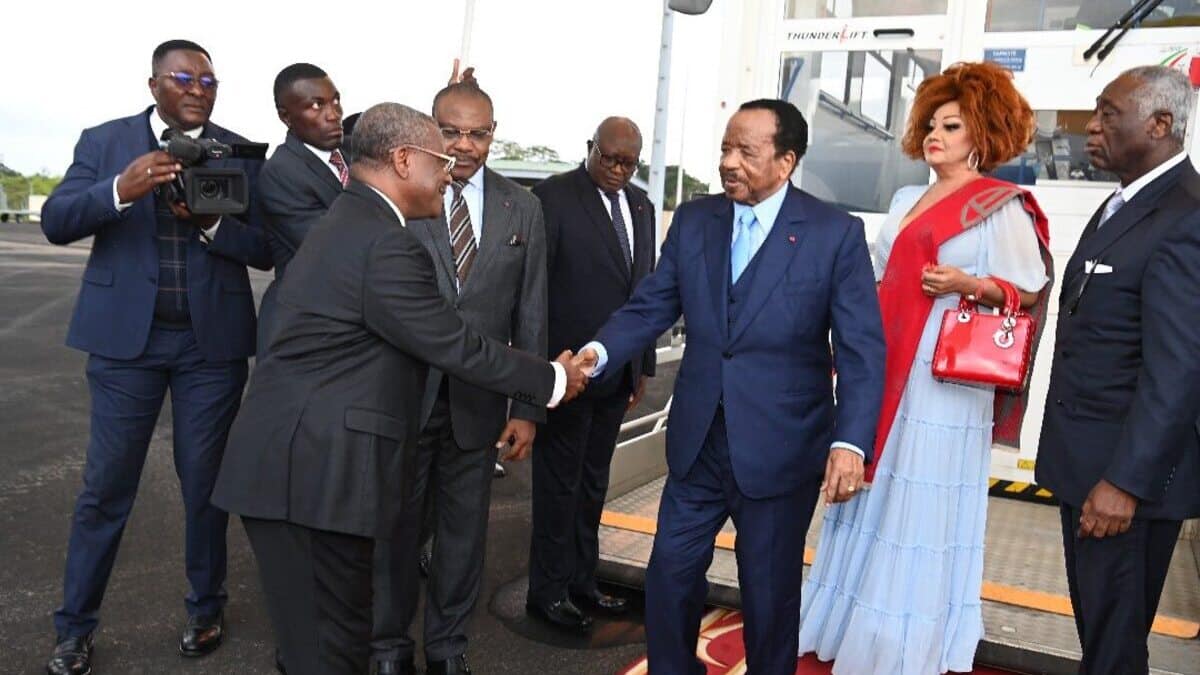
Cameroon’s president: is the power truly vacant?
In his weekly political editorial broadcast this Monday, July 21, 2026, on Radio Tiémeni Siantou (90.5 FM in Yaoundé and Bafang), journalist Eric Boniface Tchouakeu questions the prolonged private stay of Cameroon’s Head of State abroad.
In his weekly political editorial this Monday, July 21, 2026, broadcast on Radio Tiémeni Siantou (90.5 FM in Yaoundé and Bafang), journalist Eric Boniface Tchouakeu examines the implications of Cameroon’s Head of State’s extended stay abroad.
Cameroon’s President, Paul Biya, has been in Europe since June 7, 2026, officially for a “short private stay,” according to a statement from his Cabinet Director, Samuel Mvondo Ayolo.
While Jeune Afrique and other outlets have reported his presence in Geneva, Switzerland—a city where he has maintained a residence since taking office on November 6, 1982—questions linger about the true nature of his absence. Initially presented as brief, his stay has stretched far beyond expectations, fueling speculation about his health despite official reassurances. Some observers even suggest the possibility of a power vacuum in Cameroon.
Yet, legally speaking, the president’s prolonged absence does not constitute a power vacuum. Cameroon’s constitution does not impose a time limit on presidential stays abroad. A power vacuum can only be declared under three strictly defined circumstances: death, resignation, or permanent incapacitation of the sitting president.
However, the constitution provides no clear definition of “permanent incapacitation,” leaving room for interpretation. Therefore, the mere length of a president’s stay abroad cannot, by itself, justify claims of a power vacuum.
In practice, the president could theoretically govern from abroad for the entirety of his term without violating any legal provisions. The issue here is one of political ethics rather than legality.
The delayed formation of the government following the October 12, 2025 presidential election, as well as the hasty reinstatement of the Vice-President position—often perceived as rushed—may explain why some are now scrutinizing each day of the president’s absence since June 7, 2026. Over his 43 years in power, President Biya has never signed or published a major decree from abroad.
Be the first to comment
Comments