A question worth asking after Benin’s 3-0 demolition of Mauritius
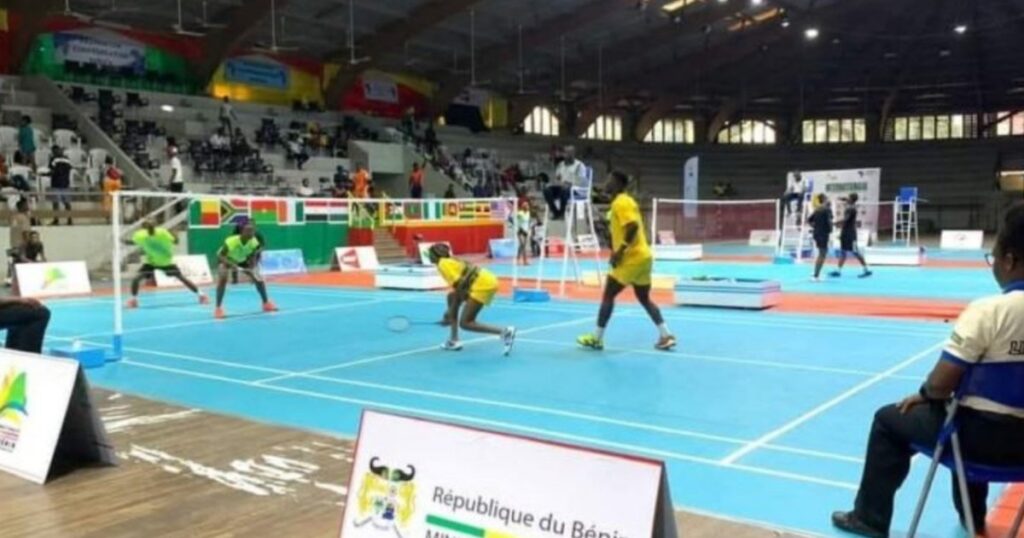
When Benin’s men’s triples team stepped onto the sand at Aero Beach in Entebbe, Uganda, on Saturday, September 19, 2026, they carried more than just their rackets. They carried the weight of a nation’s sporting ambitions. By the time they walked off, they had answered one question emphatically: could Benin convert its rising AirBadminton momentum into continental gold? The answer came in the form of a 3-0 sweep over Mauritius in the final, a result that handed the Beninese delegation its first gold medal in the men’s triples event. But the bigger question lingers: does this victory signal a new era for Benin’s presence in the sport, or is it a fleeting moment of glory?
Oswald Fano-Dosh, Carlos Kpanou, Julien Totin, and Preferet Adomahou stood at the center of that triumph. Their names now sit alongside a historic achievement that few would have predicted at the start of the tournament. Mauritius, after all, had punched its ticket to the final with a hard-fought 3-2 semifinal win over Egypt, a result that suggested they were peaking at the right time. Yet against Benin, the Mauritian side failed to win a single game, settling for silver while the Beninese celebrated gold. The 3-0 scoreline, confirmed by Radio One Mauritius, leaves little room for debate about who controlled the final.
Two days, two medals: the context behind Benin’s golden run
What makes this gold even more remarkable is the timing. Just two days before the men’s triples final, Benin had already secured a silver medal in the Team Relay event. That final ended in a narrow 60-57 loss to Egypt, a result that stung but also served a greater purpose: it validated Benin’s qualification for the BWF AirBadminton World Championships 2026. So when the triples team took the court, they were not just playing for personal glory; they were building on an already successful campaign that had put the country on the map.
The African Championships, held at Aero Beach, brought together 14 countries and more than 120 participants, according to the Badminton Confederation of Africa and the Uganda Badminton Association. In that crowded field, Benin’s ability to produce two podium finishes in a single tournament speaks to a level of preparation and talent that deserves closer examination. The Team Relay silver had already signaled that this delegation was not there to make up the numbers. The triples gold confirmed it.
Understanding the triples format: why 3-0 is more than just a score
For those unfamiliar with AirBadminton, the triples format is one of its defining features. Three players line up on each side of the net, and the match is decided in a best-of-five-games format. The first side to win three games takes the match. That is precisely what Benin did against Mauritius: three straight games, no room for a comeback, no need for a fourth or fifth. It is a format that rewards teamwork, communication, and tactical discipline, qualities that the Beninese quartet displayed in abundance.
This specificity matters because it highlights that Benin’s victory was not a fluke or a lucky break. In a format that demands coordination among three players, sweeping an opponent 3-0 requires a level of synchronization that only comes from consistent training and mutual understanding. Mauritius, for its part, had shown its own resilience by edging Egypt 3-2 in the semifinals. That they could not replicate that form against Benin underscores just how dominant the Beninese performance was.
What does this mean for Benin’s sporting future?
The immediate impact is clear: a gold medal in men’s triples and a silver in Team Relay, plus qualification for the 2026 World Championships. But the longer-term implications are what make this story compelling. Benin has now demonstrated that it can compete and win at the highest level of African AirBadminton. The question is whether this success will translate into sustained investment, broader participation, and a deeper talent pool back home.
History shows that single victories do not automatically create sporting dynasties. They can, however, serve as catalysts. The Beninese delegation returns home with tangible proof that the country’s athletes can stand atop the continental podium. Whether that proof inspires the next generation of players, attracts funding, or simply raises the profile of AirBadminton in Benin remains to be seen. What is certain is that the 3-0 win over Mauritius in Entebbe has given the sport a moment it can build on, if the right decisions follow.
The road ahead: from Entebbe to the world stage
With qualification for the BWF AirBadminton World Championships 2026 already secured, Benin’s players will not have long to rest on their laurels. The global stage presents a different level of competition, one where African champions will test themselves against the best from Asia, Europe, and the Americas. The experience gained in Entebbe, both in the Team Relay and the triples event, will be invaluable.
For now, though, the focus remains on what was achieved on the sand at Aero Beach. A 3-0 victory in a final is a statement. A gold medal is a reward. But the real story may be the question that now hangs in the air: can Benin turn this golden moment into something lasting? The answer will be written in the months and years to come, not just in the record books, but in the choices made by federations, sponsors, and athletes alike.