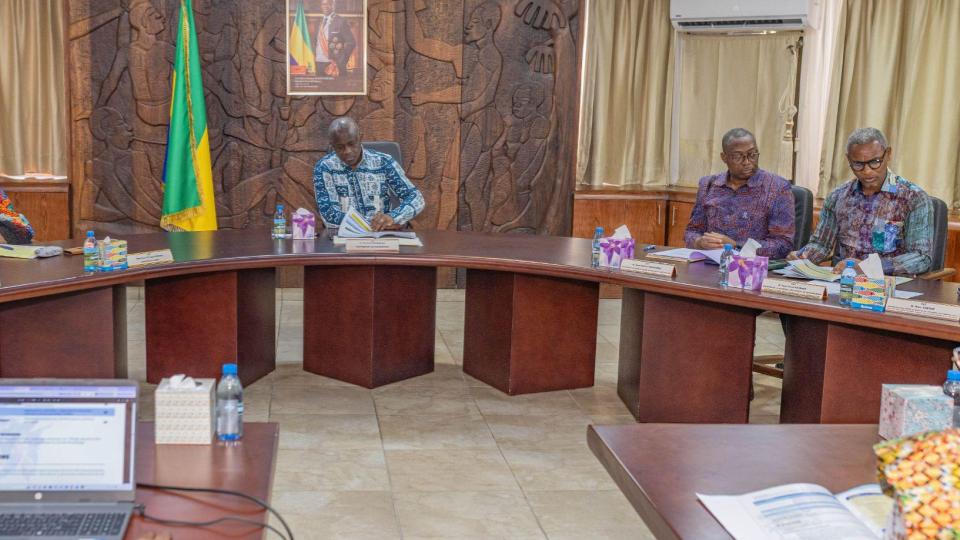
The Gabonese government’s recent decision to organize national iboga conferences in late 2026 wasn’t just a bureaucratic move—it revealed deeper tensions shaping the future of this sacred plant. During an interministerial meeting chaired by Vice-President Hermann Immongault, key figures delved into the challenges of transforming iboga from a local tradition into a regulated global resource under real Gabonese control.
Minister of Youth, Sports, Cultural Radiance, and Arts Paul Ulrich Kessany presented the initiative, positioning it as an urgent response to the plant’s shifting role. Once confined to spiritual and ritual practices, iboga has become a focus of modern medicine and international investment, prompting Gabon to redefine its relationship with this culturally vital botanical treasure.
The invisible divide between local heritage and international expectations
Iboga’s double identity—both sacred root of Gabonese traditions since 2000 and globally sought-after psychoactive substance—has created an unspoken conflict. While indigenous communities hold millennia-old knowledge of the plant’s uses, external actors are driving scientific and commercial exploration at an accelerated pace. This dynamic risks sidelining the very stakeholders whose ancestral wisdom preserves the plant’s essence.
The upcoming conferences aim to reverse this imbalance by involving all stakeholders in crafting a national plan. The goal is not merely to regulate iboga’s use but to ensure that its global potential serves the Gabonese people first and foremost.
A four-day forum to balance tradition and regulation
The national iboga assemblies are scheduled for a four-day intensive dialogue involving government ministries, researchers, NGOs, cooperatives, and indigenous communities. At the heart of discussions is the development of ethical economic and health frameworks rooted in the Nagoya Protocol, which Gabon ratified in 2014. The challenge is monumental: aligning modern scientific advancement with traditional preservation while ensuring equitable benefits for knowers of iboga’s secrets.
According to Kessany, the path forward requires more than policy—it necessitates a cultural reckoning. “Iboga’s value goes beyond market potential,” he emphasizes. “It is a living heritage that must be protected from exploitation while being shared responsibly with the world.”
From decree to dialogue: Building a sustainable future
This initiative follows a May 2026 decree regulating iboga research, exploitation, and commercialization. The decree, albeit a necessary first step, lacked stakeholder engagement—a void the conferences aim to fill. By bringing local and global voices together, Gabon seeks to transform its regulatory framework into a living strategy that prevents biological piracy while fostering fair partnerships.
The stakes are high. With iboga’s global demand surging, unchecked exploitation could lead to ecological damage and cultural erasure. Conversely, carefully managed development could position Gabon as a leader in ethical botanical innovation, merging ecological preservation with economic empowerment.