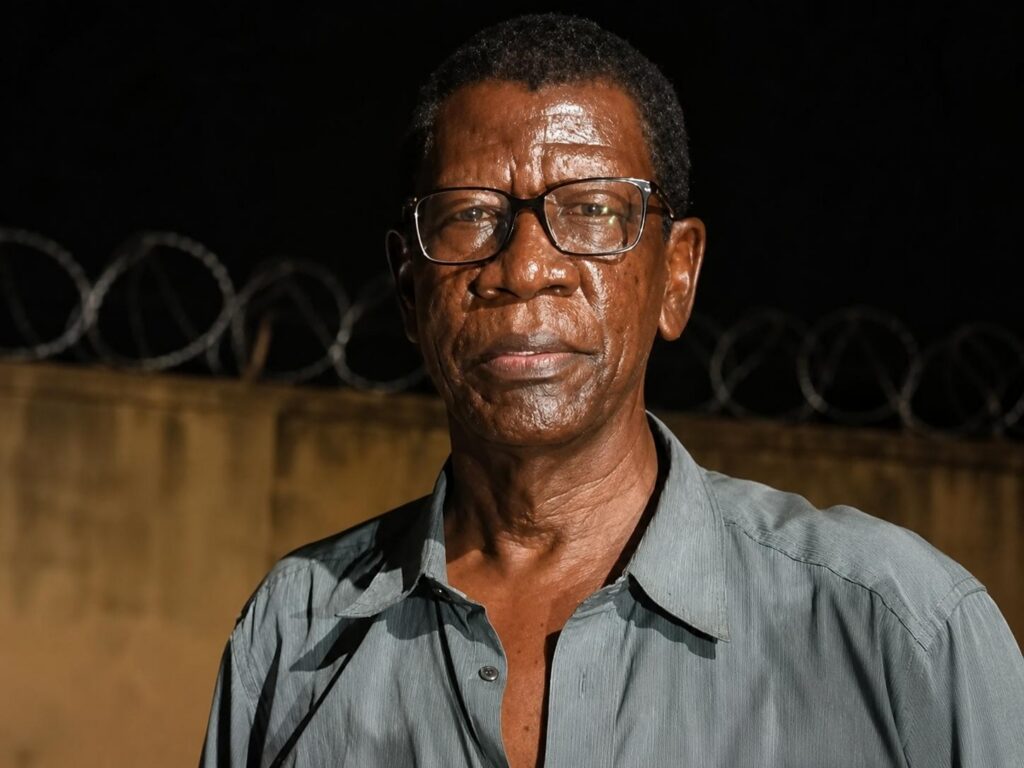
How much silence can a government afford before the silence itself becomes the story? In Niamey, that question is now unavoidable. Moussa Kaka, one of Niger’s best-known journalists and the director-general of Radio Télévision Saraounia (RTS), has been out of sight for several weeks, and the absence of any official explanation is turning a personal tragedy into a test of the transitional government’s intentions.
A veteran voice goes quiet in the heart of Niamey
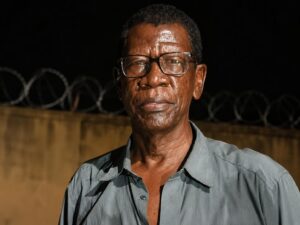
For decades, Moussa Kaka has been a familiar voice and face across West Africa. A seasoned reporter and a former emblematic correspondent for an international French-language radio station, he built his reputation on meticulous coverage of security crises, political upheavals and the tangled community dynamics of the Sahelo-Saharan belt. His professional path, marked by in-depth investigations and rare access to actors on the ground, exposed him time and again to pressure from successive regimes.
That is precisely why his disappearance carries such weight. When a journalist of this stature vanishes, the message received by every other newsroom in the country is rarely about one individual alone.
No summons, no explanation, no trace
According to information gathered from relatives and local colleagues, the journalist gave no further sign of life after leaving his home in Niamey. The transitional authorities have not notified any official grounds for an arrest, and every step taken with security services and police stations in the capital has so far led nowhere.
No family member has been told where he is being held, and no judicial document has been produced. In the absence of a formal accusation, the weeks of uncertainty are fuelling the fear that he is being held incommunicado — or that he has been made to disappear entirely.
RSF breaks the silence and demands clarity
Faced with that deafening quiet, the press freedom organisation Reporters Without Borders (RSF) reacted swiftly. In a broadcast interview, Sadibou Marong, who heads RSF’s West Africa desk, described the situation as deeply troubling and pointed to the possibility of an enforced disappearance.
“This sends a deeply alarming signal across Niger’s and the Sahel’s entire media landscape. Our call to the Nigerien authorities is clear: shed full light on his situation, state whether intelligence services are holding him, and guarantee both his physical safety and his immediate release,” Marong said.
The organisation also stresses a simple principle: protecting information professionals is the responsibility of the transitional government, and reporting the news must never be equated with an act of destabilisation.
Across the AES, a media landscape squeezed from every side
This case lands in an already punishing environment for journalism inside the countries of the Alliance of Sahel States (AES) — Niger, Mali and Burkina Faso. Since military transitional governments took power, civic and media space has narrowed steadily:
- international broadcasters suspended or pushed off the air;
- intimidation and arbitrary questioning of civil society figures;
- self-censorship imposed on local journalists as a survival reflex.
For the profession in Niger, Moussa Kaka has become the clearest illustration of how fragile the guarantees surrounding the job have become. At a moment when the sub-region faces enormous security and economic challenges, the disappearance of one of its most respected voices casts a long shadow over the future of the right to report freely from Niamey.
The question Niger’s journalists are now asking themselves
Behind the headlines lies a strategic dilemma that no newsroom in the capital can ignore: does remaining silent protect journalists, or does it merely make the next disappearance easier? Until the authorities answer for Moussa Kaka, every reporter in Niamey will be working with that question hanging over their notebook.