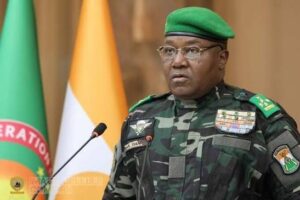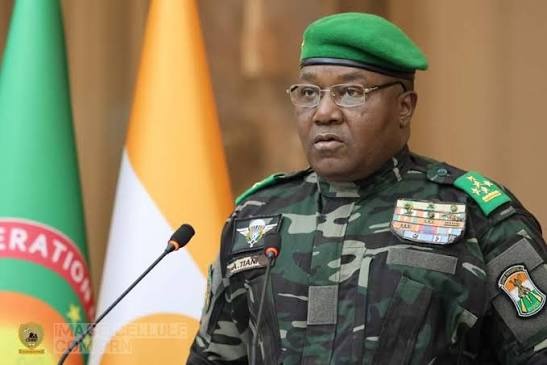
What happens when the very word meant to protect a nation — sovereignty — is turned into a tool against its own people? In Niger, that question has stopped being abstract. At the close of its Council of Ministers, the Conseil national pour la sauvegarde de la patrie (CNSP) unveiled a fresh legal framework for electronic media and foreign outlets, selling it as a shield for the country’s virtual space. Read the fine print, though, and the move looks less like protection and more like the first stone of an information wall.
Why this law matters far beyond a technical tweak
The military government insists it is merely modernising the rules. Yet the stakes are anything but administrative: this is the moment the junta decides who may speak, who must fall quiet, and who is allowed to watch from the outside.
A hunting licence dressed up as regulation
The ordinance on electronic media leaves little room for doubt once the bureaucratic vocabulary is stripped away. Behind the virtuous slogans about “adapting the rules” and “fighting disinformation” sits an unlimited right to chase down one of the last remaining pockets of freedom in Niger.
Traditional newsrooms are already under heavy pressure to cheer for the regime. Online platforms and digital outlets had stayed the final refuge for citizens, bloggers and independent journalists eager to challenge the official line. That refuge is now squarely in the crosshairs.
So who gets to decide what counts as false information?
Not an independent court. The answer, predictably, is the military state itself. With that single shift, “professional responsibility” quietly becomes another name for compulsory conformity.
A thicker curtain around outside eyes
The second half of the text takes aim at international media and foreign correspondents. The wording is carefully polished — “accreditation procedure”, “identification”, “traceability” — but the varnish is far too thin. What is being assembled is a methodical registration system paired with an absolute right of oversight over how journalists work.
Screening correspondents, selecting witnesses
By pushing correspondents through drastic filters, Niamey is not simply guarding against supposed interference. The authorities want to choose their own witnesses, impose their own version of events and block out any critical gaze. The outcome is a sealed media room where only narratives stamped by the government are granted a voice.
The fragility hiding behind the monologue
Claiming that “sovereignty is played out in the information space” is a convenient shortcut. Confusing the sovereignty of a people with a government’s monopoly over speech is a different matter altogether: a serious political mistake. A state that dreads contradiction enough to lock down the smallest news feed is not showing strength. It is showing its cracks.
What is really at stake for Niger
Turning the press into a propaganda instrument and journalists into permanent suspects does nothing to reinforce national sovereignty. It deepens isolation and leaves the population facing a bleak choice: imposed silence, or the clandestine murmur of social networks.
- For citizens: the pool of trustworthy information shrinks, and with it the ability to make informed decisions about daily life.
- For journalists and bloggers: the line between reporting and suspicion blurs, pushing independent voices either into exile or underground.
- For the country as a whole: a closed information space cuts Niger off from scrutiny, investment and the honest debate any nation needs to recover.
Information is not a threat to the homeland. It is the mirror of a nation’s democratic health — and that mirror is precisely what the CNSP has just shattered.